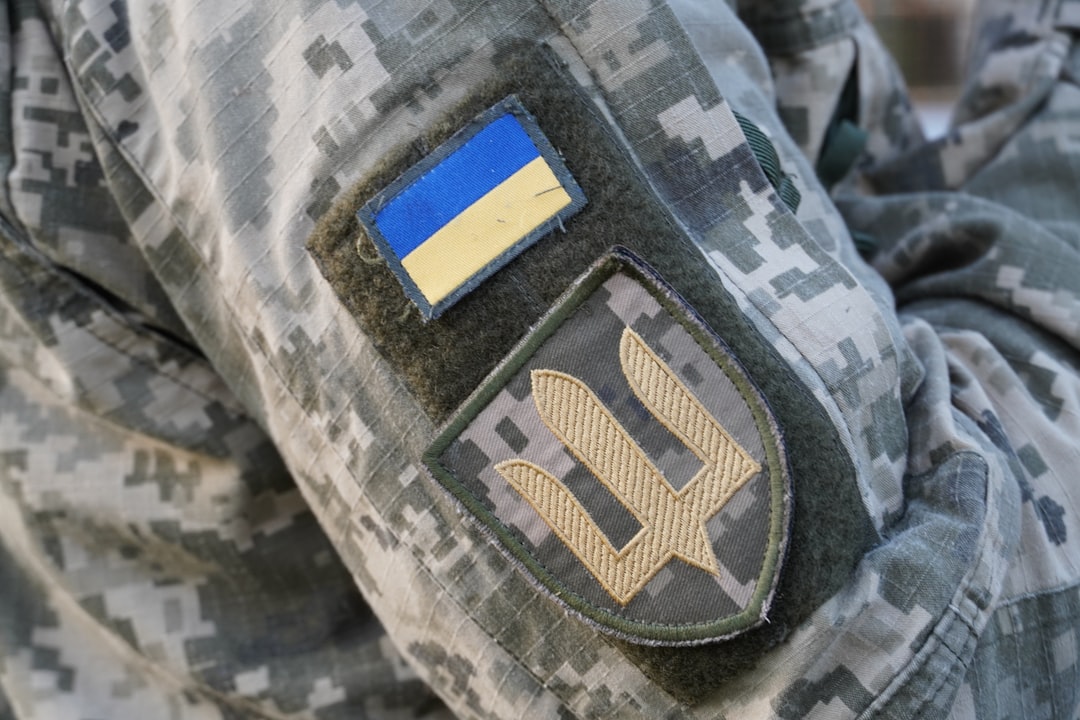
Russia's grinding military campaign in eastern Ukraine has stalled for the first time in more than two years, according to analysis by France 24 based on daily battlefield reports from Ukrainian and Western defense officials, raising questions about whether Moscow's forces are overstretched or simply consolidating gains before a renewed push.
For 26 consecutive months, Russian forces have captured Ukrainian territory nearly every week, albeit often measuring advances in hundreds of meters rather than kilometers. But over the past 12 days, front lines in Donetsk, Zaporizhzhia, and Kharkiv oblasts have remained essentially static, with neither side achieving significant territorial changes.
"This is the first sustained pause in Russian offensive operations since the failure to capture Kyiv in spring 2022," said Rob Lee, a senior fellow at the Foreign Policy Research Institute. "Whether it represents exhaustion, redeployment, or simply operational pause is the critical question."
Ukrainian military officials have been cautious about declaring a turning point, emphasizing that Russian forces retain significant combat power and could resume offensive operations at any time. But the halt, however temporary, offers Kyiv's forces a rare opportunity to reinforce defensive positions and rotate exhausted units.
To understand today's headlines, we must look at yesterday's decisions. Russia's invasion of Ukraine began in February 2022 with a failed attempt to rapidly seize the capital. After withdrawing from northern Ukraine, Russian forces concentrated on the eastern Donbas region and southern territories, adopting a strategy of attritional warfare that prioritized territorial gains over minimizing casualties.
That approach produced slow but steady advances. Russian forces captured Bakhmut after an 11-month battle, seized Avdiivka in February 2024, and gradually compressed Ukrainian-held salients in Donetsk oblast. The human cost has been staggering—Western intelligence estimates suggest Russian casualties exceed 450,000 killed and wounded—but Moscow has demonstrated willingness to sustain those losses indefinitely.
Several factors may explain the current operational pause. Ukrainian forces have recently received substantial ammunition shipments from European manufacturers, alleviating critical shortages that had limited their ability to conduct counter-battery fire and defensive operations. Increased artillery availability allows Ukrainian units to inflict higher costs on Russian assault groups.
Additionally, Russia may be reorganizing forces in anticipation of operations elsewhere. There are unconfirmed reports that some Russian units have been withdrawn from the Ukraine front for potential deployment related to tensions in the Caucasus or Central Asia, though Ukrainian intelligence has not confirmed significant force reductions.
Weather conditions may also play a role. The spring thaw, known locally as rasputitsa, typically makes off-road movement difficult in Ukraine, favoring defensive operations. But the current pause extends into early April, when ground conditions typically improve.
"We are observing a change in the operational tempo," said a Ukrainian military spokesperson during a briefing in Kyiv. "Whether this is temporary or represents something more significant, time will tell."
The timing is particularly notable given developments in American policy toward Ukraine. Revelations that President Trump threatened to withhold weapons from Kyiv unless European allies supported operations in the Persian Gulf have raised concerns in Ukraine about the reliability of American security commitments.
European support for Ukraine has strengthened substantially, with the EU now providing more total assistance than the United States when military, economic, and humanitarian aid are combined. European ammunition production has ramped up dramatically, with Czech and Polish manufacturers leading expansion efforts.
But Ukraine remains dependent on American-supplied systems for critical capabilities including HIMARS rocket artillery, Patriot air defenses, and F-16 fighter aircraft now being delivered by European partners but requiring American approval for transfer.
The pause in Russian offensive operations coincides with intensified Ukrainian strikes on Russian logistics and infrastructure deep behind front lines. Ukrainian forces have successfully targeted rail junctions, ammunition depots, and oil refineries across western Russia, degrading Moscow's ability to sustain high-tempo operations.
"The Ukrainians have become quite effective at interdiction," said Michael Kofman, director of Russian studies at CNA. "They can't stop Russian logistics entirely, but they can impose delays and force the Russians to disperse supplies, which reduces efficiency."
For Ukraine's military leadership, the challenge is to exploit the current lull without overextending forces that have been under continuous pressure for two years. Ukrainian reserves are limited, and while mobilization has increased, training new units to competence takes months.
Civilian morale in Ukraine has held up remarkably well despite more than four years of war, but economic strains are mounting. The country's GDP remains 30% below pre-war levels, and reconstruction costs are estimated at more than $400 billion.
As this correspondent observed during previous conflicts in the region, operational pauses are often preludes to renewed offensives, as both sides use the time to reconstitute forces and stockpile ammunition. The current quiet along the front may represent not the end of Russia's offensive ambitions, but merely a breath before the next exertion.
Ukrainian officials, mindful of that history, are not celebrating prematurely. "We remain prepared for renewed Russian attacks," Defense Minister said in a statement. "Our focus is on strengthening defenses and preparing for all contingencies."