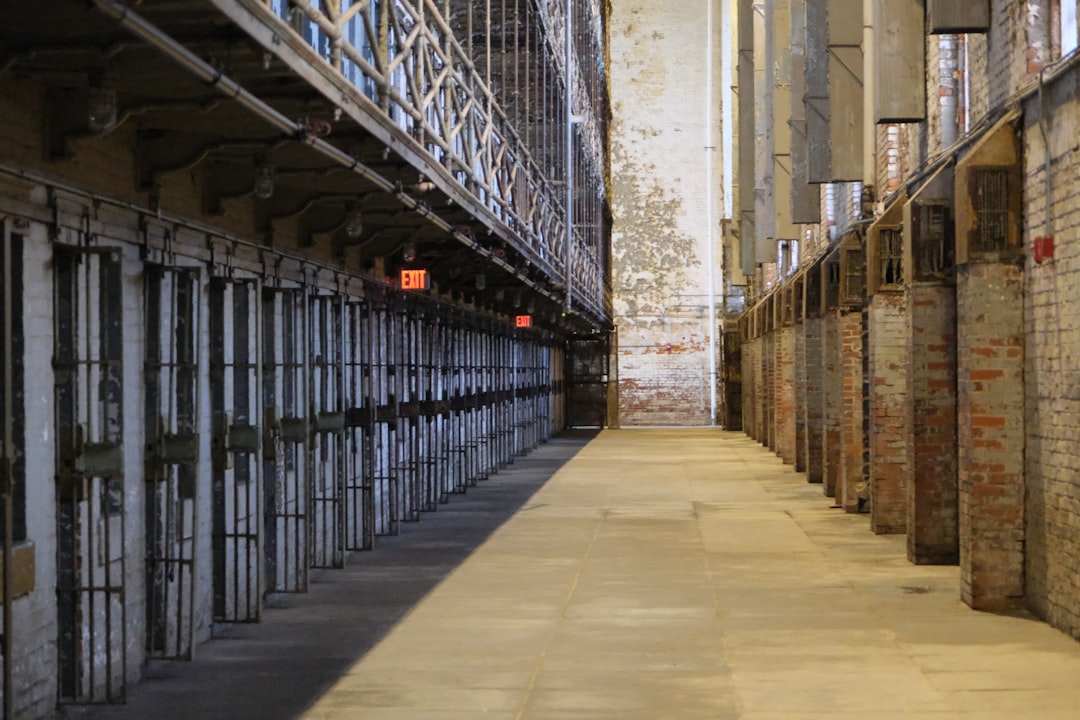
Iranian human rights activist Narges Mohammadi, awarded the 2023 Nobel Peace Prize while imprisoned in Tehran, suffered a suspected heart attack in Evin Prison on Wednesday, according to her family, raising urgent concerns about her health as the Iranian government faces mounting international pressure over treatment of political prisoners.
Mohammadi, 52, experienced severe chest pain and was briefly examined by prison medical staff before being returned to her cell, her family said in a statement reported by ABC News. Authorities denied repeated requests to transfer her to a hospital for comprehensive cardiac evaluation, according to her husband, Taghi Rahmani, who lives in exile in France.
"Narges is in critical condition and is being denied the medical care she desperately needs," Rahmani said in a telephone interview. "The Iranian authorities are effectively sentencing her to death by neglect."
The timing of the medical emergency is particularly acute. Iran is currently engaged in a military confrontation with the United States over the Strait of Hormuz, and Western governments have limited diplomatic leverage in Tehran as the crisis escalates. Human rights concerns, typically a focal point of Western criticism of the Iranian regime, have been subordinated to more immediate security imperatives.
To understand today's headlines, we must look at yesterday's decisions. Mohammadi has spent much of the past two decades in and out of Iranian prisons for her advocacy on behalf of political prisoners, women's rights, and opposition to the death penalty. She has been arrested 13 times, convicted five times, and sentenced to a total of 31 years in prison and 154 lashes.
The Norwegian Nobel Committee awarded her the Peace Prize in October 2023 "for her fight against the oppression of women in Iran and her fight to promote human rights and freedom for all." She was unable to attend the ceremony in Oslo, and her teenage children accepted the award on her behalf in an emotional moment that focused global attention on Iran's treatment of dissidents.
Mohammadi has suffered from serious health problems during her imprisonment, including a pulmonary embolism and severe muscle weakness. Her family has repeatedly sought her release on medical grounds, requests that Iranian authorities have consistently denied.
"The Iranian government's treatment of Narges Mohammadi is unconscionable," said Hadi Ghaemi, executive director of the Center for Human Rights in Iran. "Denying medical care to a Nobel laureate suffering a heart attack sends a message of complete impunity."
International human rights organizations have called for her immediate release. Amnesty International issued a urgent action alert on Thursday, and UN human rights experts have repeatedly intervened on her behalf. But those appeals have had little effect on Iranian authorities, who view Mohammadi as a threat to the Islamic Republic's stability.
The current crisis creates a diplomatic conundrum for Western governments. Under normal circumstances, the medical emergency of a Nobel Peace Prize laureate in prison would trigger high-level diplomatic interventions and potentially sanctions. But with Iran and the United States engaged in military hostilities, and with European nations attempting to mediate, governments are reluctant to introduce additional points of friction.
"There is a cruel irony here," said Karim Sadjadpour, a senior fellow at the Carnegie Endowment for International Peace. "At the moment when Mohammadi most needs international advocacy, the international community's bandwidth for pressuring Iran on human rights is at its lowest."
The Nobel Committee issued a statement expressing "deep concern" about Mohammadi's condition and calling on Iranian authorities to "provide all necessary medical care and consider humanitarian release." But the Committee has limited ability to compel compliance with its requests.
Mohammadi's case has become emblematic of the tension between crisis diplomacy and human rights advocacy. Western governments have historically used human rights concerns as leverage in negotiations with Iran—the release of political prisoners was part of discussions surrounding the 2015 nuclear agreement. But the current confrontation over the Strait of Hormuz has consumed diplomatic attention, leaving human rights advocates with limited avenues for intervention.
Iranian authorities have shown no indication they will soften their treatment of dissidents despite the international outcry. If anything, the government has intensified repression since the 2022 protests sparked by the death of Mahsa Amini in police custody. Thousands of activists remain imprisoned, and executions have increased.
For Mohammadi's family, the situation is desperate. "Every hour that passes without proper medical care increases the risk," Rahmani said. "We are calling on anyone with influence—governments, international organizations, civil society—to intervene before it is too late."
As this correspondent observed during Iran's 2009 Green Movement protests, the Islamic Republic has demonstrated consistent willingness to weather international criticism over human rights when it believes core security interests are at stake. The current military crisis only reinforces that calculus.
For Narges Mohammadi, confined to a prison cell and denied adequate medical care, the geopolitical forces shaping her fate are beyond her control. Her story serves as a reminder that even amid wars and oil crises, individual human beings continue to suffer—often in silence, often forgotten.