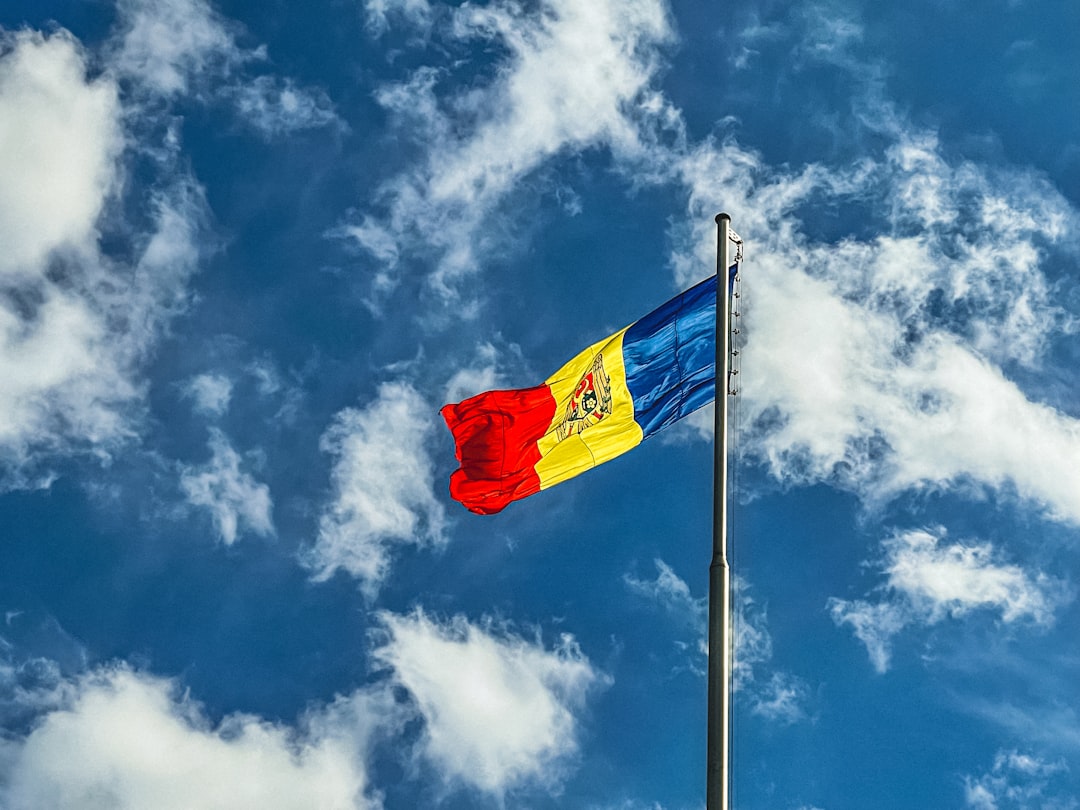
Moldova's parliament voted Thursday to withdraw from the Commonwealth of Independent States, the Russia-led alliance of former Soviet republics, in a move that accelerates the small nation's pivot toward Europe and marks another fracture in Moscow's sphere of influence.
The decision, approved by a 54-vote majority in the 101-seat parliament, formally ends Moldova's 33-year membership in an organization that critics have long dismissed as little more than a vehicle for Russian influence over its former imperial territories. The withdrawal becomes effective six months after formal notification to CIS headquarters in Minsk, Belarus.
"Today, Moldova takes another decisive step toward our European future," President Maia Sandu said in a statement following the vote, according to the Kyiv Independent. "The CIS is a relic of the past. Our future lies with the European Union."
The Commonwealth of Independent States was established in December 1991 as the Soviet Union dissolved, initially comprising Russia, Ukraine, and Belarus. It later expanded to include most former Soviet republics, ostensibly to maintain economic and security cooperation among successor states. In practice, the organization has functioned primarily as a forum for Russian influence, with limited substantive cooperation on economic or security matters.
To understand today's headlines, we must look at yesterday's decisions. Moldova, wedged between Ukraine and Romania, has been pulled between Russian and European orbits since independence in 1991. The country hosts a Russian military contingent in the breakaway region of Transnistria, a frozen conflict that has complicated Moldova's sovereignty for three decades.
President Sandu, a former World Bank economist, won office in 2020 on a pro-European platform and has systematically worked to reduce Russian influence. In 2022, Moldova applied for EU membership alongside Ukraine and Georgia. The European Council granted candidate status later that year, and accession negotiations formally opened in 2023.
The CIS withdrawal follows similar moves by Georgia, which left the organization in 2009 following a brief war with Russia, and Ukraine, which suspended participation after Russia's 2014 annexation of Crimea and formally withdrew in 2018. Turkmenistan downgraded its status to "associate member" in 2005.
"The CIS is slowly dying," said Nicu Popescu, Moldova's former foreign minister. "As countries integrate with Europe or chart independent courses, the organization loses whatever relevance it once had."
The withdrawal carries both symbolic and practical implications. Symbolically, it represents Moldova's most explicit rejection yet of the post-Soviet institutional framework that Moscow has sought to maintain. Practically, it eliminates Moldova's obligations under various CIS agreements on economic cooperation, border management, and security.
Several CIS member states maintain closer relations with Russia through overlapping organizations like the Collective Security Treaty Organization (CSTO), a military alliance, and the Eurasian Economic Union, a customs union. Moldova never joined either body, reflecting its ambivalence about deeper integration with Moscow.
Russian officials have not yet formally responded to the withdrawal, but previous Moldovan moves toward Europe have triggered sharp reactions from Moscow. Russia has imposed trade restrictions on Moldovan agricultural products, cut natural gas supplies, and provided support to political opposition groups critical of the Sandu government.
The thorniest issue remains Transnistria, a narrow strip of territory along Moldova's eastern border with Ukraine where a Russian-backed separatist government has exercised de facto control since 1992. Approximately 1,500 Russian troops are stationed in the region, nominally as peacekeepers but effectively as guarantors of the separatist regime.
"Transnistria is Moldova's Achilles heel," said Igor Boțan, executive director of the Association for Participatory Democracy in Chisinau. "As long as Russian forces remain on our territory, our sovereignty is incomplete."
Moldova's westward orientation has accelerated since Russia's 2022 invasion of Ukraine. The war brought the conflict to Moldova's doorstep—fighting has occasionally spilled over the border—and reinforced Chisinau's conviction that integration with European security structures is essential to national survival.
The EU has responded with substantial support. Moldova received candidate status in record time, and Brussels has provided more than €300 million in budgetary support and humanitarian assistance since 2022. The bloc has also absorbed hundreds of thousands of Ukrainian refugees transiting through Moldova.
But EU membership remains years away at minimum. Moldova must implement substantial reforms to meet accession criteria, including strengthening rule of law, combating corruption, and modernizing its economy. The country remains one of Europe's poorest, with a GDP per capita of approximately $5,800.
Domestically, the CIS withdrawal enjoys broad support in areas under government control, though opinion is divided in the Russian-speaking regions of the north and south. In Transnistria, where authorities align closely with Moscow, the decision was denounced as illegitimate.
As this correspondent observed during Ukraine's Euromaidan revolution in 2014, the former Soviet space remains contested terrain where geopolitical alignments are still being determined. Moldova's CIS exit represents another brick removed from the institutional architecture Moscow built to maintain influence over former Soviet territories.
Whether Russia will acquiesce to this realignment or attempt to reverse it through economic pressure, political interference, or military means remains an open question—one that will shape Moldova's trajectory for years to come.