Romanian air defense systems scrambled fighter jets and activated emergency alerts across Tulcea County on Sunday evening after detecting drones approaching Romanian airspace near the Ukrainian border, marking the latest security incident along NATO's eastern frontier.
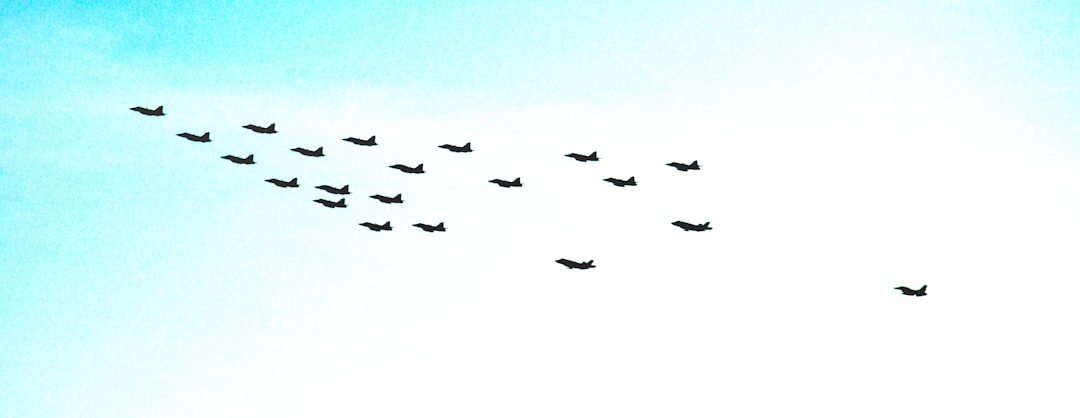
The incident began at approximately 8:50 PM local time when Romanian Air Forces radar detected airborne targets near Sulina, a coastal town in northern Tulcea County along the Danube Delta. Within minutes, two Eurofighter Typhoon fighter jets from the German Air Force—stationed at Base 57 "Mihail Kogălniceanu" as part of NATO's enhanced air policing mission—were scrambled to patrol the area.
"Radar contact was lost when the target evolved east of Sulina," the Ministry of National Defense stated in a communiqué issued Sunday night. The ministry confirmed it was coordinating with NATO allies in real-time to monitor the situation, reflecting the integrated air defense posture Romania has developed since Russia's full-scale invasion of Ukraine in 2022.
The incident prompted Romania's National Emergency Authority (IGSU) to activate the RO-ALERT emergency notification system, sending mobile phone alerts to residents across northern Tulcea County. The messages warned of possible falling objects from airspace and advised citizens to shelter in basements or civil protection buildings for an estimated duration of 90 minutes.
The alert ended at 10:00 PM after Romanian and NATO forces confirmed no debris had fallen on Romanian territory. The Defense Ministry reported that all identified aerial objects had remained over Ukrainian or international waters.
For Romania, a country that joined NATO in 2004 and the European Union in 2007, the incident underscores its transformation from a post-communist state focused on integration to a frontline defender of the Alliance's eastern flank. The 650-kilometer border with Ukraine has made Romania a critical logistics hub for Western military aid to Kyiv, while also exposing Romanian communities—particularly along the Danube and in Tulcea County—to the spillover effects of the war.
Since the war began, Romania has recorded multiple incidents of suspected drone incursions and debris falls near the Ukrainian border. In several instances, fragments of Russian drones targeting Ukrainian port infrastructure along the Danube River have landed on Romanian soil, prompting diplomatic protests to Moscow.
The deployment of German Eurofighter jets reflects NATO's rotational air policing commitments in Romania, where allied aircraft have augmented Romanian F-16s to provide 24/7 air defense coverage. Base 57 Mihail Kogălniceanu, near the Black Sea port of Constanța, has become one of the Alliance's most important installations in the region, hosting rotating detachments from Germany, Portugal, and other member states.
"In Romania, as across Eastern Europe, the transition is not over—it's ongoing," noted security analysts familiar with the country's evolving role. What began as a nation eager to escape Soviet domination and join Western institutions has become a state managing the security challenges those institutions now face along the Black Sea and in the broader European theater.
The incident also highlights the operational maturity of Romania's RO-ALERT system, which was developed after Romania's EU accession to meet European civil protection standards. The system's activation Sunday demonstrated the kind of rapid public notification capability that was unimaginable during the communist era or even in the early years of Romania's democratic transition.
Romanian officials have not disclosed whether the detected drones were targeting Ukrainian infrastructure or whether they were stray munitions. Russia has repeatedly struck Ukrainian ports and grain facilities along the Danube in recent months, often using Iranian-made Shahed drones that have occasionally strayed into Romanian and other NATO airspace.
No casualties or damage were reported in Romania. The Defense Ministry confirmed it would continue enhanced air surveillance along the border and maintain close coordination with NATO's Integrated Air and Missile Defense System.