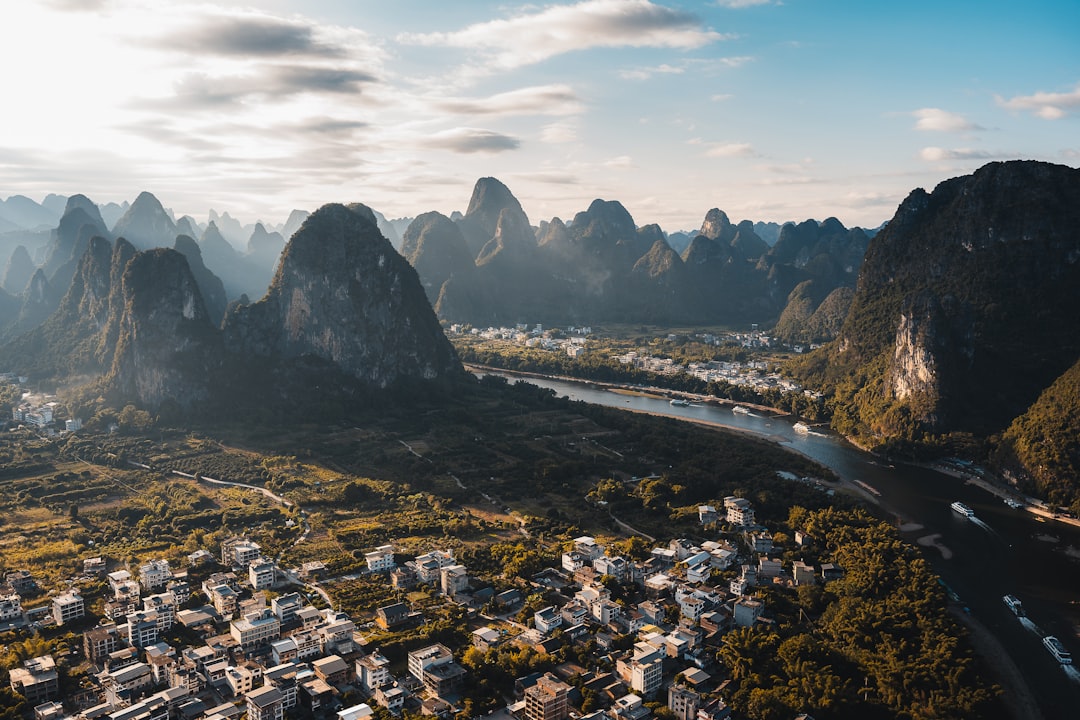
Scientists have discovered that China's mighty Yangtze River has been systematically stealing water from the Yellow River for more than a million years, a geological phenomenon called "river piracy" that offers unexpected insights into modern water security challenges.
The research, published in Scientific American, documents how erosion processes have gradually diverted drainage from the Yellow River basin into the Yangtze system. The ancient geological drama continues today, reshaping water distribution across the world's most populous nation.
While the "piracy" framing evokes intrigue, the climate implications prove more consequential. China faces acute water stress as glacial melt accelerates, precipitation patterns shift, and competing demands from agriculture, industry, and cities intensify. Understanding long-term hydrological changes becomes critical for managing scarce resources.
Researchers from Chinese Academy of Sciences analyzed sediment deposits, river terraces, and geological formations across the Tibetan Plateau, where both rivers originate. Their evidence shows the Yangtze's more aggressive erosion has captured tributary systems that historically flowed toward the Yellow River.
In climate policy, as across environmental challenges, urgency must meet solutions—science demands action, but despair achieves nothing. The river piracy research demonstrates how deep-time geological processes intersect with urgent contemporary water crises, offering perspective on both timescales of change.
The Yellow River, often called China's "Mother River" for its role in ancient civilization, has experienced declining flow volumes for decades. While human water extraction drives most of this reduction, the geological research reveals that natural processes have been gradually diminishing the river system for millennia.
"This isn't just fascinating geology—it has real implications for water resource planning," explained Dr. Li Wei, lead researcher on the study. "Understanding these long-term trends helps us distinguish natural variation from human-caused changes."
The Yangtze, Asia's longest river, supports 400 million people and generates enormous hydroelectric power through dams including the massive Three Gorges Dam. Its water resources prove critical to China's agricultural and industrial heartland, making any changes to its flow patterns nationally significant.
River piracy occurs when one river system captures the drainage of another through erosion. The more powerful river cuts backward through terrain, eventually breaching a divide and diverting water that previously flowed elsewhere. The process unfolds over geological timescales but can accelerate during periods of tectonic activity or climate change.
The Tibetan Plateau, where this piracy occurs, serves as Asia's "water tower," feeding major rivers including the Yangtze, Yellow, Mekong, Ganges, and Indus. Climate change is rapidly transforming the plateau, with glaciers retreating and permafrost thawing at unprecedented rates.
Researchers found that the Yangtze has captured several significant tributaries from the Yellow River system over the past 1.5 million years. Sediment analysis reveals distinct periods of accelerated capture, likely corresponding to tectonic uplift events and major climate transitions.
The findings complicate water management planning in a region already facing severe stress. China has invested billions in the South-North Water Transfer Project, massive infrastructure moving water from the relatively wet south to the arid north. Understanding natural water redistribution patterns helps optimize these interventions.
Climate scientists note that warming temperatures are accelerating hydrological changes across the Tibetan Plateau. Glacier-fed rivers experience initial increases in flow as ice melts, followed by long-term decline as glaciers disappear. This creates a temporary water abundance that may obscure looming scarcity.
"The geological perspective reminds us that river systems are dynamic, not static," said Dr. Sarah Martinez, hydrologist at International Rivers Institute. "As climate change accelerates, we may see rapid shifts that would normally take millennia."
The research employed multiple dating techniques including cosmogenic nuclide analysis, which measures how long rocks have been exposed to cosmic radiation, allowing scientists to determine when specific river terraces formed. This revealed the timeline of water capture events.
Beyond China, the study offers insights for other regions facing water stress. Understanding how river systems naturally evolve helps distinguish human impacts from natural variability, critical for attributing changes and designing appropriate responses.
The Yellow River has been central to China's history for thousands of years, supporting ancient dynasties and continuing to irrigate vast agricultural regions. Its declining flows have prompted massive engineering projects including dams, diversions, and groundwater extraction that further stress the system.
Environmental groups express concern that focusing on ancient geological processes might distract from urgent human-caused water stress. "These findings are scientifically valuable, but the water crisis facing northern China is overwhelmingly driven by overconsumption and climate change," argued Zhang Min of China Water Action Network.
The research team emphasizes that their work helps establish baseline natural variability against which to measure human impacts. As water resources become increasingly contested—both within China and across international river basins—understanding all factors shaping availability becomes essential for sustainable management.