
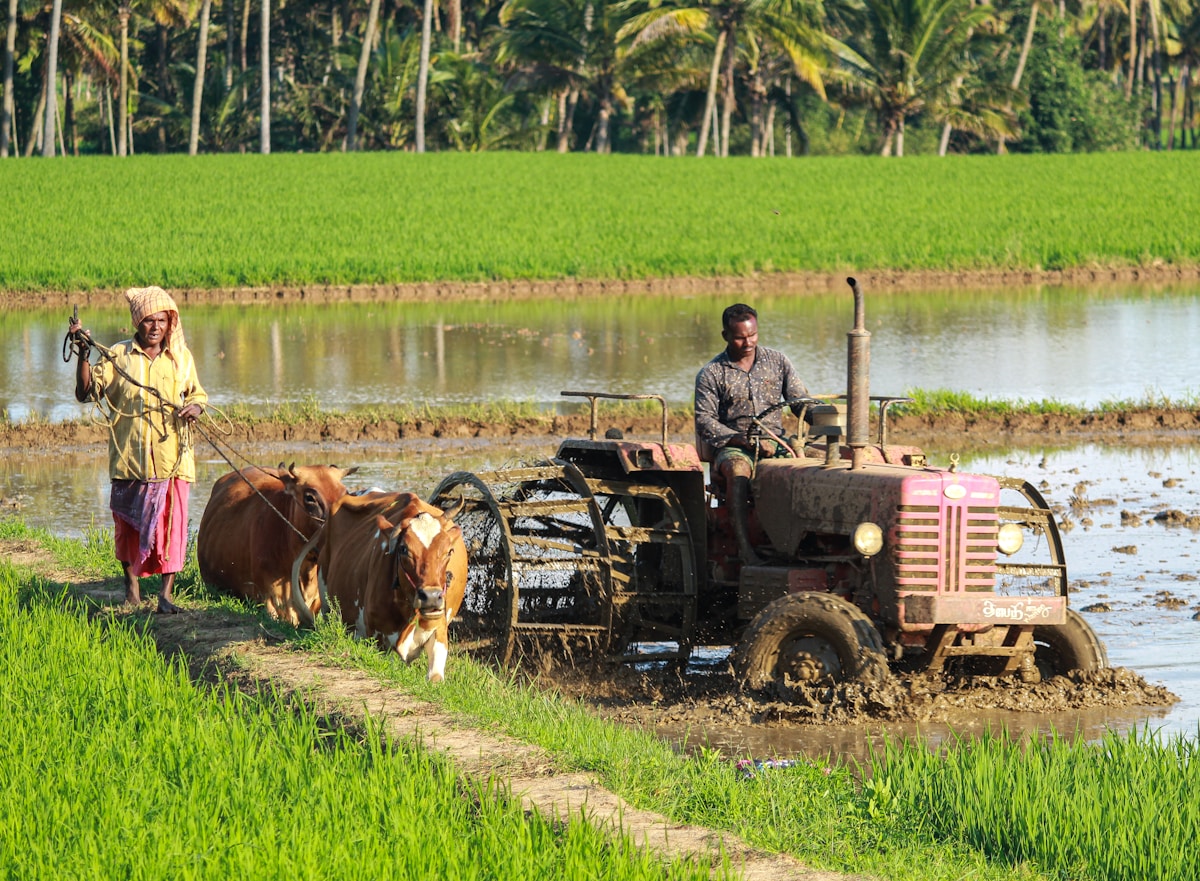
Argentina's agricultural heartland faces its perennial test: whether a commodity windfall will finance genuine economic transformation or merely postpone necessary reforms. The country's 2025/2026 harvest is projected to reach 160 million tons, a record that promises billions in desperately needed dollar revenues for an economy still reeling from crisis.
The bumper crop, detailed by La Nación, represents a fortune falling from the sky for President Javier Milei's administration. Favorable weather across the pampas, improved farming techniques, and expanded acreage combine to deliver what agricultural analysts call an exceptional production cycle for soybeans, wheat, and corn.
In Argentina, as across nations blessed and cursed by potential, the gap between what could be and what is defines the national psychology. The country's agricultural sector has repeatedly rescued Argentina from economic catastrophe, pouring export dollars into central bank reserves when urban mismanagement depleted them, only to watch those gains squandered through fiscal irresponsibility and currency manipulation.
The projected harvest translates to export revenues exceeding $50 billion, according to agricultural consultancies. For an economy struggling with less than $30 billion in central bank reserves and facing debt obligations, this injection arrives like rain after drought—welcome but insufficient without fundamental policy changes.
Milei's libertarian administration inherits this windfall at a crucial moment. His economic shock therapy has stabilized some indicators—monthly inflation declining from catastrophic to merely terrible, fiscal deficit narrowing through brutal spending cuts—but social costs mount. Poverty exceeds 40%, real wages have collapsed, and public tolerance for austerity depends partly on visible economic recovery.
The agricultural sector views Milei with cautious optimism. His reduction of export taxes on certain crops pleased farmers long frustrated by governments extracting rural wealth to finance urban clientelism. Yet significant levies remain, and the gap between official and parallel exchange rates still penalizes exporters forced to surrender dollars at artificial prices.
"The harvest solves nothing by itself," explained one agricultural economist. "What matters is whether these dollars strengthen reserves, finance productive investment, and build confidence—or get burned through subsidies and political spending as they were under Kirchnerism."
The comparison to previous commodity booms haunts Argentine economic debate. During the 2000s soy super-cycle, governments of Néstor Kirchner and Cristina Fernández used agricultural windfalls to finance expansive social programs while avoiding structural reforms. When commodity prices fell and export revenues declined, the accumulated distortions exploded into crisis.
Milei's ideological commitment to reduced government spending theoretically prevents repeating this pattern. His administration has slashed subsidies, cut public employment, and reduced transfers to provincial governments. Agricultural export revenues could accelerate lifting of capital controls and currency normalization without triggering the balance of payments crisis that typically accompanies such moves in Argentina.
Yet political economy complicates pure economics. Milei governs without a congressional majority, dependent on opposition cooperation for major reforms. Provincial governors, particularly from agricultural regions, demand infrastructure investment and support for their economies. The temptation to use commodity dollars for politically expedient spending rather than long-term transformation exists regardless of presidential ideology.
International grain markets provide additional uncertainty. Global wheat and corn prices have stabilized after volatility driven by the Ukraine war and climate disruptions, but remain vulnerable to Chinese demand fluctuations, Brazilian production expansion, and geopolitical shocks. Argentina's projected export bonanza assumes markets absorb this volume without price collapse—a reasonable but not guaranteed assumption.
The agricultural sector's relationship with the broader economy reflects Argentina's persistent distortions. Modern, efficient, globally competitive farming operations coexist with protected, subsidized industrial sectors unable to survive without tariff walls and state support. Agricultural dollars finance these inefficiencies, creating political coalitions defending the status quo.
Climate change adds another dimension. The pampas experienced exceptional rainfall timing this cycle, but droughts in recent years demonstrated vulnerability. Argentina's agricultural model depends on natural advantages that global warming could undermine, making reliance on commodity exports for economic salvation increasingly risky.
For Milei, the harvest represents both opportunity and trap. Opportunity because dollar inflows ease balance of payments constraints that have strangled previous reform attempts. Trap because abundant revenues might reduce urgency for deeper structural changes—tax reform, labor market flexibility, provincial fiscal discipline—that Argentina requires regardless of commodity prices.
The question Argentina has faced for decades, through multiple boom-bust cycles, remains unchanged: Can the country use temporary abundance to build permanent institutions, or will it once again consume the seed corn? Milei's rhetoric suggests understanding this challenge. Whether his government possesses the political skill and institutional strength to break the pattern is the test this harvest makes possible but does not guarantee.
In a country where rich natural resources have funded waste rather than development, where each generation watches potential squandered, the 160 million tons represent not salvation but another chance—a chance that Argentina has accepted and rejected, repeatedly, throughout its melancholy history of unrealized promise.