In 1980, the Chatham Island black robin was down to five birds. Of those five, only one was a breeding female. Her name was Old Blue, and every black robin alive today descends from her. It's one of the greatest conservation achievements in history, and most Australians have never heard of it.
Mate, there's a whole Pacific out here full of extraordinary stories that the world ignores. This is one of them - a story about how intensive conservation intervention, scientific innovation, and one remarkable bird pulled an entire species back from the very edge of extinction.
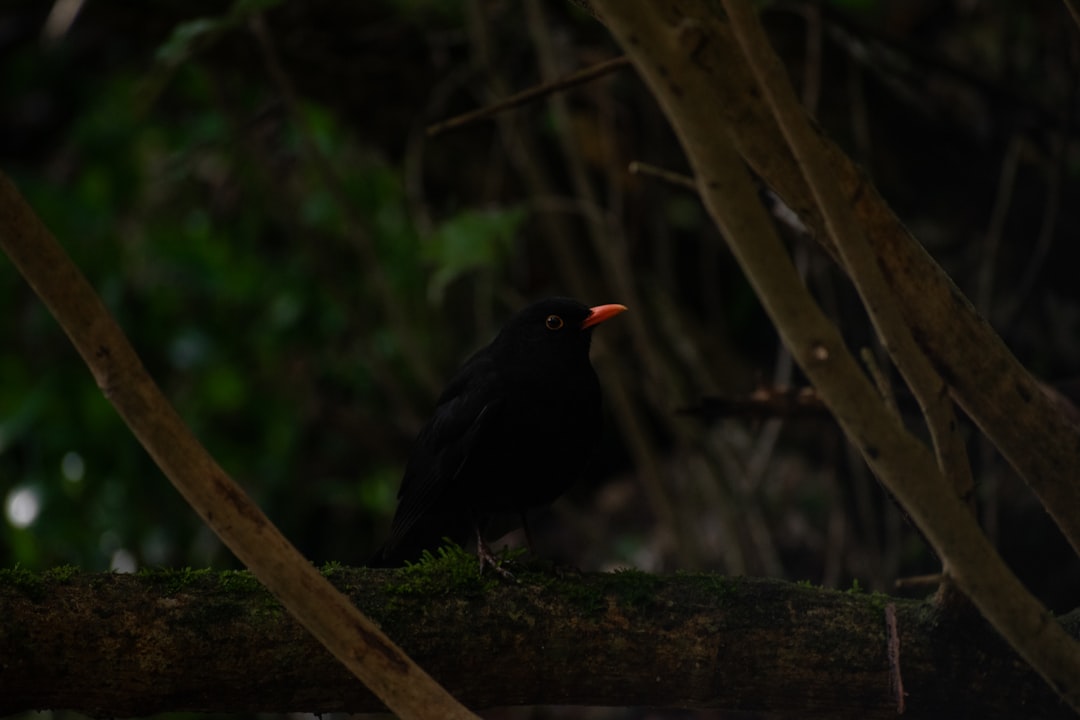
The Chatham Island black robin - kakruia in te reo - is a small passerine, around 25 grams, entirely black with dark eyes and a quiet, alert posture. It doesn't have the flash of some native birds. But what it has is a survival story that defies belief.
The edge of extinction
The black robin was once found across the main Chatham Island and several smaller islands of the Chatham group, hundreds of kilometers east of New Zealand's South Island. By 1871, introduced predators and habitat clearance had reduced it to Little Mangere Island - a small, steep, largely deforested stack where a remnant population clung on.
By 1976, the entire world population was down to seven birds. Seven. By 1979, it was five. And in 1980, after a field season that produced no successful breeding, conservation biologist Don Merton and his team counted the remaining birds and found that of the five survivors, only one was a breeding female.
Old Blue, named for her blue color band, was the last breeding female black robin alive on Earth. If she failed to breed successfully, the species would go extinct. The pressure on a single bird to carry the genetic future of her entire species is almost incomprehensible.
Cross-fostering innovation
What Merton and his team did next became a model for extreme conservation intervention worldwide. They used a technique called cross-fostering: removing Old Blue's eggs as soon as they were laid and placing them in the nests of Chatham Island tits, which acted as foster parents.
This triggered Old Blue to lay again. In a normal breeding season, a black robin pair produces one clutch. Through cross-fostering, Old Blue produced multiple clutches in a single season. Her eggs were incubated and hatched by tits while she immediately returned to breeding condition and laid again.
Old Blue kept laying. The foster parents kept raising her chicks. And slowly, impossibly, the population began to move.
By the time Old Blue died in 1983, at approximately nine years old - elderly for a small passerine - she had produced enough offspring to give the species a foothold. She didn't know she was the last. She didn't know she was being managed. She didn't know that researchers were watching her with the knowledge that if she failed, the species failed. She simply bred, season after season, doing what evolution had programmed her to do.
A fragile recovery
The population has grown from five birds in 1980 to over 300 today, spread across Rangatira and Mangere Islands, both now managed as predator-free sanctuaries. Three hundred birds, from one female. The recovery is considered one of the greatest achievements in conservation history and is studied internationally as a model for extreme case intervention.
Don Merton, who led the recovery, spent decades working on the black robin, the kakapo, the saddleback, and other species at the edge. He's one of the people New Zealand - and the world - should know by name. His work proved that even when a species is down to a handful of individuals, recovery is possible if you decide it's possible and commit to the intervention required.
But the black robin is still classified as endangered. Three hundred birds, on two islands, in a managed environment, with no unmanaged wild population anywhere. The window is being held open by people who have dedicated their careers to caring for these birds. That effort is ongoing and will need to remain ongoing for the foreseeable future.
The bird is not yet saved. It is being kept, carefully, by some incredible people.
Why this matters
This is a Pacific Islands conservation success story that deserves wider recognition, particularly in Australia where we face similar extinction crises with our own species. At a time when we're facing mass extinction globally, the black robin is proof that intensive intervention can work.
It's also a reminder that the Pacific matters beyond geopolitics and great power competition. These islands are home to unique species found nowhere else on Earth. The Chatham Islands are as much a part of the Pacific story as any security pact or port development.
As one commenter on the New Zealand subreddit noted in response to this story: "Old Blue was not the only bird in the recovery. There were males. There were tit foster parents. There were the researchers and the field staff and the people who built the predator fence and monitored the nests and made the decision to intervene rather than document the extinction."
That's exactly right. But Old Blue was the bird. Old Blue is the reason there are black robins today, and there is no account of this that does not come back to her.
Mate, there's a whole continent and a thousand islands down here full of species that exist nowhere else, and people doing extraordinary work to keep them alive. This is one of those stories - and it deserves to be told.