
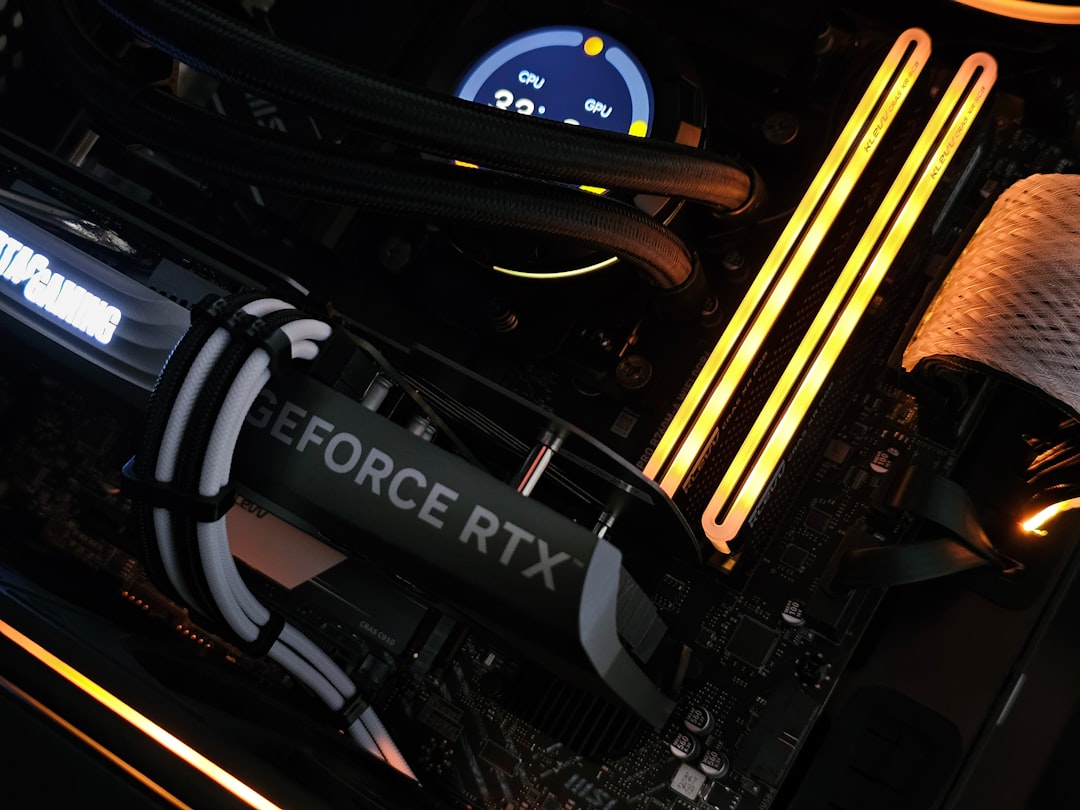
Nvidia closed at a record high Thursday, pushing its market capitalization past $5 trillion for the first time and cementing its position as one of the most valuable companies in human history.
The stock's surge marks the first time Nvidia has hit an all-time high since October 2025, when brief concerns about AI infrastructure oversupply triggered a sector-wide pullback. That proved short-lived. Demand for AI accelerators hasn't just continued—it's intensified.
At $5 trillion, Nvidia is now worth more than the entire economy of most G20 nations. To put this in historical context: it took Apple decades to reach $3 trillion. Nvidia added $2 trillion in market cap in less than 18 months, almost entirely driven by AI chip sales.
The company now represents approximately 7% of the S&P 500's total market capitalization, making it the third-largest weighting in the index behind only Microsoft and Apple. That concentration creates interesting portfolio dynamics: passive index investors are increasingly exposed to a single company's AI chip dominance.
The business fundamentals justify at least some of the valuation. Nvidia's data center revenue—primarily AI accelerators—grew 427% year-over-year in its most recent quarter. Gross margins exceed 75%, levels typically associated with software companies, not semiconductor manufacturers.
What makes Nvidia's position particularly defensible is the moat it's built through CUDA, its software platform. Companies don't just buy Nvidia chips—they build entire AI infrastructure stacks around Nvidia's ecosystem. Switching costs are enormous, measured in millions of engineering hours and billions in sunk capital.
Competitors including AMD, Intel, and various startups are trying to challenge that dominance. So far, they've made limited headway. Nvidia's market share in AI training chips remains above 90%, and its inference chip business is growing even faster than training.
The question investors face now: is this a rational valuation for a company that dominates the most important technology infrastructure buildout of the decade, or is it euphoria that will reverse the moment AI spending moderates?
History suggests both can be true. During the dot-com boom, Cisco briefly became the world's most valuable company as it supplied the picks and shovels of internet infrastructure. That valuation proved unsustainable, but Cisco's business fundamentals were real—it just took 15 years for earnings to catch up to the stock price.
Nvidia might face a similar trajectory. The AI infrastructure buildout is real. The demand is real. The margins are real. Whether the current valuation properly discounts future risks—competition, commoditization, cyclical capex slowdowns—is another question entirely.
For now, the market has spoken: Nvidia is a $5 trillion company, and anyone betting against AI infrastructure spending has been consistently wrong for two years running.