
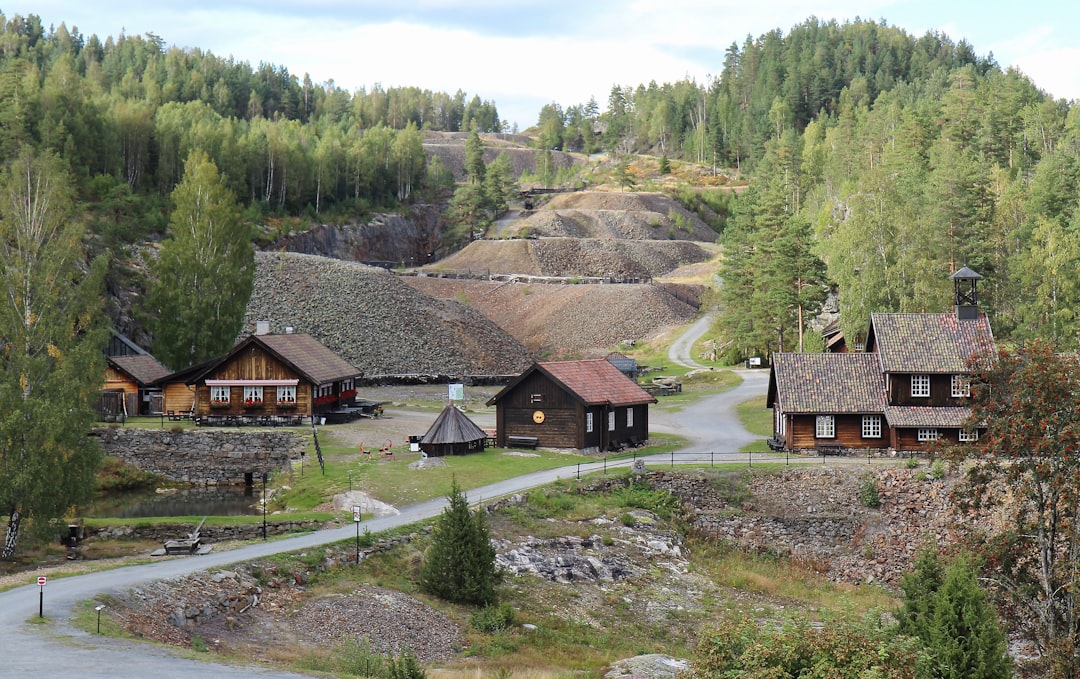
Rare Earths Norway announced Tuesday that its estimate of Europe's largest rare earth deposit has jumped 81%, a discovery that could reshape global supply chains for critical minerals that China currently dominates. This isn't just about rocks in the ground—it's about strategic independence for Western tech and defense industries.
The Norway-based company revised its resource estimate for the Fen Complex deposit upward dramatically, confirming what geologists suspected: Europe is sitting on a rare earth bonanza it didn't fully appreciate until now.
Rare earth elements are the unglamorous minerals that make modern technology possible. They're essential for electric vehicle motors, wind turbines, smartphones, precision-guided missiles, and F-35 fighter jets. Despite the name, they're not actually rare—but they're difficult and environmentally messy to process, which is why China controls roughly 70% of global production.
That monopoly has become a national security headache for the United States and Europe. When trade tensions flare or geopolitical conflicts emerge, China has the option to restrict exports of materials that are critical to Western defense and technology sectors. It's the ultimate supply chain vulnerability.
The Norway deposit changes that calculus—potentially. An 81% increase in estimated resources is massive, but there's a long road from geological estimates to actual production. Rare earth mining and processing requires significant capital investment, environmental permitting, and years of development.
Still, the strategic implications are clear. If Europe can develop domestic rare earth production at scale, it reduces dependence on China for materials that are essential to the green energy transition and defense modernization. That's worth the investment from a security standpoint alone.
The timing couldn't be better—or worse, depending on your perspective. Western governments are pouring billions into reshoring critical mineral supply chains as part of broader "de-risking" strategies with China. Europe has designated rare earths as strategic materials, and the U.S. has created tax incentives and loans for domestic production.
But China didn't build its rare earth dominance by accident. It invested heavily in processing infrastructure and was willing to accept environmental costs that Western countries won't tolerate. Even with new deposits, Western producers face a brutal cost disadvantage.
Rare Earths Norway will need to prove it can produce these materials economically and at scale. That means overcoming both technical challenges—rare earth processing is chemically complex—and economic ones. China can always undercut prices to make Western production unprofitable if it chooses.
The defense angle is what makes this more than just a mining story. The Pentagon and NATO have been sounding alarms for years about rare earth dependence on China. Precision munitions, stealth aircraft, and advanced radar systems all require these materials. A secure, allied source in Norway would be a game-changer for defense procurement.
The clean energy sector has similar concerns. The European Union's aggressive climate targets depend on massive deployment of wind turbines and electric vehicles—all of which require rare earth magnets. Relying on China for materials essential to European climate policy creates an uncomfortable dependency.
From an investment standpoint, this is high-risk, high-reward. If Rare Earths Norway can navigate the permitting, financing, and technical challenges to bring this deposit into production, it could capture premium pricing as governments prioritize supply security over cost. If it can't, this becomes another "world-class deposit" that never reaches commercial production.
The broader trend is clear: Western governments are willing to pay for strategic independence in critical materials. Whether that's enough to overcome China's cost advantages remains to be seen. But an 81% increase in Europe's largest deposit is a significant step toward answering that question.