Nigeria's electricity crisis remains one of the country's most persistent infrastructure failures, undermining economic competitiveness, draining household budgets, and symbolizing broader governance dysfunction.
"The mass is suffering," wrote one Nigerian in a social media comment about yet another power outage—a phrase capturing the daily frustration of over 200 million people living in Africa's largest economy with one of the continent's least reliable power grids.
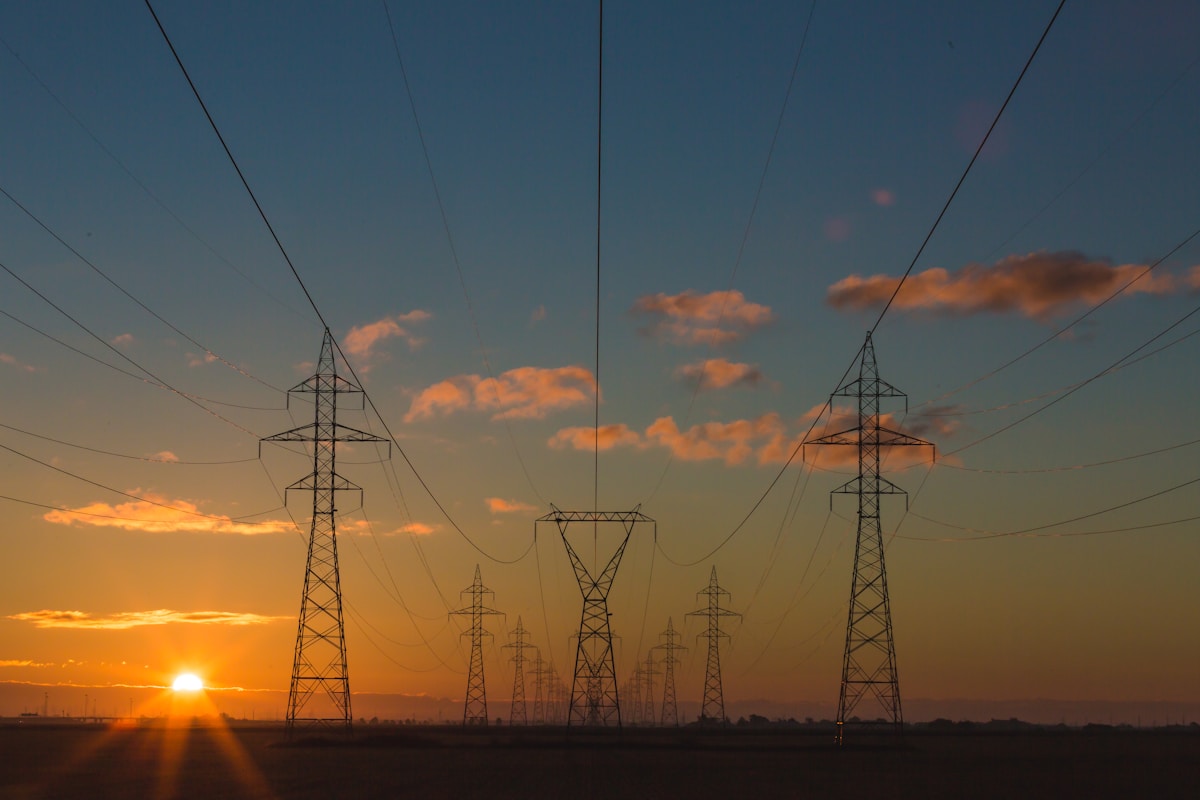
Nigeria's installed electricity generation capacity is approximately 12,500 megawatts, but actual production rarely exceeds 4,000-5,000 megawatts due to gas supply shortages, aging infrastructure, and grid transmission losses. For comparison, South Africa, with one-quarter of Nigeria's population, generates over 40,000 megawatts. The result is frequent blackouts affecting homes, businesses, hospitals, and schools across the country.
The economic costs are staggering. Nigerian businesses and households spend an estimated $14 billion annually on backup generators and diesel fuel, according to World Bank estimates. That's money diverted from productive investment, education, and healthcare into simply keeping lights on and equipment running.
For Nigeria's booming tech sector—home to unicorns like Flutterwave, Interswitch, and Andela—unreliable power means expensive data centers, backup systems, and higher operating costs that reduce competitiveness against global rivals. Manufacturing companies face similar challenges, with some reporting that electricity costs account for 30-40% of production expenses.
Households bear the burden through higher prices for goods and services, while those who cannot afford generators endure sweltering heat without fans, food spoilage without refrigeration, and children studying by candlelight.
The crisis has structural roots. Nigeria's power sector was privatized in 2013, with generation and distribution assets sold to private companies while transmission remained government-controlled. The reform was supposed to attract investment and improve service. Instead, it created a fragmented system where private generators cannot sell power efficiently because the state-owned transmission company cannot deliver it reliably, and distribution companies struggle to collect payments from customers who refuse to pay for inadequate service.
Debt has paralyzed the sector. Distribution companies owe generation companies billions of naira for power supplied but not paid for. Generation companies are owed by the government for gas subsidies never reimbursed. The Nigerian Electricity Regulatory Commission attempts to balance competing interests while the grid deteriorates.
Gas supply—Nigeria sits on Africa's largest natural gas reserves—should be abundant, but pipeline vandalism, inadequate infrastructure, and contractual disputes limit availability. The country that exports liquefied natural gas globally cannot reliably fuel its own power plants.
Solar and renewable energy offer alternatives. Nigeria's location near the equator provides abundant sunshine, and distributed solar systems could bypass the failing grid entirely. Yet adoption remains limited, hindered by high upfront costs, import duties on solar equipment, and lack of financing for households and small businesses.
In Nigeria, as across Africa's giants, challenges are real but entrepreneurial energy and cultural creativity drive progress. Nigerian tech companies have built globally competitive platforms despite unreliable electricity. Nollywood produces thousands of films annually, often powered by generators. Small businesses adapt, survive, and occasionally thrive.
But adaptation is not development. Every generator running is a visible reminder that Nigeria's government cannot deliver basic infrastructure. Every blackout reinforces cynicism about whether political leaders—who live in well-lit compounds with stable power—care about ordinary citizens.
The power crisis connects to everything: economic growth constrained by energy poverty, businesses relocating to countries with reliable grids, environmental damage from millions of diesel generators, and the daily indignity of living in a resource-rich nation that cannot keep the lights on.
As long as "the mass is suffering" through darkness, Nigeria's potential remains, quite literally, unrealized.