
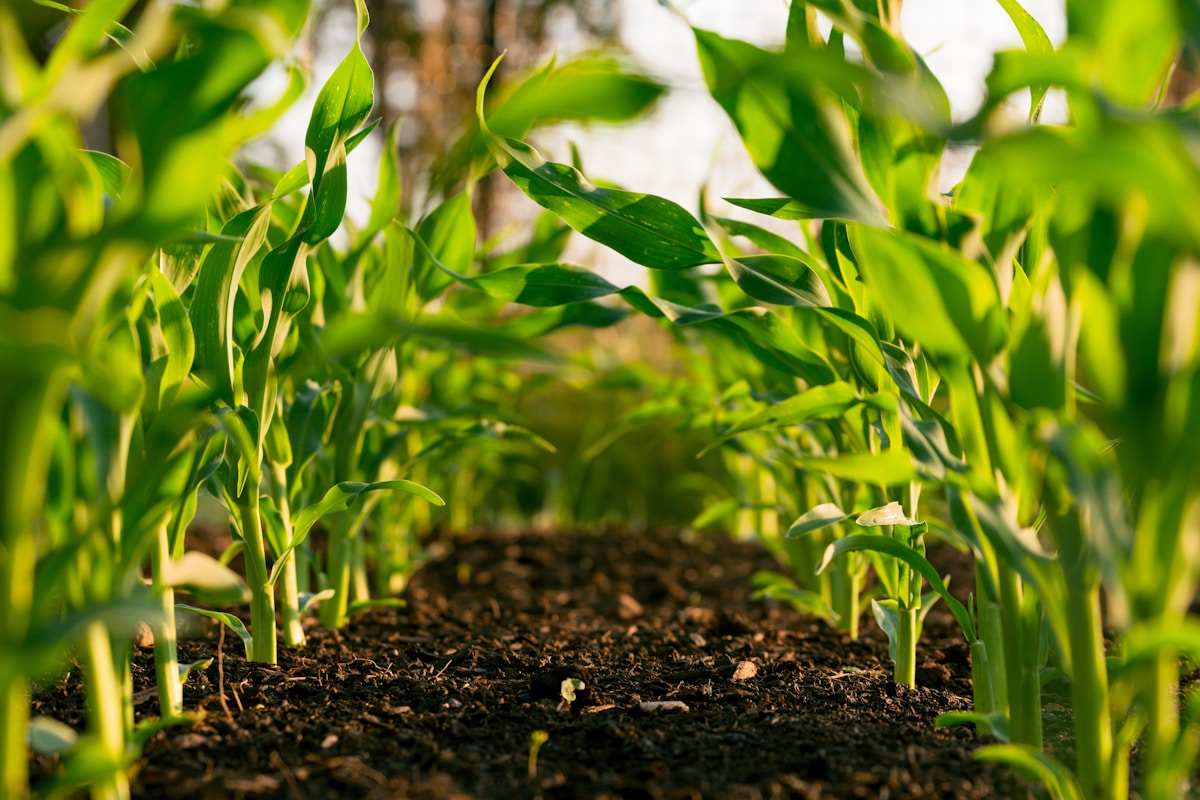
Nigeria possesses 50 million hectares of unused arable land—an agricultural resource that economists say could generate $500 billion in non-oil exports and fundamentally reshape Africa's most populous nation.
The figures, circulating among policy advocates and development economists, highlight Nigeria's persistent paradox: a country rich in natural resources yet struggling with widespread poverty and economic vulnerability. With crude oil revenues declining and millions living below the poverty line, the unused farmland represents an opportunity economists describe as transformative—if Nigeria can overcome the structural barriers that have kept the land idle.
"We have over 50 million hectares of land that is not being used for farming," wrote one development analyst in a detailed proposal gaining traction on Nigerian forums. "Imagine if we split that land to grow things like palm oil, cocoa, cotton, and fruits—but not just to sell the raw crops abroad. Instead, we should process them right here in Nigeria."
The vision is ambitious: industrial-scale cultivation of cash crops including palm oil, cocoa, cotton, and tropical fruits, coupled with domestic processing facilities that would produce finished goods—cooking oil, chocolate, textiles, juices—for export markets. Combined with investments in renewable energy to reduce production costs, proponents argue Nigeria could build a diversified export economy that would strengthen the naira and reduce dependence on volatile oil markets.
But the critical question isn't whether the opportunity exists—it's why this land sits unused in the first place.
Land tenure systems remain a major obstacle. Much of Nigeria's agricultural land is held under customary ownership with unclear titles, making large-scale investment risky. Investors—both domestic and foreign—hesitate to commit capital without secure property rights. The Land Use Act of 1978, which vests all land in state governors, has created a bureaucratic maze that discourages rather than facilitates agricultural development.
Infrastructure deficits compound the problem. Nigeria's road networks are inadequate for transporting crops from rural areas to processing facilities and ports. The country's chronic power crisis—with frequent outages and minimal grid reliability—makes industrial processing expensive and unpredictable. Without dependable electricity and transportation, the cost advantages of domestic production evaporate.
Political will presents another barrier. Agriculture accounts for roughly 25% of Nigeria's GDP and employs over 35% of the workforce, yet government investment in the sector remains modest compared to oil and gas. Subsidy programs have been inconsistent, credit access for farmers is limited, and extension services that provide technical support to rural cultivators are underfunded.
Comparative examples show what's possible. Vietnam transformed from a rice importer to the world's second-largest rice exporter within two decades through land reform, infrastructure investment, and agricultural extension programs. Brazil turned vast tracts of previously unused cerrado savanna into one of the world's most productive agricultural regions, becoming a dominant exporter of soybeans, coffee, and sugar.
Nigeria attempted similar reforms under various administrations. The Agricultural Transformation Agenda (2011-2015) sought to boost production through improved seeds, fertilizer distribution, and market linkages. Results were mixed—rice and cassava production increased, but systemic challenges persisted. Corruption diverted resources, land access remained problematic, and infrastructure gaps limited scalability.
Economists say the $500 billion export projection is achievable—but only with comprehensive reform. That means modernizing land tenure systems to provide secure titles, building rural road networks and cold storage facilities, investing in reliable power generation (solar, hydro, and gas), and providing affordable credit to agribusinesses and smallholder farmers.
In Nigeria, as across Africa's giants, challenges are real but entrepreneurial energy and cultural creativity drive progress. The unused farmland represents not just an economic opportunity but a test of whether Nigeria can move beyond oil dependence to build a diversified, resilient economy.
Ngozi Okonjo-Iweala, Nigeria's former finance minister now leading the World Trade Organization, has long argued that Africa must add value to raw materials rather than simply exporting them. Nigeria's 50 million hectares offer a chance to prove that model at scale.
The question is whether political leadership will match the ambition with action—or whether this vast resource will remain, as it has for decades, an untapped promise.