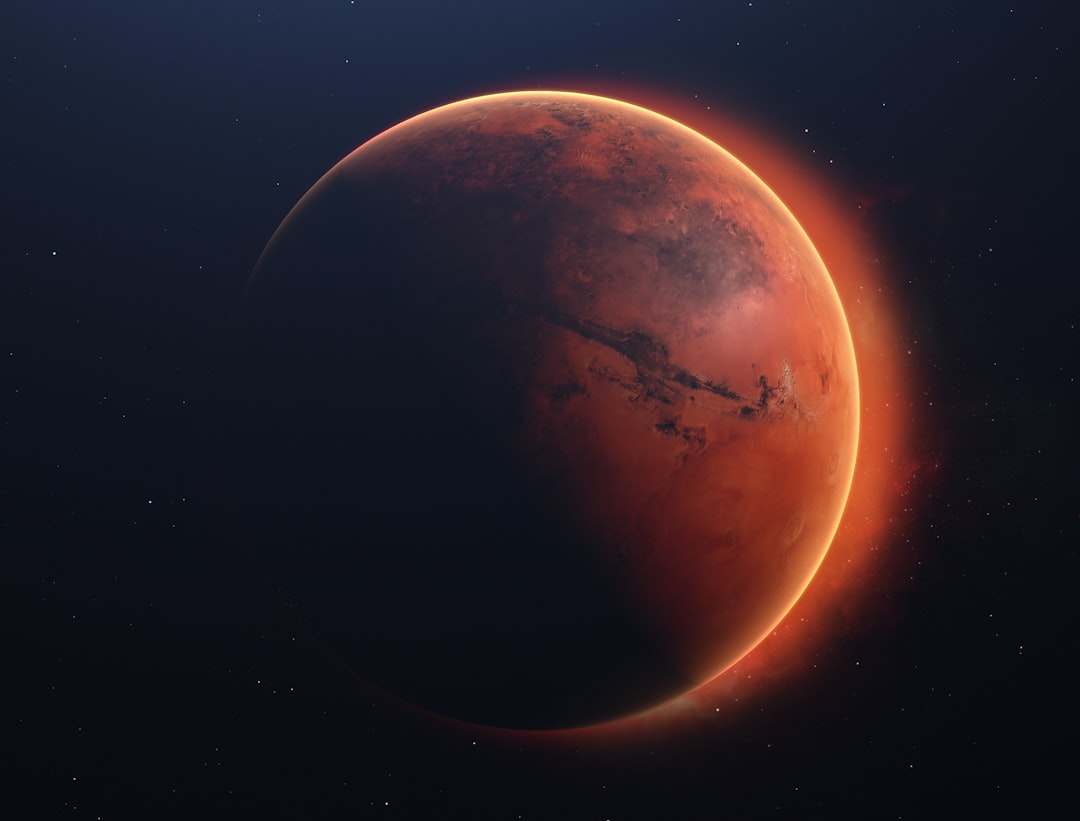

NASA's Psyche spacecraft executed a precision gravity-assist maneuver past Mars on Friday, racing past the Red Planet at 12,333 mph as it continues a six-year journey to explore one of the solar system's most enigmatic objects—a rare metal asteroid that may hold answers to planetary formation itself.
The spacecraft passed within 2,800 miles of Mars, roughly the distance between the U.S. east and west coasts, using the planet's gravity to gain momentum while simultaneously conducting a crucial dress rehearsal for its 2029 arrival at asteroid 16 Psyche. During the flyby, mission controllers activated all science instruments, capturing thousands of photographs to calibrate cameras and sensors against observations from NASA's Mars rovers and orbiting spacecraft.
"We'll get just plain beautiful photos," said Jim Bell, imaging team leader at Arizona State University, describing the comparative data that will help validate instrument performance before the main event.
The target asteroid represents something extraordinary in planetary science: an exposed planetary core. The potato-shaped object, measuring approximately 173 miles long and 144 miles wide, is believed to be the nickel and iron heart of a failed planet, stripped bare by cosmic collisions billions of years ago. If confirmed, 16 Psyche offers scientists a rare window into planetary interiors normally hidden beneath rocky mantles—including Earth's own iron core, buried 1,800 miles beneath our feet.
"This is essentially looking at the guts of a planet that never quite made it," mission scientists explain. The asteroid could reveal critical information about solar system formation 4.6 billion years ago, when colliding planetesimals were assembling into the worlds we know today. Some planetesimals formed cores and grew into planets; others, like the presumed parent body of 16 Psyche, were destroyed before they could complete the journey.
The van-sized spacecraft, launched in 2023, relies on solar electric propulsion powered by xenon gas thrusters—a technology enabling the precise maneuvers required for deep space exploration. After the Mars encounter, Psyche will continue its outward journey, arriving at the asteroid belt in 2029 for a two-year orbital investigation.
The mission exemplifies NASA's shift toward targets that challenge conventional planetary categories. Unlike typical asteroids composed of rock and ice, 16 Psyche may be up to 95% metal, offering insights not only into planetary differentiation but also into the violent collisions that shaped the early solar system. The asteroid's composition makes it a natural laboratory for understanding processes that occurred during the first 10 million years after the solar system's birth.
In space exploration, as across technological frontiers, engineering constraints meet human ambition—and occasionally, we achieve the impossible. The Psyche mission represents NASA's commitment to answering fundamental questions about planetary evolution, using a gravity assist from one planet to reach the exposed core of another that never fully formed.
When Psyche enters orbit in 2029, it will spend two years mapping the asteroid's surface, analyzing its composition, and measuring its magnetic field—searching for evidence of an ancient dynamo that once powered this fragment of planetary history. The mission's findings could rewrite our understanding of how rocky planets like Earth, Mars, Venus, and Mercury formed their metal cores and evolved into the diverse worlds we observe today.