
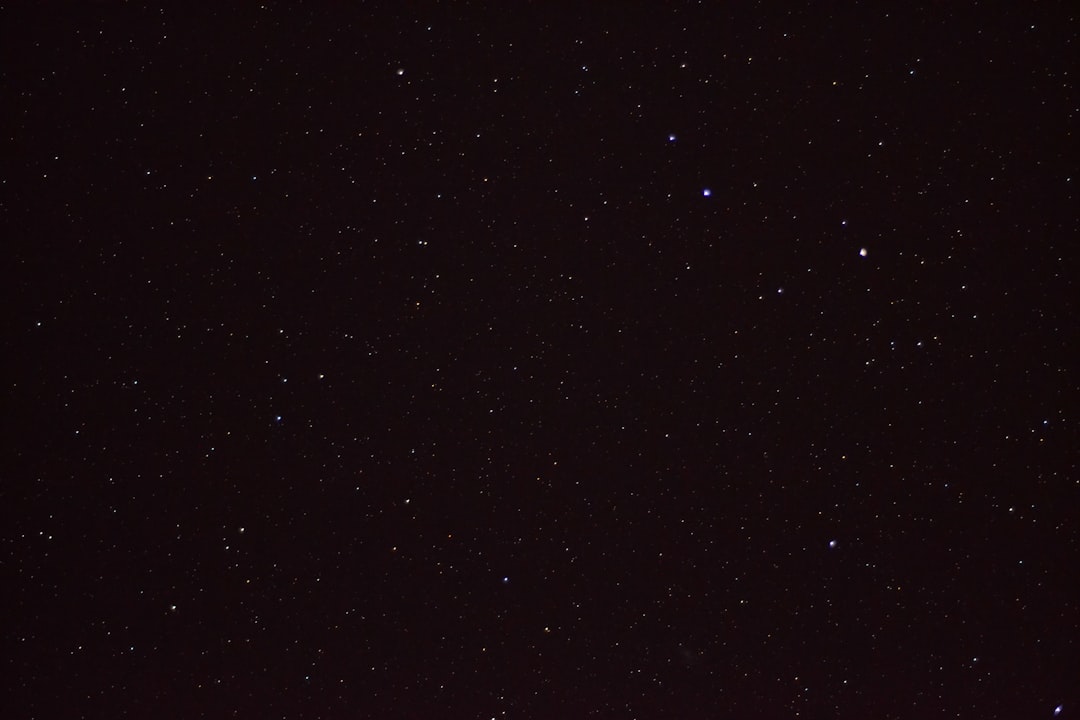
When the James Webb Space Telescope began beaming back its first deep-field images in late 2022, astronomers noticed something odd scattered across the cosmic background: countless tiny red specks where nothing should exist.
They call them "Little Red Dots," or LRDs for short. And according to Fabio Pacucci, a Harvard-Smithsonian astrophysicist, they've become "quite unexpectedly, the hottest topics in astrophysics."
Here's why: these objects appear in the universe's first billion years—between roughly 600 million and 1.5 billion years after the Big Bang. According to our current cosmological models, they appear too large and mature for that epoch. They shouldn't exist. But there they are.
Their intense red color comes partly from cosmological redshift—light stretched by the universe's expansion during its 13-billion-year journey to our telescopes. But there's also something intrinsically red about these objects, and that's where the debate gets interesting.
Hubble couldn't see them. JWST's superior infrared detection capabilities made the invisible visible, revealing a population of objects that challenge our understanding of how the early universe assembled itself.
Three main theories are battling it out:
Theory 1: Supermassive Primordial Stars Harvard-Smithsonian researchers proposed in January 2026 that LRDs might be gigantic, short-lived stellar objects—massive stars without heavy elements ("metals" in astronomer-speak) that could only form in the universe's pristine early conditions. These behemoths would burn incredibly hot and die young, potentially explaining the unusual properties.
Theory 2: Direct Collapse Black Holes Instead of forming through stellar death, some black holes might have formed directly from collapsing gas clouds in the early universe. We're talking objects 100,000 to 1 million times the sun's mass, appearing when the cosmos was still in its infancy.
Theory 3: Rapidly Accreting Black Holes Perhaps these are supermassive black holes in an early, extremely active feeding phase—gorging on surrounding matter at rates we rarely observe today.
The stakes here are bigger than just classifying mysterious dots. If LRDs host rapidly accreting black holes, it addresses one of cosmology's fundamental chicken-or-egg questions: