
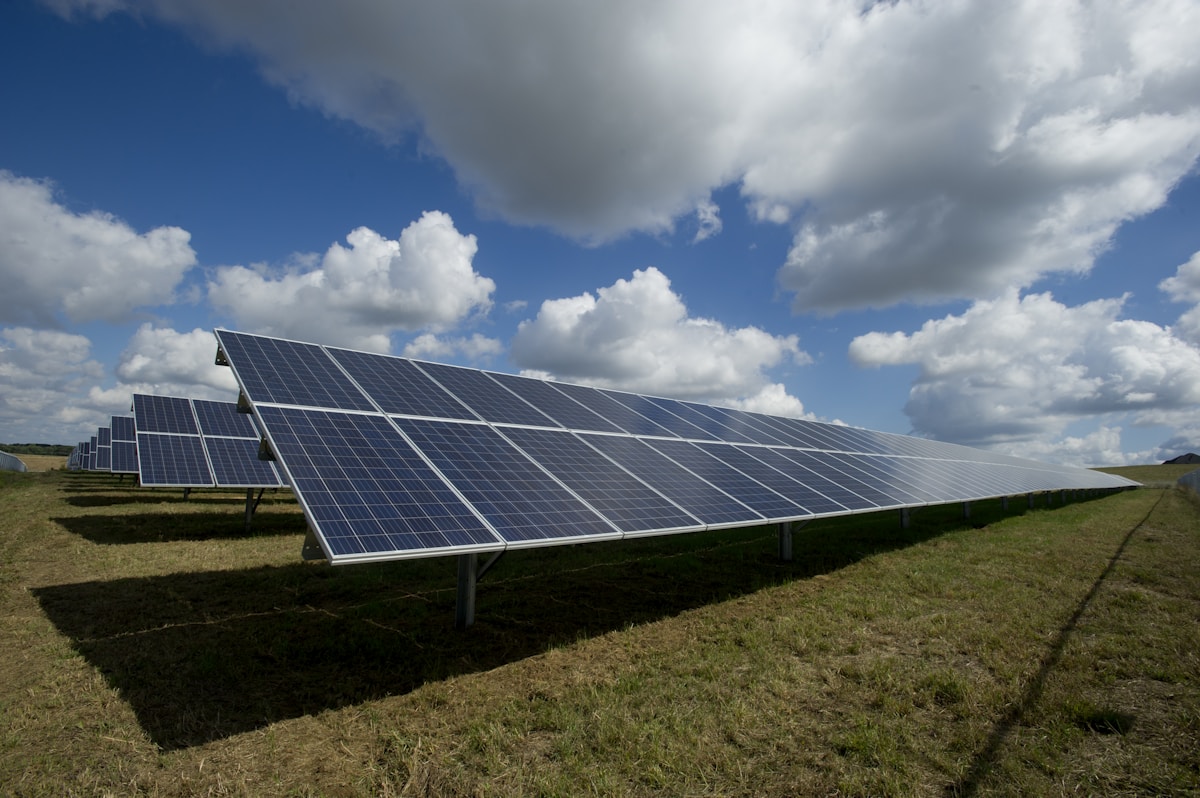
India has emerged as a global solar manufacturing powerhouse, with production capacity reaching 210 gigawatts in 2025—a scale that positions the nation as a serious challenger to China's dominance in renewable energy technology and offers a developing-world model for climate leadership.The capacity expansion, reported by industry analysts, represents quintupling production in just four years, driven by government incentives, import tariffs on Chinese modules, and growing domestic demand for clean energy.The 210 GW manufacturing capacity could theoretically produce enough solar panels annually to power hundreds of millions of homes, though actual production rates and deployment lag behind maximum capacity. Nevertheless, the industrial base positions India as both a major domestic installer and potential exporter competing with China's previously unchallenged market dominance."This is developing world climate leadership in action," said Dr. Ajay Mathur, director general of the International Solar Alliance. "India is demonstrating that the Global South can manufacture, innovate, and deploy renewable technology at scale—not just consume solutions designed elsewhere."The expansion addresses long-standing concerns about China's near-monopoly on solar panel supply chains. Chinese manufacturers controlled approximately 80% of global solar production as recently as 2023, raising supply security concerns for countries pursuing renewable transitions.India's manufacturing growth has been accelerated by the Production Linked Incentive scheme, which provides financial support for domestic manufacturers meeting production targets. The policy attracted both domestic conglomerates and international firms establishing facilities.However, capacity and deployment represent distinct metrics. 's actual solar installations totaled approximately through 2025, with ambitious targets of . Manufacturing capacity outpacing domestic deployment opens export opportunities but also raises questions about whether production will find sufficient markets.In climate policy, as across environmental challenges, urgency must meet solutions—science demands action, but despair achieves nothing. 's manufacturing scale-up demonstrates that technological and industrial capacity for renewable transitions exists, though translating production into actual emissions reductions remains the critical challenge.The solar manufacturing boom has generated substantial employment, with estimates of across production, installation, and maintenance sectors. This employment growth addresses concerns that renewable transitions might disadvantage workers in fossil fuel industries.Geopolitical implications extend beyond climate. positions itself as a reliable supply chain partner for nations seeking to diversify away from dependence, particularly following and trade tensions with .Challenges remain, including input material dependencies—particularly polysilicon, where retains dominance—and technology transfers for the most advanced high-efficiency modules. manufacturers focus on established technologies while firms lead cutting-edge development in perovskite and tandem cell designs.Environmental groups emphasize that manufacturing capacity alone does not guarantee climate progress. , climate campaigner with , noted that remains heavily dependent on coal for electricity generation, with new coal plants still under construction despite renewable growth. The nation faces the complex challenge of expanding energy access for hundreds of millions while transitioning toward clean sources.Solar manufacturing also raises questions about global value distribution. If manufactures panels primarily for wealthy nation deployment, value accrues to importers while bears industrial impacts. Ensuring manufacturing translates to domestic clean energy access remains politically and economically essential.The , headquartered in , advocates for to leverage manufacturing capacity to support solar deployment across and , potentially through concessional financing that competes with Belt and Road infrastructure lending.Technology transfer and skills development constitute additional opportunities. technical institutes are expanding renewable energy engineering programs, creating expertise that could support regional transitions across the Global South.
|