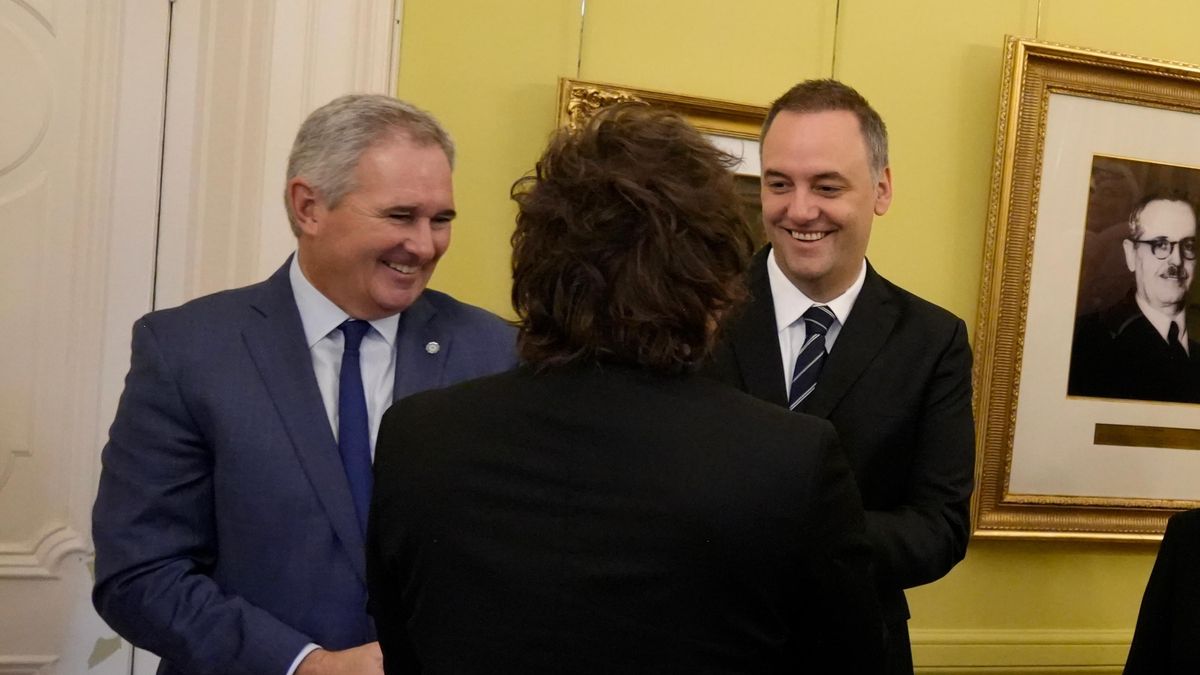
Argentina's presidential spokesman Manuel Adorni faces an illicit enrichment investigation after financial records revealed monthly expenses of $20,000 that vastly exceed his official government salary.
The probe, reported by El Diario AR, centers on bank records showing Adorni spending approximately 20 million pesos monthly—roughly equivalent to $20,000 at current exchange rates—while his official salary as presidential spokesman stands at just 7 million pesos. The discrepancy has triggered questions about whether the spokesperson is engaged in money laundering or undeclared income that contradicts President Javier Milei's anti-corruption platform.
Investigators identified a pattern of cryptocurrency transactions and unexplained deposits that coincided with Adorni's meteoric rise within Milei's administration. The spokesman, who became one of the government's most visible faces after Milei's election in 2023, has given no public explanation for how he affords expenses nearly three times his official income.
In Argentina, as across nations blessed and cursed by potential, the gap between what could be and what is defines the national psychology. For a president who campaigned on draining the swamp and eliminating corruption from Buenos Aires politics, Adorni's financial opacity represents a direct test of those principles.
La Nación reported that Adorni has been under financial scrutiny for two months, describing him as "the man to whom everything was given at once." The newspaper's investigation traced Adorni's spending patterns to luxury purchases and high-end lifestyle choices inconsistent with public sector compensation.
Opposition politicians seized on the revelations to challenge Milei's credibility on corruption issues. Peronist lawmakers called for Adorni's immediate suspension pending a full accounting of his finances, while even some libertarian allies privately expressed concern about the political damage.
The cryptocurrency angle adds particular complexity to Argentine financial investigations. The country's chronic inflation and currency controls have made digital assets increasingly popular for both legitimate savings and illicit transfers. Prosecutors are examining whether Adorni used cryptocurrency platforms to obscure the origins of unexplained income.
Whether Milei stands by his spokesman or distances himself from the scandal will signal how seriously the administration takes its own anti-corruption rhetoric. In a country where politicians have historically protected their own, the test is whether this government proves different—or simply another iteration of Argentina's familiar pattern of promising reform while practicing the old politics.
The investigation continues as financial authorities demand detailed explanations for the discrepancy between Adorni's official income and actual expenditures. For a government that promised transparency and accountability, the spokesman's financial opacity represents an early crisis of credibility.