
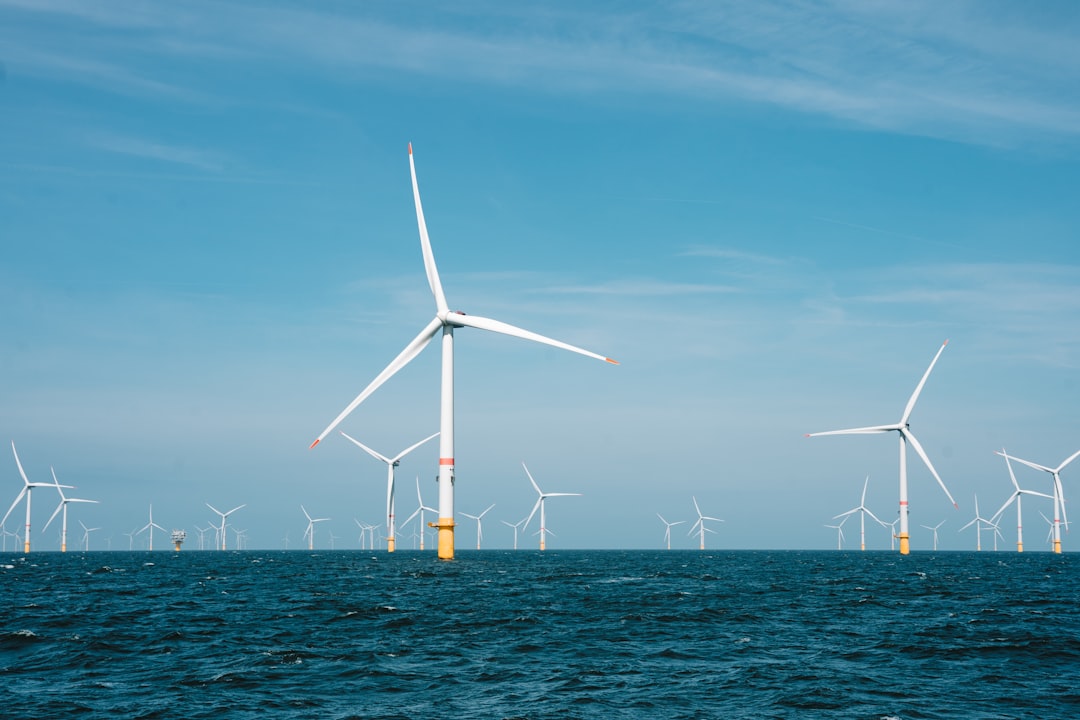
Massachusetts locked in offshore wind power at prices $1.4 billion lower than previous contracts, marking a dramatic reversal in renewable energy economics that challenges persistent narratives about climate action's cost.
The renegotiated agreements with two major offshore wind projects—Commonwealth Wind and SouthCoast Wind—reflect rapidly improving wind turbine technology, supply chain stabilization, and growing developer competition that have driven costs downward after pandemic-era inflation temporarily reversed decade-long price declines.
Rebecca Tepper, Massachusetts Energy Secretary, called the new contracts "proof that clean energy is now the economically rational choice, not just the environmentally responsible one." The deals will deliver 2,678 megawatts of offshore wind capacity—enough to power approximately 1.4 million homes—at prices averaging $0.089 per kilowatt-hour, compared to $0.124 in the original 2022 contracts.
The savings demonstrate how renewable energy has shifted from cost burden to cost advantage, particularly as fossil fuel price volatility continues creating budgetary uncertainty for utility customers. Massachusetts ratepayers will see the $1.4 billion savings reflected in electricity bills over the 20-year contract period, with estimated reductions of $3-5 monthly for average households.
Offshore wind faced significant headwinds in 2023-2024 as inflation, supply chain disruptions, and rising interest rates forced developers to cancel or renegotiate contracts across the Northeast. Several major projects sought price increases or threatened withdrawal, creating doubts about the industry's viability. The Massachusetts renegotiations occurred against this turbulent backdrop, making the price reductions particularly striking.
In climate policy, as across environmental challenges, urgency must meet solutions—science demands action, but despair achieves nothing. The offshore wind turnaround shows that clean energy economics can improve rapidly when policy certainty, technological innovation, and market competition align, even after temporary setbacks.
The cost declines reflect several converging factors: larger, more efficient turbine models that generate more power per installation; improved installation vessels that reduce construction time; and competition among developers eager to establish market position in the growing U.S. offshore wind sector. Federal Investment Tax Credits from the Inflation Reduction Act also improved project economics, allowing developers to accept lower power purchase prices.
Avangrid, developer of Commonwealth Wind, emphasized that the project will use 15-megawatt turbines—among the world's largest—that were unavailable when original contracts were signed. These advanced turbines require fewer installations to generate the same power, reducing construction costs and environmental impact while improving efficiency.
The Massachusetts agreements include provisions requiring union labor for construction and operations, creating an estimated 10,000 jobs during the build phase and 1,200 permanent positions. This labor commitment addresses longstanding concerns about ensuring climate transition benefits reach working-class communities rather than concentrating gains among investors and technology companies.
Environmental reviews for both projects received federal approval after comprehensive assessments of impacts on marine ecosystems, fishing industries, and endangered species including North Atlantic right whales. The developers committed to seasonal construction restrictions during whale migration periods and established a $20 million fund for fishing industry support and marine research.
The offshore wind sector's maturation positions Massachusetts as a clean energy leader while demonstrating scalable solutions for coastal states seeking to decarbonize electricity grids. The state's offshore wind capacity, once fully operational by 2030, will generate approximately 25% of Massachusetts electricity demand, substantially reducing reliance on natural gas that currently dominates regional power generation.
Cost reductions carry implications beyond Massachusetts, potentially accelerating offshore wind adoption across New York, New Jersey, Connecticut, and Rhode Island—states with aggressive renewable targets but concerns about ratepayer impacts. The Massachusetts model demonstrates that climate commitments and economic prudence need not conflict.
Analysts note that offshore wind's improving economics coincide with growing electricity demand from electric vehicle adoption, data center expansion, and building electrification. Meeting this demand with renewable sources rather than new fossil fuel infrastructure becomes increasingly viable as clean energy costs decline, potentially avoiding decades of carbon lock-in from conventional power plant construction.
The contracts include escalator clauses allowing small annual price increases indexed to inflation, while also requiring performance guarantees ensuring projects deliver promised power generation. This balanced risk allocation protects ratepayers from cost overruns while providing developers sufficient certainty to secure project financing.
Challenges remain: offshore wind requires substantial transmission infrastructure to connect ocean-based turbines to onshore grids, with Massachusetts investing $2 billion in undersea cables and substation upgrades. These infrastructure costs, though significant, spread across multiple projects and decades of operation, compare favorably to the environmental and health costs of continued fossil fuel dependence.
The Massachusetts offshore wind agreements arrive as global renewable energy capacity surpasses fossil fuel additions for the first time, according to the International Energy Agency. This milestone reflects not altruism but economics: in most markets, building new solar and wind costs less than continuing to operate existing coal and gas plants, fundamentally altering energy investment calculus.
For climate advocates who spent decades arguing that environmental protection required economic sacrifice, the Massachusetts deals represent vindication and challenge—vindication that clean technology could reach cost parity with fossil fuels, and challenge to accelerate deployment now that economic barriers have largely dissolved.
Whether offshore wind's Massachusetts success catalyzes broader adoption depends on factors beyond economics: permitting efficiency, transmission planning, workforce development, and political will to prioritize long-term climate stability over short-term status quo preservation. The technology and economics now favor transition; the question is whether policy and public support will seize the opportunity.