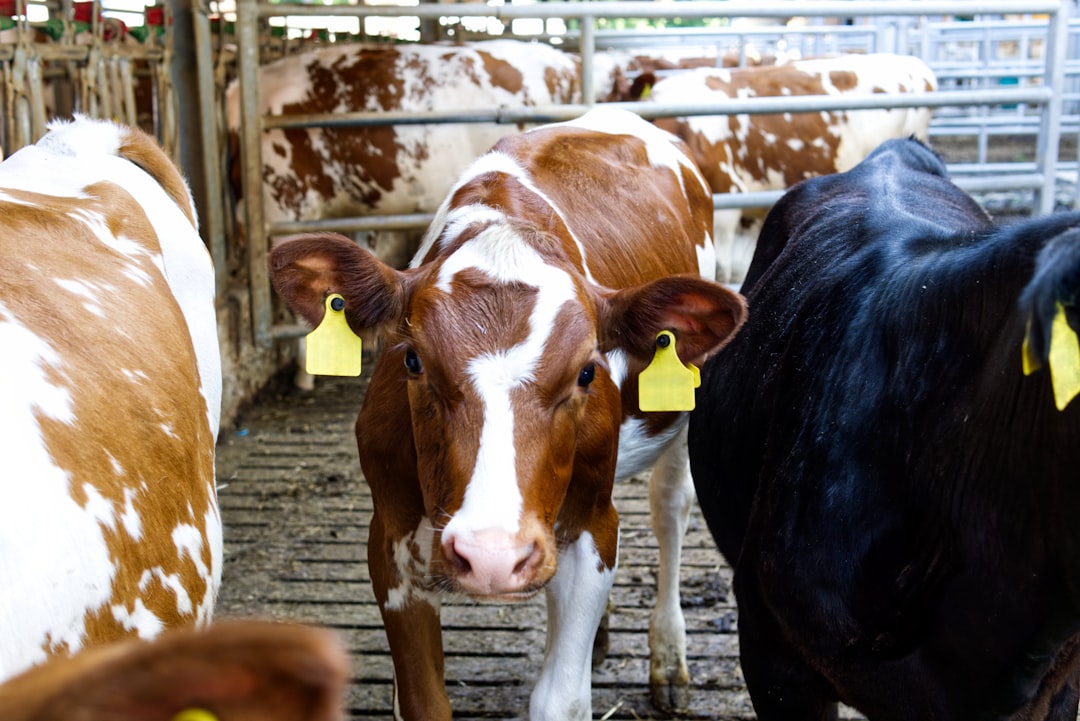
Inside the stomach of a cow, there's a microscopic universe. Bacteria, archaea, protozoa, and fungi all work together to break down plant material that would otherwise be indigestible. This microbial ecosystem is why cows can eat grass and turn it into milk and muscle. It's also why cows burp approximately 220 pounds of methane per year.
Now, researchers have discovered a previously unknown cellular structure within this ecosystem—one that appears to play a central role in methane production. They're calling it the "hydrogenobody," and it may offer a new target for reducing agricultural greenhouse gas emissions.
Jie Xiong, a professor at the Institute of Hydrobiology at the Chinese Academy of Sciences, led the research published in the journal Science. The team analyzed hundreds of genomes from rumen ciliates—single-celled organisms that live in cattle stomachs. Using detailed microscopic imaging and direct methane measurements from dairy cattle, they identified these hydrogen-producing structures within the ciliates.
Here's what hydrogenobodies do. They remove oxygen from the rumen environment and produce hydrogen gas. Other microbes—specifically methanogenic archaea—then use that hydrogen to produce methane. It's a two-step process, and the hydrogenobody is the first step.
The correlation is striking. Rumen ciliates with more hydrogenobodies produced more hydrogen. And cattle harboring these hydrogen-rich ciliates produced more methane. The pathway is direct and measurable.
Why does this matter? Livestock production accounts for nearly 15% of global greenhouse gas emissions, and methane from ruminant animals is a significant contributor. Methane is a far more potent greenhouse gas than carbon dioxide over short timescales—roughly 80 times more warming potential over 20 years. Reducing methane emissions from cattle could have an outsized climate impact.
Previous approaches to reducing cattle methane have included dietary supplements, vaccines targeting methanogenic archaea, and selective breeding for low-emission animals. Results have been mixed. The hydrogenobody discovery offers a new angle: target the hydrogen production that fuels methane synthesis, rather than the methane-producing microbes themselves.
Now, the practical challenges are considerable. You can't exactly remove cellular structures from microbes living inside millions of cattle worldwide. But understanding the genes that produce hydrogenobodies—and the mechanisms that regulate their activity—could inform breeding programs, feed additives, or even microbial interventions that reduce hydrogen availability in the rumen.
What's elegant about this research is how it combines basic cell biology with applied climate science. The team wasn't looking for a climate solution—they were mapping the structure and function of rumen ciliates because that's fundamental biology worth understanding. The climate application emerged from the discovery, not the other way around.
It's also a reminder of how little we still know about microbial ecosystems, even ones we've been studying for decades. The rumen has been examined intensively for over a century—it's economically important, scientifically accessible, and relatively easy to sample. Yet researchers are still discovering new cellular structures and metabolic pathways.
There's a long road from discovery to deployment. The Chinese Academy of Sciences team has identified the structure and demonstrated its role in methane production. Now comes the hard part: figuring out how to manipulate it at scale, in living animals, without disrupting the beneficial digestive functions of the rumen microbiome.
But that's how science works. First you discover what's true. Then you figure out what to do about it. And what's true here is that deep inside the stomachs of cattle, a previously unknown cellular structure is helping drive one of agriculture's most significant climate challenges.
The universe doesn't care what we believe. Let's find out what's actually true—and use that knowledge to build a more sustainable food system.