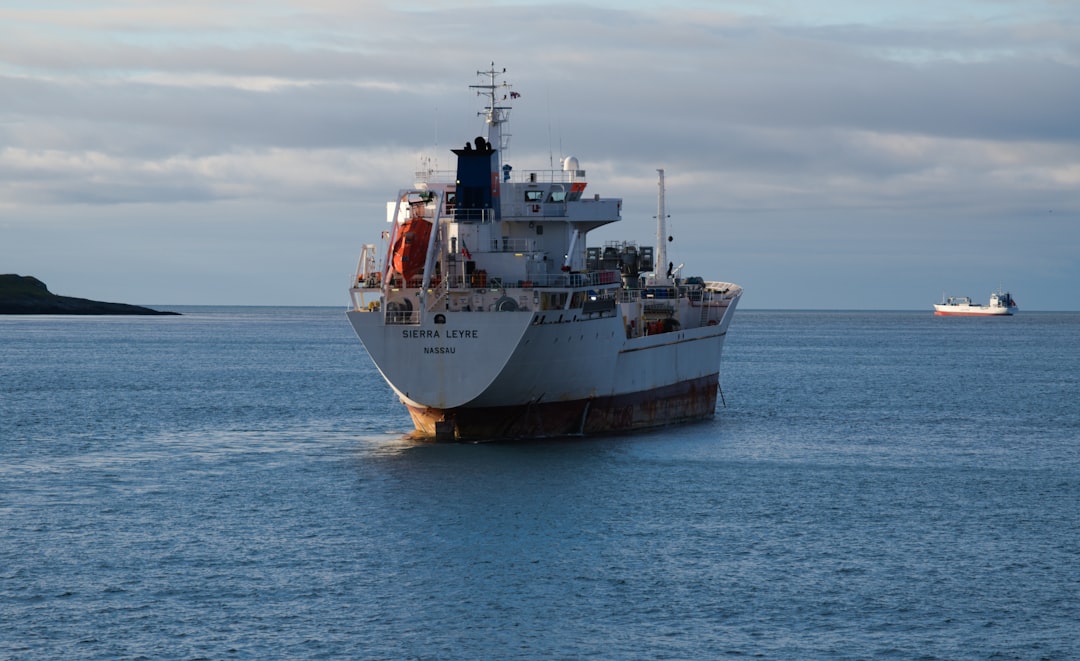
A Japanese-owned oil tanker passed through the Strait of Hormuz on Tuesday without paying a newly imposed toll by Iran, according to Mainichi Shimbun, marking Tokyo's first direct challenge to Tehran's assertion of economic control over the critical waterway.
The incident underscores Japan's acute vulnerability in Middle Eastern tensions. Approximately 95 percent of Japan's crude oil imports transit the Strait of Hormuz, the narrow passage between Iran and the Arabian Peninsula through which roughly one-fifth of global oil supply flows.
Iran announced the toll requirement in March, citing what it termed "navigational services" provided by Iranian authorities in the strait. The move was widely interpreted as retaliation for international sanctions and as leverage in Tehran's ongoing tensions with Gulf Arab states and Western powers.
While several European shipping companies have quietly paid the fees—amounts reportedly ranging from $50,000 to $200,000 per passage depending on vessel size—this marks the first publicized refusal by a ship affiliated with a major oil-importing nation.
The tanker's operator declined to be identified, citing security concerns. Japan's Ministry of Foreign Affairs confirmed awareness of the incident but refused to comment on whether Tokyo had coordinated the decision with the vessel's commercial operator or with allies.
"Watch what they do, not what they say. In East Asian diplomacy, the subtext is the text." The same principle applies to Japan's energy security calculations. While Tokyo maintains officially neutral positions on many Middle Eastern conflicts, its energy dependence forces constant balancing between economic interests and alliance commitments.
The timing is significant. Japan has historically maintained better relations with Iran than most U.S. allies, dating to Prime Minister Shinzo Abe's 2019 visit to Tehran—the first by a Japanese leader in 41 years. That trip, intended to mediate between Iran and Washington, ended awkwardly when two tankers (one Japanese-operated) were attacked in the Gulf of Oman during Abe's meetings.
Since then, Tokyo has aligned more closely with U.S. policy toward Iran, including joining sanctions regimes, even as it seeks to preserve diplomatic channels. The tanker's non-payment suggests Japan has concluded that acquiescing to the toll would legitimize Iranian claims of economic jurisdiction that most maritime nations reject.
Under international law, the Strait of Hormuz is governed by the United Nations Convention on the Law of the Sea, which guarantees transit passage through straits used for international navigation. Iran cannot legally impede passage, though it can regulate matters like environmental protection and safety within its territorial waters.
Legal arguments aside, enforcement is another matter. Iran's Islamic Revolutionary Guard Corps Navy operates dozens of fast-attack craft in the strait and has repeatedly demonstrated willingness to seize vessels. In 2019, Iranian forces detained the British-flagged tanker Stena Impero for 10 weeks.
The question now is whether Tehran will escalate. Detaining a Japanese vessel would risk alienating one of the few major economies that has maintained dialogue with Iran. But allowing the non-payment to stand could encourage other shipping companies to refuse, undermining the toll policy.
For Japan, the incident highlights a broader strategic dilemma. Tokyo has invested heavily in renewable energy and nuclear power restoration since the 2011 Fukushima disaster, yet remains overwhelmingly dependent on Middle Eastern oil. Alternative supply routes—pipelines through Russia or increased imports from Southeast Asia—come with their own geopolitical complications.
The Strait of Hormuz toll dispute also affects South Korea and China, both major oil importers through the waterway. Seoul has not publicly addressed the Iranian policy, while Beijing—which maintains close economic ties with Tehran—has remained silent. Industry sources suggest Chinese tankers have been paying the toll without objection.
No incidents were reported following the Japanese tanker's passage, according to maritime tracking data reviewed by Mainichi. The vessel continued to its destination in Japan without delay.