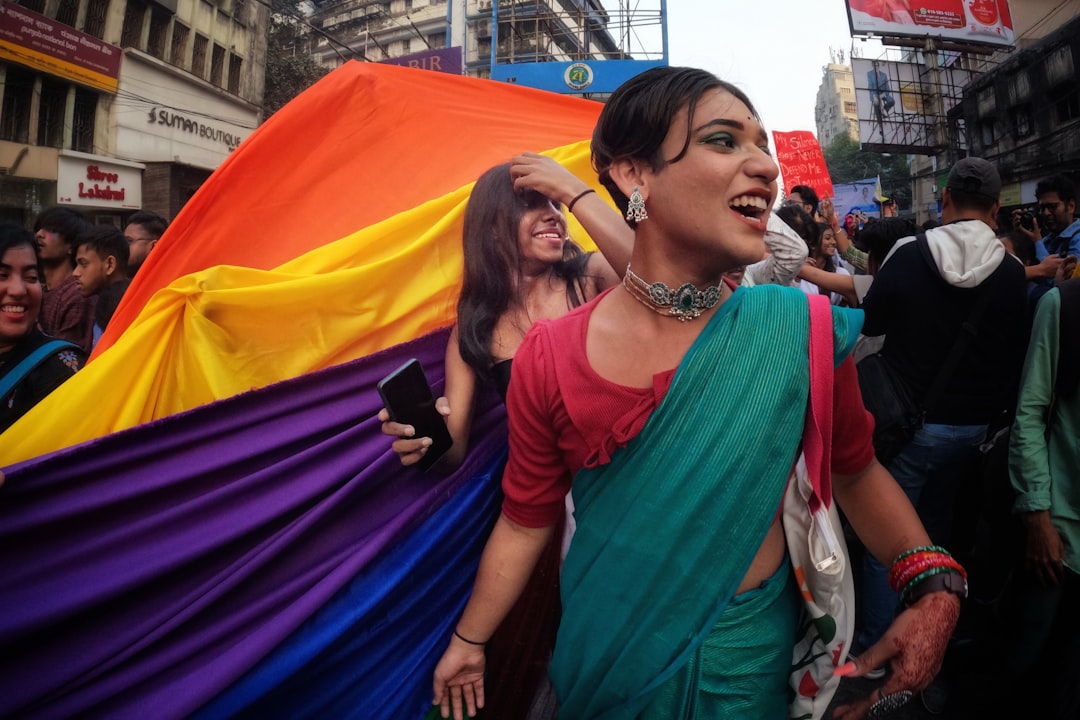
The Allahabad High Court has ruled that transgender persons have no legal right to collect badhai, traditional gifts given on auspicious occasions, delivering a blow to a longstanding cultural practice that provides crucial economic support for one of India's most marginalized communities.
The April 15 judgment, delivered by Justices Alok Mathur and Amitabh Kumar Rai, rejected a petition by Rekha Devi, a transgender woman from Gonda district in Uttar Pradesh. She had sought legal protection to collect badhai within what she claimed as her territorial jurisdiction and asked the court to prevent other transgender individuals from encroaching on her area.
For international readers unfamiliar with the practice, badhai refers to customary offerings or gifts—typically small cash payments—given to transgender persons who arrive at homes or businesses during weddings, childbirth celebrations, or other auspicious events. The practice has roots stretching back centuries in South Asian culture, where transgender individuals, historically excluded from formal employment, performed blessings in exchange for financial support.
In India, as across the subcontinent, scale and diversity make simple narratives impossible—and fascinating. The badhai system operates differently across states and regions. In Maharashtra and Karnataka, transgender communities maintain organized territorial divisions. In West Bengal, the practice has diminished in urban areas but persists in smaller towns. Punjab and Haryana see the tradition most robustly maintained, often with significant social pressure on families to pay.
The court's reasoning centered on legal formalism. "There is no legitimate or legal backing permitting any person or individual from collecting / extracting any money, tax, fee or cess from any individual except in accordance with law," the judges wrote, according to Bar and Bench. They emphasized that citizens can only be compelled to pay amounts "legitimately extracted from them in accordance with law."
Crucially, the bench noted that even the Transgender Persons (Protection of Rights) Act, 2019—India's landmark legislation recognizing transgender identity and prohibiting discrimination—contains no provisions protecting badhai collection. This legislative silence, the court suggested, indicates lawmakers have not recognized such practices as enforceable rights.
The ruling highlights a tension at the heart of India's transgender rights evolution. In 2014, the Supreme Court's NALSA judgment granted constitutional recognition to transgender identity, declaring transgender persons a "third gender" entitled to equal protection under Articles 14, 19, and 21. The 2019 legislation followed, banning discrimination in education, employment, and healthcare.
Yet economic realities for India's estimated 500,000 to 2 million transgender individuals (exact numbers remain contested) have barely improved. Formal employment discrimination persists despite legal protections. A 2022 government survey found that 92 percent of transgender persons in India lack access to stable employment, forcing many into sex work, begging, or badhai collection.
"This judgment worsens an already desperate economic situation," said Laxmi Narayan Tripathi, a transgender rights activist based in Mumbai. "The court is technically correct—there's no law mandating badhai. But by delegitimizing the practice without offering alternative livelihoods, they're pushing our community further into poverty."
The case also exposed internal tensions within transgender communities. Rekha Devi's petition arose from territorial disputes with other transgender individuals, suggesting the practice, while economically necessary, generates its own conflicts over limited resources and traditional hierarchies within the community.
Legal experts note the ruling doesn't criminalize badhai—it simply declares no legal obligation to pay. Families can still give voluntarily. But the judgment's language, describing the practice as "extracting" money, carries stigmatizing implications that may embolden those who refuse payments or harass transgender persons.
The decision arrives as India navigates contradictions in LGBTQ+ rights. The 2018 decriminalization of same-sex relations marked progress, but in 2023, the Supreme Court declined to legalize same-sex marriage. Transgender protections exist on paper, yet implementation across 28 states and 8 union territories remains wildly inconsistent.
As the judgment circulates through lower courts and shapes future cases, transgender rights organizations are preparing appeals and lobbying Parliament for amendments to the 2019 Act that would explicitly protect economic rights, including formalized recognition of traditional practices or, more ambitiously, guaranteed employment quotas and social welfare benefits. In a democracy of India's scale and complexity, the legal battle for true equality is far from over.