

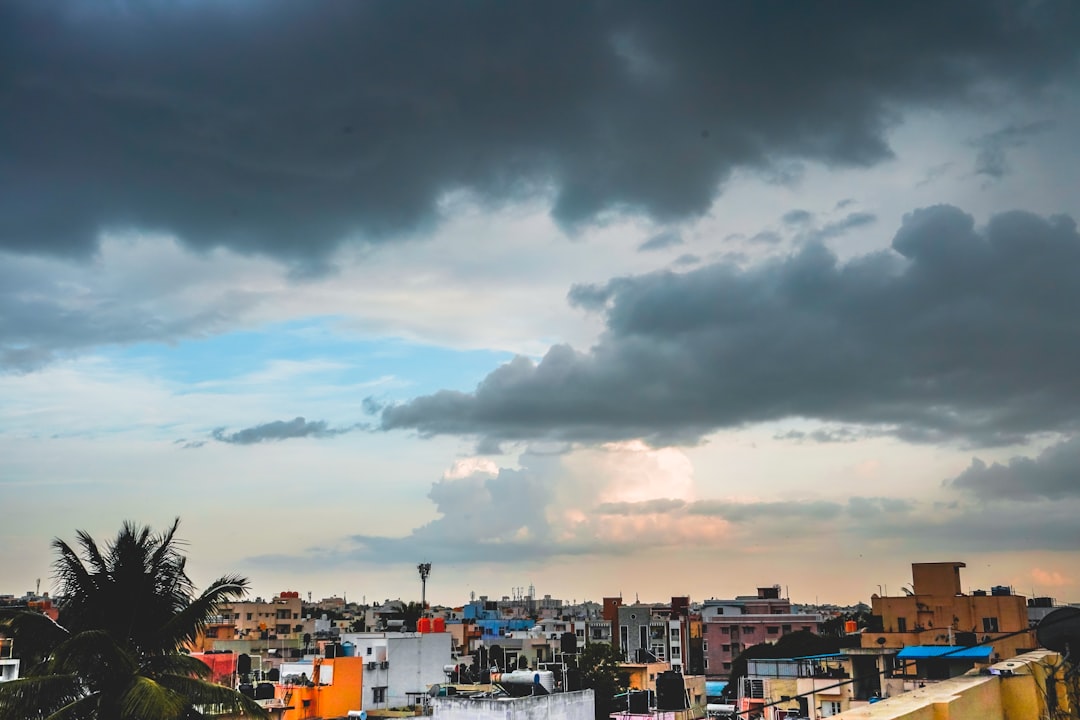
Ten people died in Bengaluru on Wednesday as hailstorms and violent winds battered India's tech capital, disrupting operations at multinational offices, grounding flights, and raising urgent questions about climate adaptation in one of the world's fastest-growing urban centers.
The sudden storm, which meteorologists described as "unprecedented in intensity" for late April, brought golf ball-sized hail, 100 kilometer-per-hour wind gusts, and torrential rainfall that overwhelmed drainage systems across the city of 13 million. Trees crashed onto vehicles, billboards collapsed, and widespread power outages paralyzed neighborhoods for hours, according to The Times of India.
Victims included a software engineer crushed by a falling tree in the Indiranagar tech corridor, a construction worker struck by debris in Whitefield, and multiple motorists whose vehicles were swept into flooded underpasses. The death toll may rise as rescue operations continue in low-lying areas prone to flash flooding.
Bengaluru, known globally as the "Silicon Valley of India," hosts offices for Google, Microsoft, Amazon, Infosys, Wipro, and hundreds of startups. The city generates approximately $110 billion in annual economic output—roughly 3 percent of India's GDP—and employs nearly 2 million tech workers. Wednesday's storm forced evacuations at several IT parks, sending thousands of employees home early and disrupting operations for multinational corporations whose global supply chains depend on Bengaluru-based engineering teams.
"This isn't just a local weather event," said Ramesh Kumar, director of the Karnataka State Disaster Management Authority. "When Bengaluru goes dark, software development for Fortune 500 companies stops. Cloud infrastructure monitoring gets delayed. This has global tech supply chain implications."
In India, as across the subcontinent, scale and diversity make simple narratives impossible—and fascinating. Climate impacts vary wildly across the country's diverse geography, but Bengaluru's rapid, unplanned urbanization has compounded natural vulnerabilities. The city, situated on the Deccan Plateau at 900 meters elevation, historically enjoyed moderate weather. But decades of breakneck growth—population doubling since 2000—have destroyed green cover, paved over natural drainage systems, and created urban heat islands that intensify extreme weather.
The India Meteorological Department (IMD) issued warnings 24 hours in advance, but the storm's severity exceeded predictions. Climate scientists note that India is experiencing increasing frequency of such "surprise" extreme weather events—delayed monsoons followed by concentrated downpours, freak hailstorms in traditionally mild seasons, and urban flash flooding that overwhelms infrastructure designed for gentler climate patterns.
Bengaluru's infrastructure struggles are emblematic of challenges facing rapidly urbanizing Indian cities. The city's drainage system, built for a population of 2 million, now serves 13 million. Lakes that once absorbed excess rainfall have been filled for real estate development. Road construction prioritizes vehicle traffic over stormwater management. The result: even moderate rainfall regularly floods IT parks and residential areas.
Wednesday's chaos prompted renewed calls for climate adaptation investment. Karnataka state authorities announced a review of building codes, drainage capacity, and early warning systems. But experts warn that reactive measures won't suffice.
"We need systemic change—restoring lakes, mandating green cover in new developments, upgrading drainage to handle 200-year flood events, not 20-year ones," said T.V. Ramachandra, an environmental scientist at the Indian Institute of Science in Bengaluru. "Climate models predict these extreme events will only intensify."
The economic stakes extend beyond India. Global tech companies have invested billions in Bengaluru infrastructure precisely because of the city's perceived stability and talent pool. Recurring climate disruptions could accelerate diversification strategies, with some firms already expanding operations to Hyderabad, Pune, and smaller tier-2 cities less vulnerable to flooding.
As rescue teams worked through the night Wednesday, clearing fallen trees and restoring power, the message was unmistakable: India's tech capital, like cities worldwide, faces a climate reckoning that infrastructure built for yesterday's weather cannot withstand.


