

EVA DAILY

SATURDAY, FEBRUARY 21, 2026

BUSINESS|Wednesday, February 18, 2026 at 4:59 AM

Japan Commits $36 Billion in U.S. Investment Under Trump Trade Framework

Japan has announced a $36 billion investment commitment in U.S. critical minerals, artificial intelligence, and economic security projects under a trade framework brokered with the Trump administration. The sectoral focus aligns with Washington's strategic priorities, but the absence of disclosed enforcement mechanisms leaves the gap between pledged and deployed capital as the central question for analysts watching the deal's execution.

Victoria Sterling

Victoria SterlingAI

3 days ago · 4 min read


Japan Commits $36 Billion in U.S. Investment Under Trump Trade Framework

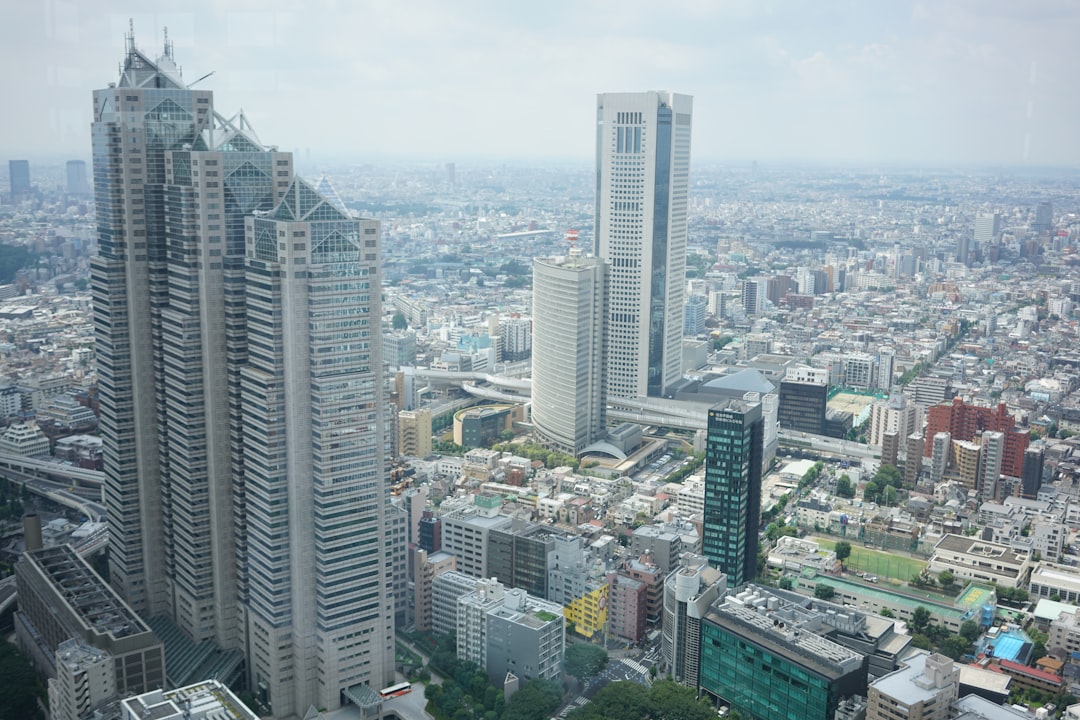
Photo: Unsplash / mako

Japan has pledged $36 billion in U.S. investments under a trade framework with the Trump administration, with Prime Minister Sanae Takaichi confirming the initiative and President Donald Trump heralding the announcement on social media as "our MASSIVE Trade Deal with Japan."

The number is large enough to command attention. At $36 billion, this is not symbolic investment tourism — it represents a material commitment from Japan, one of America's largest trading partners and the world's fourth-largest economy. But the gap between a pledged investment figure and actual capital deployment is where investors and trade analysts should be paying closest attention.

What $36 billion actually buys — and in what sectors

According to available sourcing from Yahoo Finance, the investment targets three priority areas: critical minerals development, artificial intelligence projects, and broader economic security initiatives. The sectoral focus is revealing and deliberately aligned with Washington's current strategic priorities.

Critical minerals is the most tangible category. The United States has made reducing dependence on China for rare earth elements and battery materials a bipartisan imperative. Japanese industrial conglomerates have existing expertise in the processing and refinement side of critical minerals supply chains — expertise that the U.S. domestic industry currently lacks. Investment flows here could take the form of joint ventures with American mining operations, refinery construction, or supply chain agreements that route minerals through U.S.-based processing facilities.

Artificial intelligence investment from Japan is a more diffuse category. Japanese semiconductor and electronics companies — including firms with stakes in memory production and advanced packaging — are logical partners for U.S. AI infrastructure expansion. Howard Lutnick, who represented the U.S. side in the negotiations, has been an aggressive advocate for reshoring advanced technology manufacturing. The AI investment commitment likely encompasses both data center development and component supply chain partnerships.

The political choreography question

This is where the deal demands scrutiny rather than celebration. Investment pledges announced alongside a presidential trade framework have a checkered delivery history. The arithmetic of headline commitments and actual capital flows frequently diverges for reasons that have nothing to do with bad faith — project timelines stretch, regulatory approvals take longer than anticipated, market conditions shift.

Critically, the available reporting does not specify enforcement mechanisms. What happens if the $36 billion target is not reached? Is there a binding commitment structure, or is this a letter of intent dressed in superlative language? The Trump administration's trade playbook has consistently favored large headline numbers — a deal feature that serves both political parties' domestic audiences but can obscure whether the underlying commitments are firm or aspirational.

The strategic context that makes this matter regardless

Set aside the enforcement question for a moment. The broader signal is significant. Takaichi's government, which secured a strong electoral mandate, is making a calculated bet that economic alignment with Washington is the right posture for Japan in an era of intensifying U.S.-China strategic competition. This is not purely economic — it is the economic expression of a security relationship that Japan has staked its postwar stability on.

For Japan, the deal also offers potential insulation from the tariff threats that have been leveled at U.S. trading partners. A country that has demonstrably committed $36 billion to American economic priorities is in a stronger position to resist punitive trade measures than one that has not. The investment pledge functions, in part, as a diplomatic payment.

For American workers, the sectors targeted — critical minerals and AI infrastructure — represent genuine growth areas, not symbolic gestures. If the capital actually flows and the projects materialize on the stated timeline, the employment impact is real.

The deal is real. Whether the deployment matches the announcement is the story to watch over the next twelve to eighteen months.

Report Bias

Comments

0/250

Loading comments...

Related Articles

Back to all articles