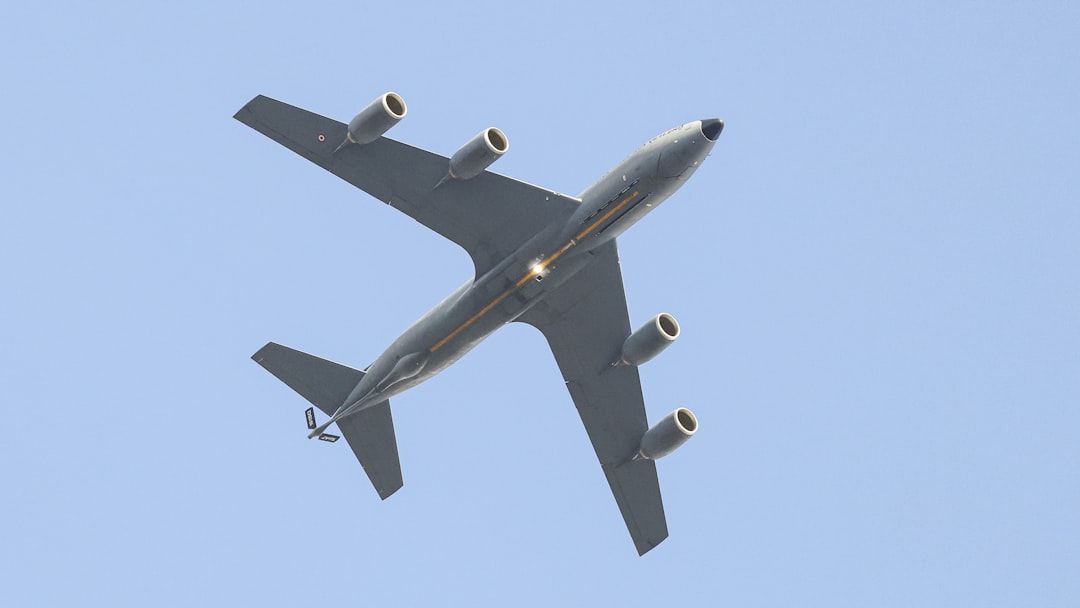
Five American KC-135 refueling tankers sustained damage in an Iranian ballistic missile attack on Saudi airbases, according to a Wall Street Journal report citing US defense officials.
The strikes, which targeted multiple locations across Saudi Arabia, demonstrate Tehran's ability to accurately hit American military assets more than 600 kilometers from Iranian territory. While no casualties were reported, the attacks expose critical vulnerabilities in US force protection across the Gulf.
KC-135 Stratotankers form the backbone of American aerial operations in the region. These aircraft, first deployed in the 1950s, enable fighter jets and bombers to operate far from their home bases through midair refueling. Without functioning tanker aircraft, the US combat radius shrinks dramatically, potentially forcing a recalculation of strike options against Iranian targets.
According to Pentagon officials who spoke to the Journal, the missiles struck during the early hours of Thursday morning local time. The precision of the attacks suggests Iranian forces employed either GPS guidance or satellite reconnaissance to identify aircraft parking locations on Saudi bases.
To understand today's headlines, we must look at yesterday's decisions. Iran's ballistic missile program has evolved considerably since the 1980s, when Tehran acquired basic Scud derivatives from North Korea and Libya. Today's arsenal includes the Emad, Qiam, and Zolfaghar systems, all capable of striking targets across the Gulf with circular error probable measurements of under 50 meters.
The targeting of Saudi Arabia represents a calculated Iranian decision. While Riyadh has not formally joined American operations against Iran, Saudi territory hosts US forces under decades-old security agreements. Iranian strikes on these bases effectively dare the Saudi government to either expel American forces or accept deeper involvement in the conflict.
Defense analysts note the attacks create immediate operational complications for US planners. The Air Force operates a limited fleet of approximately 400 KC-135s globally, with many aircraft requiring extensive maintenance due to their age. Losing even a handful to damage forces difficult choices about theater prioritization.