
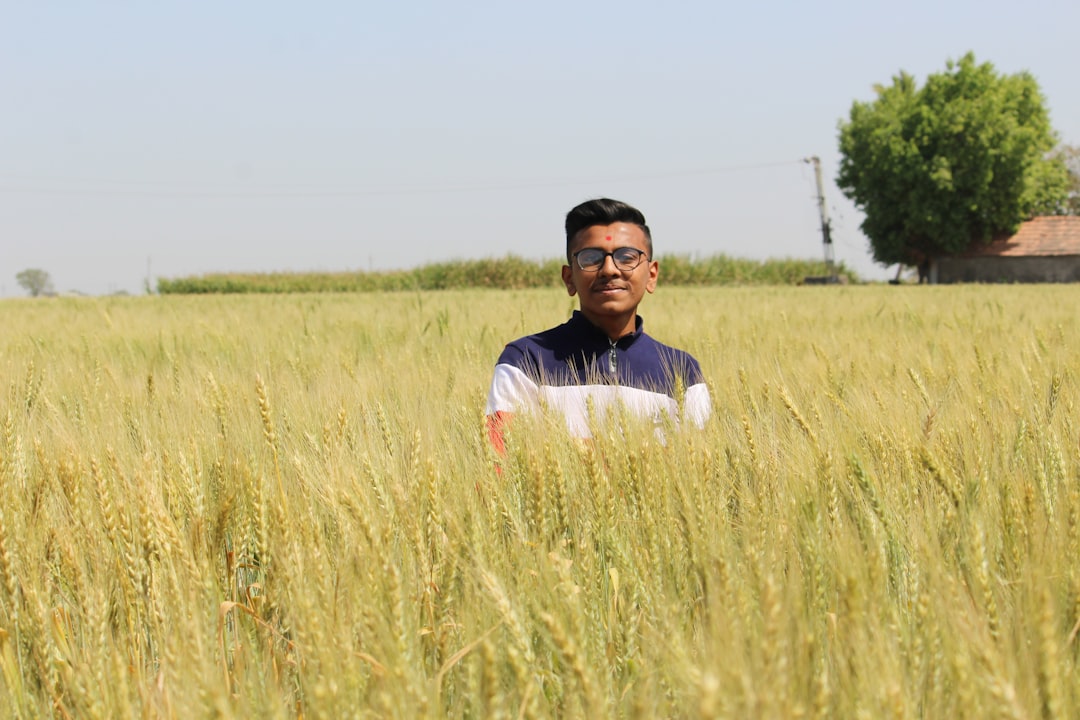
An unseasonable heat wave is gripping Punjab, India's breadbasket, with maximum temperatures soaring 7.5°C above normal for early March, raising urgent concerns about wheat crop damage in a region that supplies roughly one-third of India's grain production.
The extreme temperatures, documented by meteorological authorities, arrive during the critical grain-filling stage of wheat development. At this phase, plants are particularly vulnerable to heat stress, which can reduce kernel weight and overall yields even if temperatures return to normal before harvest.
Agricultural experts warn the timing could not be worse. Punjab and neighboring Haryana together contribute approximately 35% of India's wheat to government procurement systems that supply public distribution programs feeding hundreds of millions. Significant yield reductions would ripple through both domestic food security and international markets, as India ranks as the world's second-largest wheat producer.
Farmers in affected districts report visible stress symptoms in wheat fields: premature drying of leaves, reduced tillering, and accelerated maturation that typically correlates with lower grain quality. Traditional varieties cultivated in the region evolved for moderate spring temperatures, not the heat extremes now becoming regular occurrences.
The phenomenon reflects broader climate disruption patterns across South Asia. India has experienced five of its hottest years on record since 2016, with heat waves arriving earlier and lasting longer. The India Meteorological Department projects continued above-normal temperatures through late March, compounding agricultural stress.
Climate scientists emphasize this is not abstract future projection but real-time climate impact. The 7.5°C temperature anomaly exceeds typical natural variability, fitting predictions that global heating would intensify regional extremes. For farmers, the distinction between climate attribution and immediate survival is academic—crops either survive or fail regardless of causation.
The economic implications extend beyond agriculture. Wheat price volatility affects India's inflation calculations, influences monetary policy decisions, and impacts household budgets for the majority of Indians who spend substantial income portions on food. Government officials face difficult choices about export restrictions versus international commitments, particularly as global food systems remain stressed from multiple shocks.
Yet the crisis also accelerates adaptation innovation. Agricultural research institutions across India have developed heat-tolerant wheat varieties capable of maintaining yields at higher temperatures. The challenge is deployment speed—breeding programs operate on multiyear timelines while climate conditions shift within seasons.
Farmers are experimenting with microclimate management techniques: adjusting irrigation timing to provide evaporative cooling during peak heat hours, using shade netting in demonstration plots, and shifting planting dates to align grain-filling stages with historically cooler periods. These adaptations require technical knowledge, capital investment, and reliable weather forecasting, resources unevenly distributed across India's diverse agricultural communities.
Water availability compounds temperature stress. Punjab's groundwater tables have declined dramatically from decades of intensive irrigation, leaving farmers less able to provide supplemental water during heat events. The intersection of temperature extremes and water scarcity creates multiplicative rather than additive risks.
Climate justice dimensions are stark. Small-holder farmers who contributed negligibly to global emissions bear disproportionate consequences of climate disruption. Meanwhile, adaptation financing from wealthy nations—promised under international climate agreements—remains far below levels needed to transform agricultural systems at scale.
In climate policy, as across environmental challenges, urgency must meet solutions—science demands action, but despair achieves nothing. The Punjab heat wave demonstrates climate change disrupting food systems in real time, not in distant projections. It also shows that solutions exist, from heat-tolerant crop varieties to improved forecasting systems, but require political will and financial resources to deploy rapidly.
The wheat crop outcome will become clear within weeks as harvest approaches. Regardless of final yields, the event underscores an uncomfortable reality: agricultural systems designed for historical climate stability now operate in conditions for which they were never optimized. Adaptation is no longer optional preparation for future change but immediate necessity for current survival.