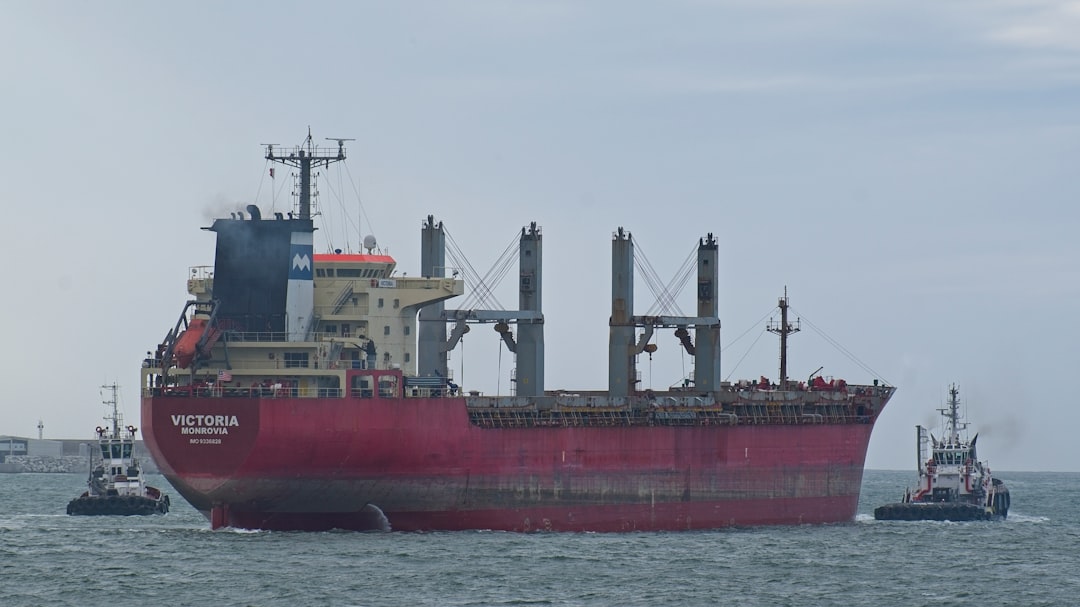
A tugboat powered by ammonia fuel has completed its first operational voyage, marking a breakthrough in the decade-long effort to decarbonize shipping, an industry that produces roughly 3% of global greenhouse gas emissions and has proven resistant to electrification solutions.
The demonstration, conducted by maritime technology firm Amogy, converted diesel engines to run on ammonia-derived hydrogen through a cracking process that splits ammonia molecules into hydrogen fuel. The system achieved performance comparable to conventional diesel propulsion while producing zero carbon emissions at point of use.
Shipping decarbonization presents unique challenges absent from road transport electrification. Cargo vessels require energy densities far exceeding current battery capabilities, operate on multi-week voyages without refueling opportunities, and carry payloads where every ton of battery weight reduces revenue cargo capacity. These constraints have left the industry searching for liquid fuel alternatives that can slot into existing infrastructure.
Ammonia emerges as a leading candidate because it can be produced from renewable electricity through electrolysis and nitrogen synthesis, stored as liquid at modest pressures, and transported using adapted petroleum infrastructure. Unlike hydrogen, which requires cryogenic temperatures or extreme pressures for storage, ammonia remains liquid at -33°C or under moderate compression, making it far more practical for marine applications.
The tugboat demonstration validates technical viability but highlights scaling challenges ahead. Global ammonia production currently relies almost entirely on natural gas feedstock through the Haber-Bosch process, making it a carbon-intensive commodity. Transitioning to green ammonia produced from renewable electricity requires massive expansion of electrolysis capacity and clean energy generation.
Current green ammonia production costs roughly three times conventional ammonia, though analysts project price parity as renewable energy becomes cheaper and carbon pricing mechanisms strengthen. The International Energy Agency estimates maritime shipping will require approximately 200 million tons of ammonia fuel annually by 2050 to meet net-zero targets—roughly doubling current global ammonia production.
Port infrastructure poses another barrier. Bunkering facilities designed for diesel and heavy fuel oil must be retrofitted to handle ammonia, which is toxic and requires specialized safety protocols. Early-mover ports in Singapore, Rotterdam, and Norway are developing ammonia refueling capabilities, but comprehensive global infrastructure remains years away.
Safety considerations are significant. Ammonia is caustic and poses respiratory hazards if released. Maritime industry standards for ammonia handling are still under development by the International Maritime Organization, which must balance innovation encouragement with crew and environmental safety.
Yet shipping companies face mounting pressure to decarbonize. The IMO has set targets for 50% emission reductions by 2050 compared to 2008 levels, with intermediate goals accelerating through the 2030s. European Union regulations now include maritime transport in carbon markets, creating financial incentives for cleaner fuels. Major cargo customers including Amazon and Ikea increasingly demand low-emission shipping options.
Alternative pathways are also advancing. Methanol fuel derived from captured carbon and renewable energy is powering several new container ships. Battery-electric ferries operate successfully on short routes. Hydrogen fuel cells show promise for specific applications. The diversity of approaches reflects shipping's varied operational profiles—solutions optimal for tugboats may differ from container ships, tankers, or bulk carriers.
In climate policy, as across environmental challenges, urgency must meet solutions—science demands action, but despair achieves nothing. The ammonia tugboat represents lab concepts transitioning to real-world application, demonstrating that shipping decarbonization is technologically feasible even if commercially and logistically complex.
The pathway from demonstration to fleet transformation typically spans decades in conservative maritime industries. Vessels operate for 20-30 years, meaning decisions about ship designs and fuel systems made today lock in emissions profiles through mid-century. This reality makes the current decade critical for establishing standards, building infrastructure, and scaling production of alternative fuels.
Whether ammonia becomes dominant or part of a diversified fuel mix depends on factors still unfolding: relative fuel costs, infrastructure development speed, safety regulation evolution, and competitive dynamics among alternative technologies. What the tugboat voyage confirms is that zero-emission shipping is no longer theoretical—the question now is implementation speed and scale.