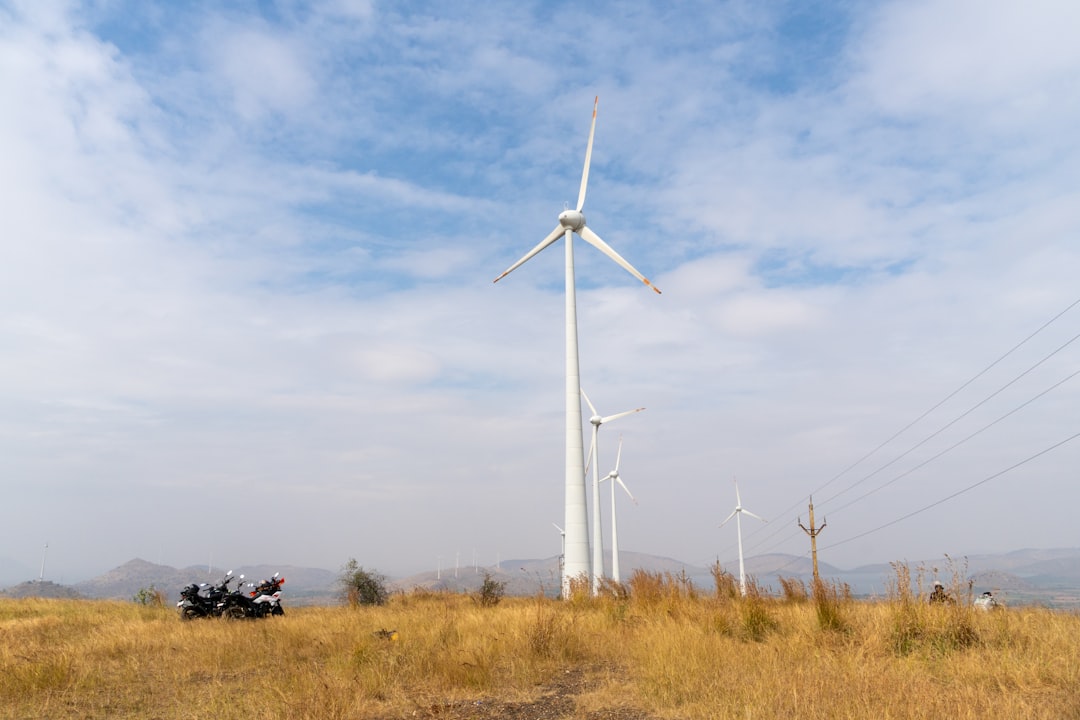
India added 6.05 gigawatts of wind power capacity in fiscal year 2025-26, marking the highest annual addition on record and signaling renewed momentum in the country's renewable energy transition as the world's most populous nation pursues aggressive climate targets.
The expansion represents a 46% year-on-year increase and pushes India's total installed wind capacity past 56 gigawatts, according to Energetica India. The addition exceeds the previous peak of 5.5 GW recorded in fiscal year 2016-17, breaking a multi-year slowdown that had raised doubts about India meeting its renewable energy commitments.
Gujarat, Karnataka, and Maharashtra emerged as the primary contributors to capacity addition, driven by wind-solar hybrid projects and expanding green energy open access programs that allow industrial consumers to purchase renewable power directly from generators.
In India, as across the subcontinent, scale and diversity make simple narratives impossible—and fascinating. With 1.4 billion people and the world's fifth-largest economy, India's energy trajectory carries global climate implications. The country has committed to reaching 500 gigawatts of non-fossil fuel electricity capacity by 2030 and achieving net-zero emissions by 2070—targets that require massive renewable deployment across diverse terrain spanning Himalayan highlands to tropical coastlines.
The wind sector revival follows years of policy uncertainty that slowed investment. Improved regulatory clarity, transmission infrastructure readiness, competitive tariff discovery through auctions, and a robust project pipeline have combined to restore developer confidence, industry analysts note.
The government has supported the expansion through concessional customs duties on wind turbine components, waiving interstate transmission charges through June 2028, implementing competitive bidding frameworks, and providing technical assistance through the National Institute of Wind Energy.
Wind power now represents a significant portion of India's 200+ gigawatt renewable energy installed base, which includes solar, hydro, and biomass. Yet the country still generates roughly 70% of electricity from coal, reflecting the enormous challenge of transitioning an economy where hundreds of millions gained electricity access only in recent decades and industrial demand continues surging.