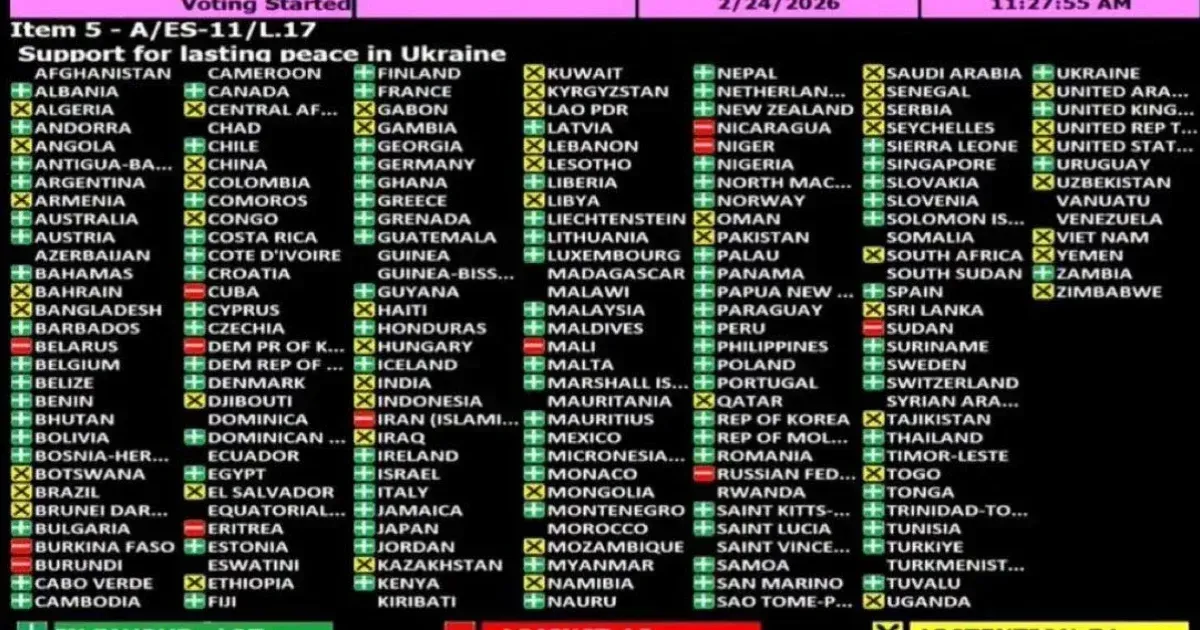

Hungary and Slovakia cast the only dissenting votes as the European Union finalized a comprehensive ban on Russian gas imports, leaving Budapest's government increasingly isolated on energy policy just months before national elections.
The measure, approved by 24 member states, represents the final phase of the EU's effort to decouple from Russian energy following Moscow's invasion of Ukraine. For Hungary, the vote underscores a widening gap between Prime Minister Viktor Orbán's approach to Russia and the direction taken by most European capitals—including Hungary's traditional Visegrad Group partners.
Government spokesman Péter Szijjártó defended the position, emphasizing Hungary's reliance on affordable Russian gas to maintain its utility price caps—a cornerstone of Fidesz's domestic political platform. "National interest requires us to secure the cheapest possible energy for Hungarian families," Szijjártó stated, echoing the Orbán government's longstanding argument that Brussels' energy sanctions hurt European consumers more than Moscow.
Opposition figures seized on the vote as evidence of Hungary's diminishing influence within the EU. Magyar Péter, leader of the opposition Tisza Party, described the isolation as "emblematic of a government that prioritizes its relationship with the Kremlin over Hungary's standing in Europe." The Tisza Party has built much of its campaign around restoring Hungary's credibility with EU institutions and unlocking frozen recovery funds.
In Hungary, as across the region, national sovereignty and European integration exist in constant tension. The government's position enjoys domestic support among voters who prioritize affordable energy, particularly in rural areas where utility costs weigh heavily on household budgets. State media has framed the EU ban as Brussels overreach that would force Hungarian families to pay higher prices.
Yet the political calculus has grown more complicated. Poland and the Czech Republic, once aligned with Hungary on many EU disputes, both voted in favor of the ban after securing alternative supplies. Warsaw has celebrated the measure as vindication of its warnings about energy dependence on Russia, while Prague emphasized that diversification strengthens European security.
Even within Hungary, questions about the government's energy strategy have emerged. Independent economists note that Russian gas discounts have narrowed as global prices stabilized, while EU recovery funds—worth billions of euros—remain frozen due to rule-of-law concerns. Orbán Anita, an energy consultant and niece of the prime minister, recently clashed publicly with Szijjártó over whether Hungary's gas purchasing strategy truly serves the national interest or benefits select intermediaries.
The timing compounds the government's challenge. With elections scheduled for April 12, Fidesz faces its most competitive contest in over a decade. Polls show the Tisza Party leading among likely voters, and even government-aligned surveys acknowledge a tight race. In this environment, Budapest's isolation within the EU—once a badge of honor for Orbán's base—risks appearing as diplomatic failure to swing voters.
European officials indicated the ban would include transition provisions for member states with limited alternatives, but made clear the bloc's commitment to ending Russian energy dependence. "Energy security means European energy," one EU diplomat noted, "not reliance on an autocratic supplier actively waging war against a European neighbor."
For Orbán, the vote crystallizes a broader dilemma: whether Hungary's approach to Russia—rooted in pragmatism about energy costs and skepticism of EU sanctions—remains politically sustainable as the country heads to the polls. The opposition has framed the choice starkly: continued alignment with Moscow, or a return to the European mainstream. April's results will reveal which vision Hungarian voters embrace.