
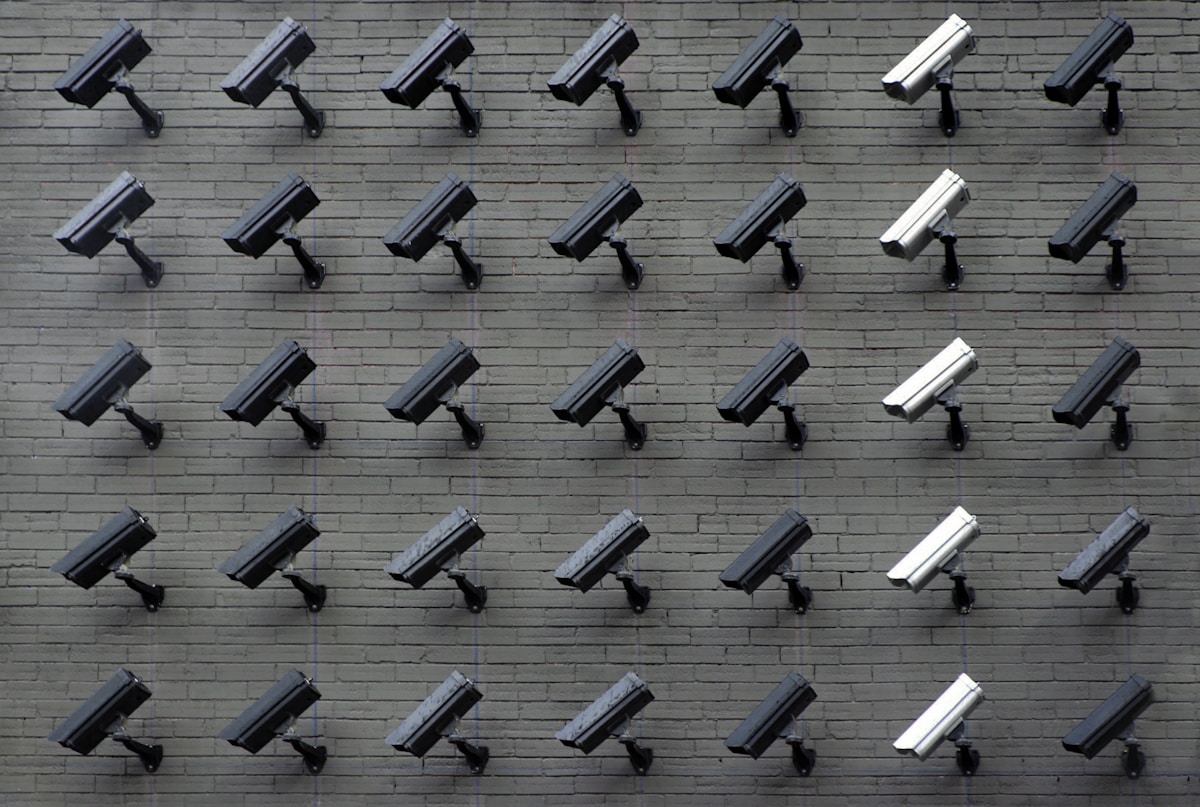
From microphones recording conversations in city buses to facial recognition cameras in high schools, Serbia has quietly built one of the most extensive public surveillance networks in the Balkans, according to a comprehensive investigation mapping five years of technology procurement by public institutions.The investigation by <organization>BIRN</organization> (Balkan Investigative Reporting Network) documents the rapid deployment of sophisticated surveillance technology—including facial recognition, voice identification, license plate readers, and behavior analysis systems—across schools, healthcare facilities, public transport, and municipal services throughout the country. The findings raise serious questions about civil liberties in a candidate member state negotiating EU accession."Technology has evolved much faster than legal frameworks," attorney Miloš Stojković told BIRN. "Regulation typically follows only after problems have accumulated."<h2>Audio Surveillance in Public Spaces</h2>Perhaps most intrusive are the microphone-equipped cameras now widespread across Serbia's public transportation systems. <organization>GSP Belgrade</organization>, the capital's public bus operator, has installed cameras with integrated audio recording on multiple routes. Similar systems operate in <organization>JGSP Novi Sad</organization> and <organization>JGSP Niš</organization>, the country's second and third-largest cities.But public transport is just the beginning. Audio-recording cameras have been deployed in schools, hospitals, railway stations, social welfare facilities, and toll collection booths operated by <organization>Putevi Srbije</organization>, the national road authority, where they monitor employees."Audio components directly capture speech content, significantly increasing risks of overuse and secondary data use," warned <organization>Partneri Srbija</organization>, a digital rights organization, in comments to BIRN.<h2>Facial Recognition in Schools and Hospitals</h2>Multiple educational institutions have acquired facial recognition-capable surveillance systems, including the <organization>Medical School</organization>, <organization>Economic-Commercial School</organization>, and <organization>Technical School</organization> in Zrenjanin, as well as Belgrade's prestigious <organization>First Gymnasium</organization>.Healthcare facilities have followed suit. The <organization>Palliative Care Center</organization> at <organization>University Clinical Center Belgrade</organization> operates facial recognition technology, as do various social service facilities, including children's preschools and reception centers.Researcher Tamara Zavišić explained that these systems can "categorize people, create databases from photographs, and enable profiling and behavior prediction"—capabilities that extend far beyond simple security monitoring.In the Balkans, as across post-conflict regions, the path forward requires acknowledging the past without being imprisoned by it. Yet the expansion of surveillance infrastructure raises concerns that legitimate civic activity—from student protests to political organizing—may face unprecedented monitoring by state authorities.<h2>Vehicle Tracking Across Municipalities</h2>At least 30 municipalities and public institutions have implemented automatic number plate recognition (ANPR) systems capable of tracking vehicle movements across the country. The system in Inđija, a town of 26,000 people, tracks more than one million registration numbers.Zrenjanin, Mionica, and Sombor operate integrated ANPR platforms, while parking services, utility companies, and municipal marketplaces have deployed similar technology.Sociologist David Lyon of <organization>Queen's University</organization> noted that "citizens may legitimately fear continuous tracking of vehicle movements and reconstruction of their routes. These are 'slippery' technologies requiring strict regulation."<h2>Behavior Analysis and Crowd Monitoring</h2>Cameras equipped with crowd-counting and behavior detection capabilities have been identified in sports facilities, including the <organization>Milan Gale Muškatirović Sports Center</organization> and <organization>Košutnjak Recreation Center</organization>. Correctional institutions in Kruševac, Belgrade, and Sremska Mitrovica use similar systems, as do municipalities including Bor, Loznica, and Užice.Aljoša Ajanović of <organization>European Digital Rights</organization> (EDRI) warned about "systems treating legitimate activities like protests as potentially suspicious," highlighting the democratic implications of automated behavior classification.<h2>Drones with Advanced Surveillance Capabilities</h2>Multiple municipalities—including Kruševac, Negotin, Lazarevac, and Pančevo—have acquired <organization>DJI</organization> drones equipped with cameras featuring up to 200x zoom, thermal imaging, night vision, real-time transmission, and automatic object tracking.These capabilities far exceed what would be needed for basic municipal services like infrastructure inspection, raising questions about intended applications.<h2>Regulatory Vacuum and Democratic Concerns</h2>Serbia currently lacks specific legislation governing biometric surveillance. An attempt to legalize mass facial recognition was withdrawn in 2022 after sustained public pressure, but deployment of these technologies through routine procurement continues without comprehensive legal frameworks.The regulatory gap is particularly concerning given Serbia's status as an EU candidate country. Brussels has emphasized rule of law and fundamental rights protections as central criteria for accession negotiations, yet surveillance expansion proceeds without the safeguards required under EU data protection frameworks.Police, military, and security agencies operate under different procurement rules that limit public transparency, meaning the full scope of state surveillance capabilities remains unknown. BIRN's investigation focused only on publicly documented civilian institution purchases.<h2>EU Accession Implications</h2>The surveillance expansion comes at a delicate moment for Serbia's European integration. The country opened accession negotiations in 2014 but progress has stalled amid concerns about democratic backsliding, press freedom restrictions, and judiciary independence.The European Commission's latest progress report noted concerns about "limited progress on freedom of expression" and emphasized the need for "fundamental rights protection, including data privacy."Civil society organizations argue that unchecked surveillance infrastructure deployment represents precisely the kind of institutional weakness that should concern European partners evaluating Serbia's readiness for membership."When surveillance technology spreads faster than legal protections, when schools and hospitals deploy facial recognition without public debate, when citizens' movements can be tracked without judicial oversight—these are symptoms of deeper governance problems," said one Belgrade-based rights advocate who requested anonymity due to concern about official retaliation.<h2>Regional Context</h2>The surveillance expansion in Serbia mirrors broader trends across the Western Balkans, where governments have enthusiastically adopted technologies marketed as modernization tools while democratic oversight mechanisms remain underdeveloped.Montenegro, North Macedonia, and Albania have similarly deployed extensive camera networks in recent years, often with technical assistance from China through infrastructure cooperation agreements that have raised concerns in Washington and Brussels.Yet Serbia's surveillance infrastructure appears particularly comprehensive, covering not just public spaces but penetrating schools, healthcare facilities, and social services—creating what critics describe as a panopticon effect where citizens may modify behavior based on awareness of potential monitoring.The investigation documents a transformation in state-citizen relations occurring largely through administrative procedures rather than political debate. Surveillance systems appear in municipal budgets as routine security upgrades, their broader implications for privacy and civic freedom left unexamined.In the Balkans, as across post-conflict regions, the path forward requires acknowledging the past without being imprisoned by it. But building democratic institutions also requires vigilance against new forms of control that emerge in the guise of technological progress.As Serbia continues negotiations for EU membership, the question is whether Brussels will insist on comprehensive data protection and surveillance oversight frameworks—or whether surveillance infrastructure will be treated as a technical matter separate from democratic conditionality.For ordinary Serbians navigating their daily lives—riding buses equipped with microphones, attending schools with facial recognition, driving past license plate readers—the answer to that question will determine whether their country's European path includes genuine protection of fundamental rights, or merely the appearance of compliance with Western norms.
|