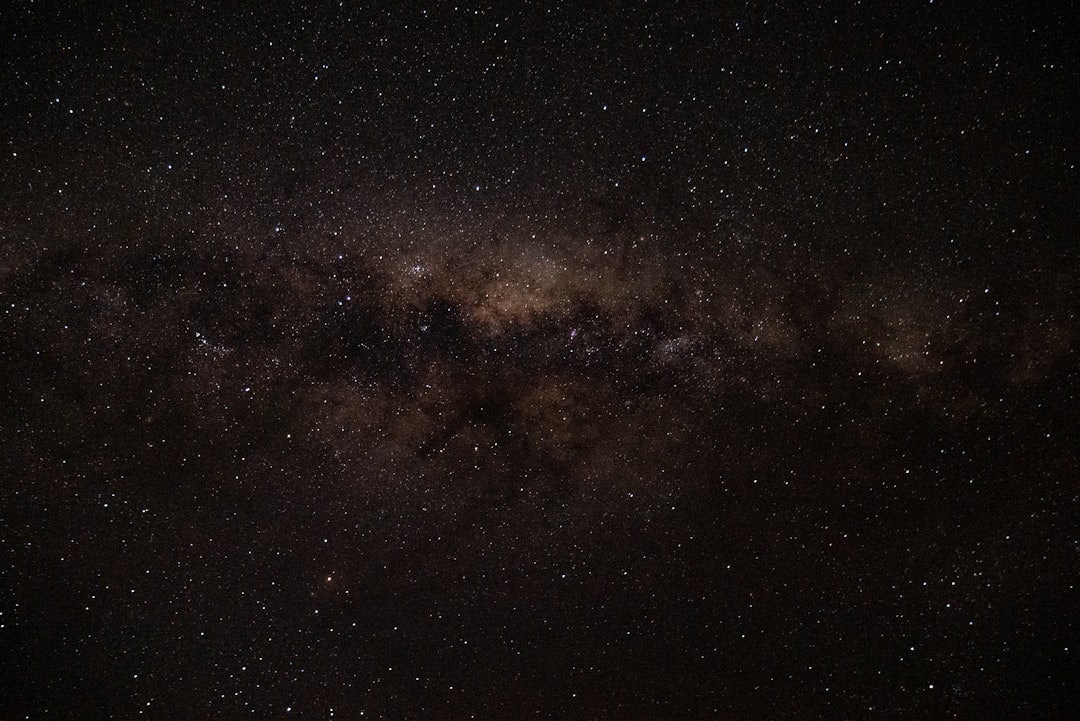
Our galaxy is a cannibal. Over billions of years, the Milky Way has consumed dozens of smaller galaxies, shredding them into long ribbons of stars called stellar streams. Now astronomers have discovered dozens of previously hidden streams in the galaxy's outer halo—the faint, spherical cloud of ancient stars surrounding our galactic disk.
These streams are archaeological evidence of galactic violence, frozen records of ancient collisions. Each stream represents a dwarf galaxy or star cluster that wandered too close to the Milky Way's gravitational pull and was torn apart by tidal forces.
Think of it like this: when a small galaxy encounters the Milky Way, its stars don't actually collide (space is mostly empty, after all). But the gravitational gradient—stronger on the near side, weaker on the far side—stretches the dwarf galaxy like taffy until it dissolves into a thin stream of stars following the same orbit.
What makes these newly discovered streams particularly interesting is what they reveal about dark matter.
Dark matter doesn't emit light, so we can't see it directly. But it comprises roughly 85% of the matter in the universe, and its gravity shapes how galaxies form and evolve. The way stellar streams bend and flow as they orbit the Milky Way provides indirect evidence of dark matter's distribution.
Imagine you can't see a river, but you can watch leaves floating on its surface. By tracking how the leaves move—where they speed up, slow down, or change direction—you can infer the river's shape. Stellar streams work similarly for mapping dark matter.
The newly discovered streams were hiding in plain sight, buried in data from surveys like Gaia, the European Space Agency's mission to map the positions and motions of over a billion stars. The breakthrough came from improved data analysis techniques that can distinguish faint, coherent structures from the galaxy's background stellar population.
Some of these streams are ancient—the remnants of galaxies consumed when the Milky Way was young. Others are more recent additions, still relatively intact. By measuring their chemistry, ages, and orbits, astronomers can reconstruct the Milky Way's growth history.