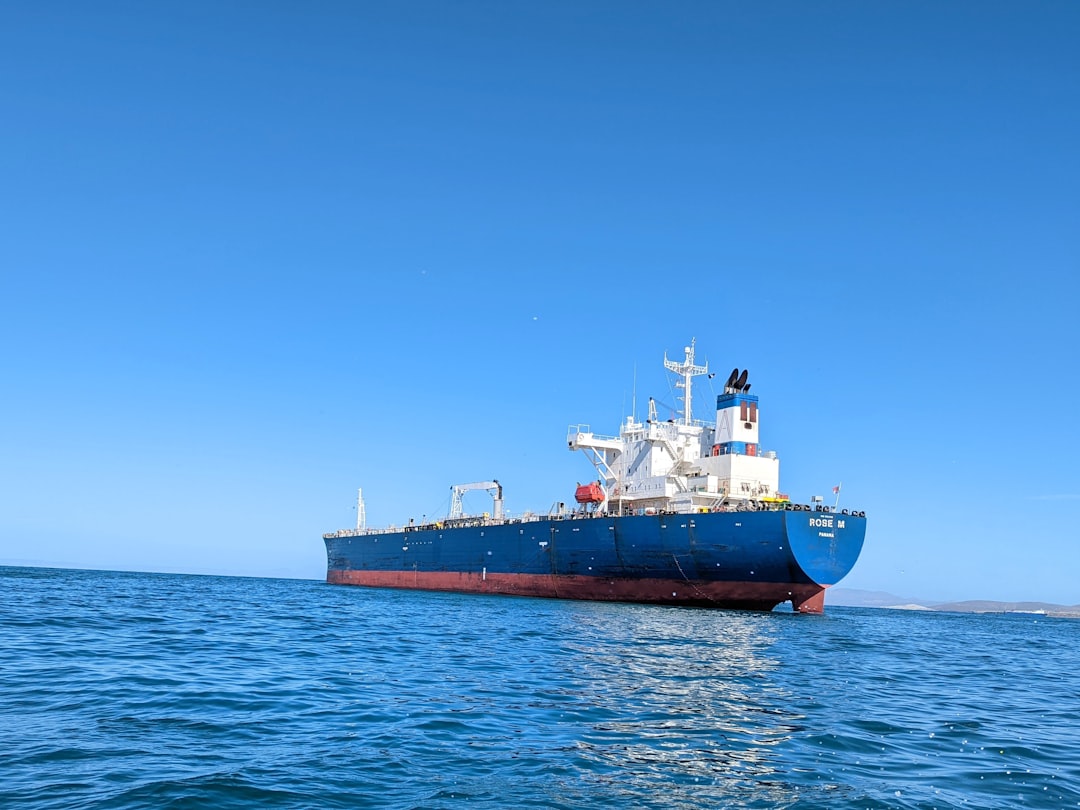
A French court has sentenced a Chinese ship captain to one year in prison for his role in operating a vessel suspected of being part of Russia's "shadow fleet" used to evade international sanctions, establishing a legal precedent that could shape future enforcement efforts.
The Brest criminal court convicted Captain Zhang Wei on charges related to operating the tanker Baltic Horizon, which French authorities intercepted in the English Channel in February carrying Russian oil products that violated EU sanctions, according to Le Monde.
The case represents one of the first successful prosecutions of individuals involved in Russia's elaborate system of sanctions evasion, which Western intelligence agencies estimate involves hundreds of vessels operating under flags of convenience.
The Baltic Horizon, registered in Cameroon but operated by a shell company with opaque ownership structures, was carrying approximately 75,000 tons of refined petroleum products when French customs officials boarded the vessel during a routine inspection. Documentation indicated the cargo originated in Russia, violating EU sanctions that prohibit importing Russian oil products transported by sea.
Captain Zhang maintained during the trial that he was simply following orders from the vessel's owners and had no knowledge that the operation violated international sanctions. However, prosecutors presented evidence suggesting he was aware of the cargo's origins and the vessel's role in sanctions evasion, including communications in which he discussed routes designed to avoid Western naval patrols.
The court imposed a one-year prison sentence, with six months suspended, and ordered Zhang to pay a fine of €10,000. The vessel remains impounded, and French authorities are pursuing separate legal action against the registered owners.
To understand today's headlines, we must look at yesterday's decisions. The Russian shadow fleet emerged as a systematic response to Western sanctions imposed after Moscow's invasion of Ukraine in 2022. As legitimate shipping companies and insurers withdrew from transporting Russian oil, Moscow assembled a fleet of aging tankers, often with unclear ownership and minimal safety standards, to continue exports.
Western intelligence estimates suggest the shadow fleet numbers between 600 and 1,400 vessels, depending on classification criteria. These ships typically employ various deception techniques, including disabling transponders, conducting ship-to-ship transfers in international waters, and using falsified documentation to obscure cargo origins.
The French prosecution sends a signal that European authorities are willing to hold individuals accountable, not merely seize vessels or impose fines on corporate entities. Legal experts suggested this approach could prove more effective in disrupting shadow fleet operations, as ship captains and crew face personal consequences.
"Corporate entities can be dissolved and reformed easily," said Dr. Anne-Marie Slaughter, an international law expert at Sciences Po in Paris. "But ship captains who face prison time may think twice about participating in sanctions evasion schemes, regardless of what they're being paid."
The case also illustrates ongoing European resolve on Russia sanctions despite divisions over other international issues. Even as European governments clash with Washington over the Iran conflict, they have maintained a united front on Ukraine-related sanctions, regularly extending and expanding measures against Russia.
Maritime security analysts noted that prosecuting individual ship captains presents both opportunities and challenges. While it may deter some mariners from accepting shadow fleet positions, it could also push the operations further into gray areas, with crews potentially kept deliberately ignorant of their cargo or destinations.
The French action comes amid broader European efforts to tighten sanctions enforcement. The EU has recently expanded its legal framework for prosecuting sanctions violations and increased cooperation among member states on maritime interdiction. Several other EU nations, including Germany and Poland, have vessels under investigation for similar violations.