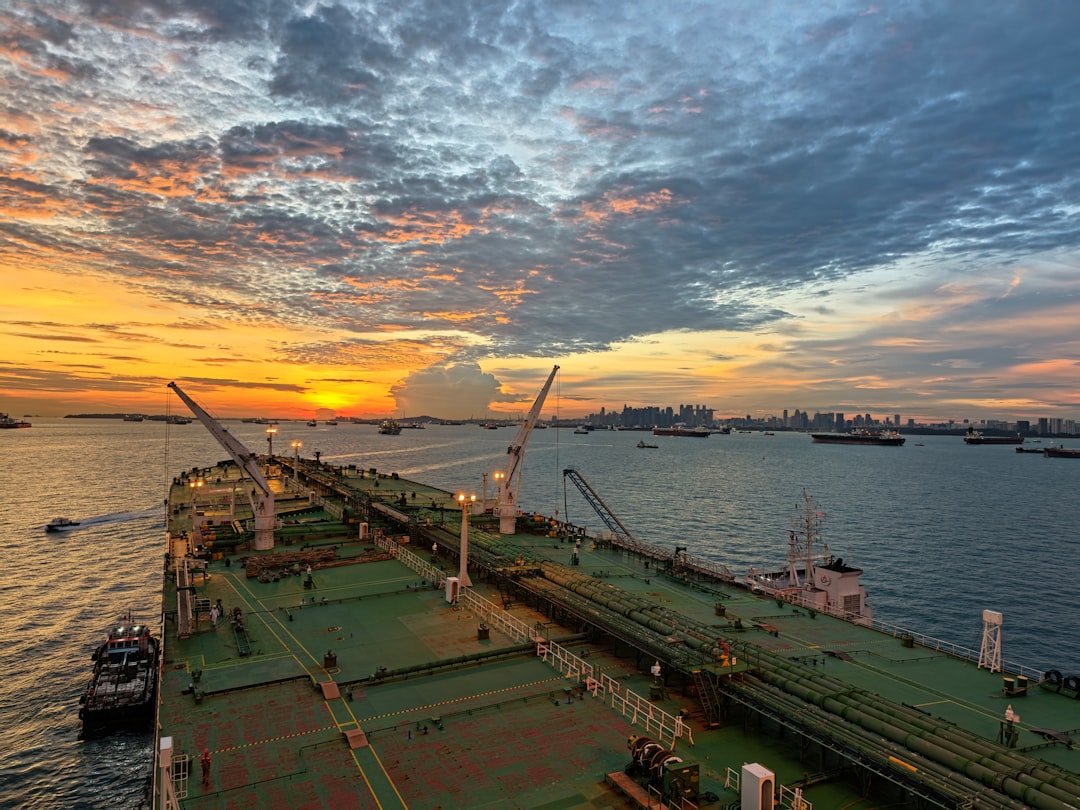
US-sanctioned Chinese oil tankers successfully passed through the Strait of Hormuz despite an American naval blockade, according to vessel tracking data reported by Reuters, underscoring Beijing's willingness to challenge Washington's enforcement mechanisms when energy security is at stake.
The incident marks a significant escalation in the ongoing US-China friction over sanctions compliance and reveals the practical limits of American naval power when confronted with a major geopolitical rival. For Beijing, ensuring stable energy supplies takes precedence over respecting unilateral US sanctions, particularly when those sanctions target oil flows from Iran—a key supplier to China.
In China, as across Asia, long-term strategic thinking guides policy—what appears reactive is often planned. Beijing's decision to allow sanctioned tankers to transit the strait despite US interdiction efforts reflects calculations made at the highest levels of the Chinese government. Energy security ranks among the CCP's core national interests, and dependence on foreign oil—China imports roughly 70 percent of its crude—makes diversified supply sources essential.
The Strait of Hormuz, through which nearly one-third of global seaborne oil passes, has become a focal point in the escalating conflict between the United States and Iran. The Trump administration's naval blockade aims to prevent Iranian oil exports, but enforcement against Chinese vessels creates a direct US-China confrontation that Washington has sought to avoid in previous sanctions regimes.
Chinese state-owned shipping companies have increasingly employed "dark fleet" tactics—turning off transponders, conducting ship-to-ship transfers in international waters, and using complex ownership structures to obscure cargo origins. These methods, while technically violating US sanctions, allow Beijing to maintain deniability while securing access to discounted Iranian crude.
The United States faces difficult choices in responding to the breach. Military interdiction of Chinese-flagged vessels risks direct confrontation between nuclear-armed powers, while inaction undermines the credibility of American sanctions enforcement. Previous US administrations have typically imposed secondary sanctions on Chinese companies involved in Iranian oil trade, but such measures have had limited effect when Beijing deems the trade strategically necessary.
For China, the calculus is straightforward. Iranian oil, sold at significant discounts to market prices due to sanctions pressure, provides economic benefits at a time when Beijing seeks to control inflation and support energy-intensive manufacturing. The relationship with Tehran also serves broader geopolitical goals, including countering US influence in the Middle East and developing alternative trade and financial systems outside Washington's control.
The incident occurs against the backdrop of deteriorating US-China relations across multiple domains—trade, technology, Taiwan, and now energy sanctions. Chinese officials have consistently argued that unilateral US sanctions lack international legal standing and that Beijing has no obligation to enforce them, particularly when they conflict with China's sovereign economic interests.
As the conflict in the Persian Gulf intensifies, the tanker transit through Hormuz suggests that Beijing will not allow US sanctions policy to dictate Chinese energy security decisions. This assertiveness marks a departure from earlier periods when China showed greater deference to American financial power, reflecting both China's growing economic strength and its determination to resist what it views as extraterritorial application of US law.