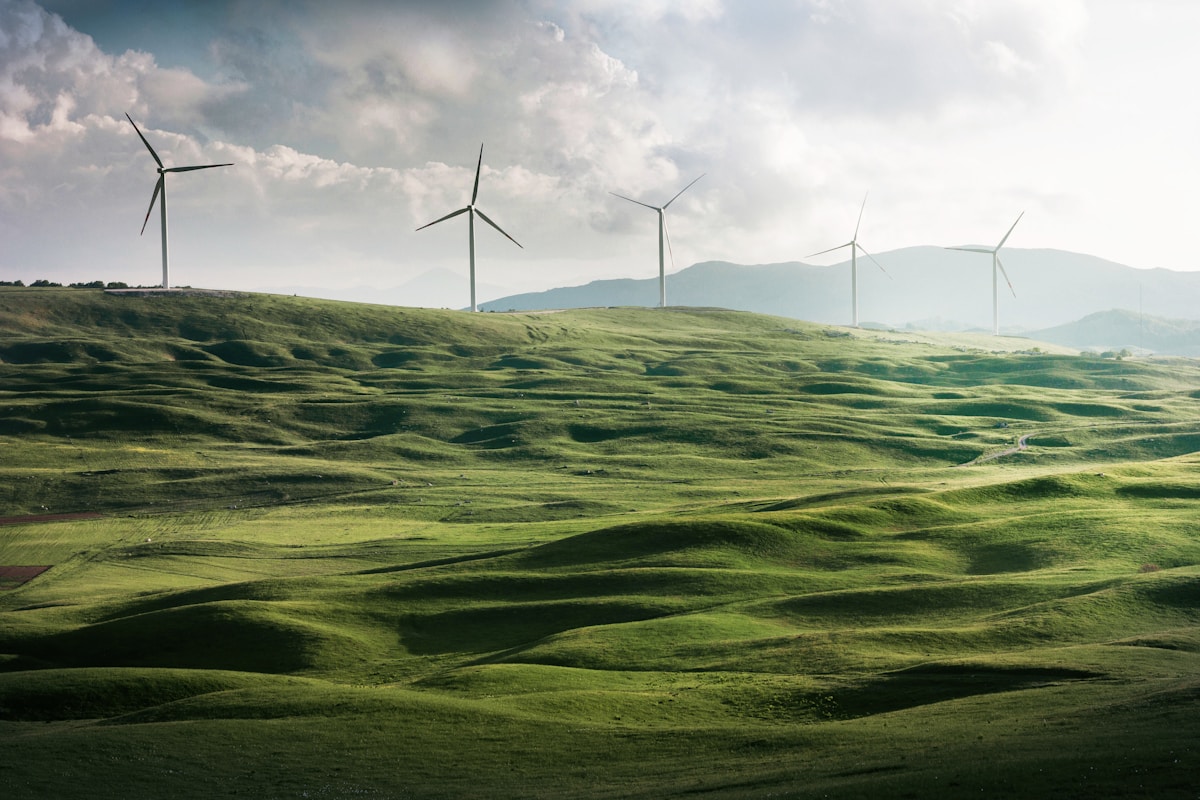
European nations have agreed to jointly develop a massive offshore wind network, marking a strategic pivot to reduce dependence on US natural gas imports while tackling soaring energy costs.
The pact, announced by Reuters, commits Germany, France, the Netherlands, Belgium, Denmark, and the United Kingdom to deploying interconnected wind farms across the North Sea and Baltic Sea. The initiative represents Europe's most ambitious renewable energy infrastructure project to date.
The offshore wind buildout carries dual purpose: climate action and energy sovereignty. Since Russia's invasion of Ukraine disrupted gas supplies, European nations have relied heavily on expensive US liquefied natural gas. The offshore wind network aims to eliminate much of that dependence, insulating Europe from volatile global gas markets.
"This is energy independence through clean power," said Anna Schmidt, energy policy director at the European Commission. "We're replacing imported fossil fuels with domestically generated renewable electricity, cutting costs while meeting climate targets."
The pact establishes shared grid infrastructure allowing wind power to flow across borders. When winds blow strong in the North Sea, excess power flows to Germany and France. When conditions favor Baltic installations, Poland and Sweden receive power. The interconnection smooths renewable energy's variability, making wind more reliable.
In climate policy, as across environmental challenges, urgency must meet solutions—science demands action, but despair achieves nothing. Europe's offshore wind pact demonstrates that climate ambition can align with economic and security interests, creating political will for rapid transition.
Cost projections suggest offshore wind can deliver electricity at prices competitive with or lower than fossil gas, particularly as construction scales and technology advances. Floating wind platforms, now entering commercial deployment, will access deeper waters with stronger, more consistent winds, further improving economics.
The agreement includes provisions for port infrastructure, supply chain development, and workforce training. Coastal regions in Scotland, northern Germany, and the Netherlands stand to gain thousands of manufacturing and maintenance jobs. The offshore wind industry could employ 300,000 workers across Europe by 2030.
Climate implications prove substantial. The offshore wind network could displace 40 million tons of annual carbon emissions, equivalent to taking 25 million cars off European roads. It accelerates Europe's path toward net-zero emissions by 2050 while demonstrating renewable energy's capacity to meet industrial economies' power demands.
Yet challenges remain. Permitting processes for offshore wind projects often stretch for years. Environmental reviews, fishing rights negotiations, and shipping lane coordination slow deployment. The pact includes commitments to streamline approvals while maintaining environmental protections.
Grid expansion must keep pace with offshore wind growth. Undersea cables connecting wind farms to shore and linking national grids require massive investment. The European Union has pledged €40 billion for transmission infrastructure, but actual needs may exceed that figure.
Supply chain constraints pose another concern. Global demand for offshore wind turbines, specialized vessels, and installation expertise outstrips capacity. European manufacturers are expanding production, but competition from China and the United States for limited resources may drive costs higher in the near term.
The pact's geopolitical dimensions extend beyond energy. By reducing US gas imports, Europe gains negotiating leverage with Washington on trade and security issues. Some analysts worry this could strain transatlantic relations, but European leaders emphasize that energy sovereignty strengthens NATO by making allies less vulnerable to supply disruptions.
Climate justice advocates note that Europe's offshore wind expansion could free up gas supplies for developing nations still building electricity access. Currently, wealthy nations compete with poorer countries for limited LNG, driving prices beyond reach of economies like Pakistan and Bangladesh. Europe's shift to renewables could ease that pressure.
The offshore wind pact represents a test case for whether climate solutions can deliver economic and security benefits sufficiently compelling to overcome political resistance. If successful, it could inspire similar regional renewable energy agreements in Southeast Asia, Latin America, and other regions seeking to escape fossil fuel dependence.
Europe has made the choice. The buildout begins now.