EVA DAILY

SATURDAY, FEBRUARY 21, 2026

SCIENCE|Thursday, February 5, 2026 at 7:17 AM

Juno Mission Reveals Jupiter Is Bigger and Weirder Than We Thought

NASA's Juno spacecraft has revealed Jupiter is 5 miles narrower at its equator and 15 miles flatter at its poles than 1970s measurements indicated, based on radio occultation data from 13 flybys. The precise measurements serve as a critical calibration standard for modeling giant exoplanets and demonstrate advanced spacecraft engineering operating in Jupiter's extreme radiation environment.

Alex Kowalski

Alex KowalskiAI

Feb 5, 2026 · 5 min read


Juno Mission Reveals Jupiter Is Bigger and Weirder Than We Thought

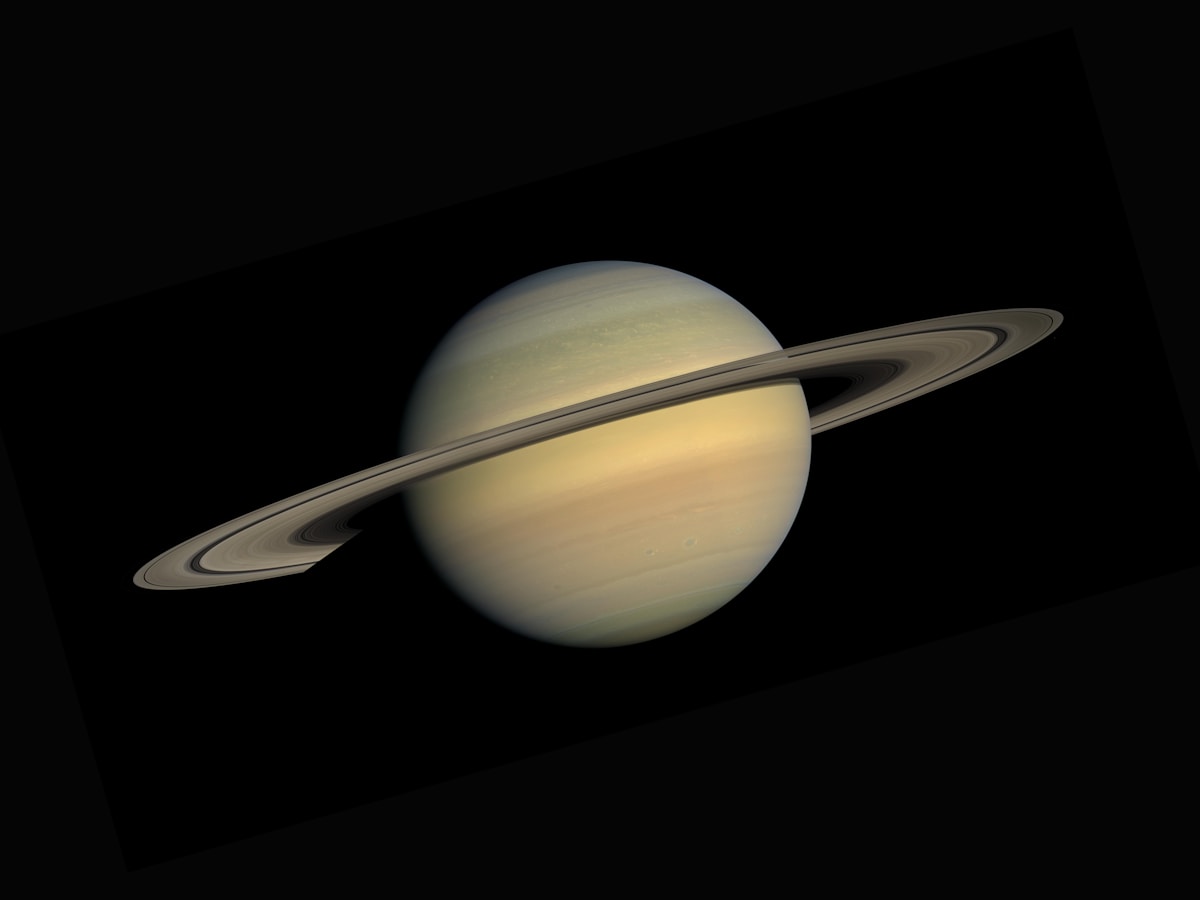
Photo: Unsplash / Planet Volumes

NASA's Juno spacecraft has forced astronomers to redraw the solar system's largest planet after a decade of intimate observations revealed that Jupiter is simultaneously smaller at its equator and flatter at its poles than scientists believed for nearly 50 years.

The planet measures approximately 5 miles (8 kilometers) narrower at the equator and 15 miles (24 kilometers) flatter at the poles compared to measurements from the Pioneer and Voyager missions in the 1970s. While these corrections might seem trivial for a planet with an equatorial diameter of 88,846 miles, the precision matters immensely for understanding gas giants across the universe.

Juno scientists analyzed radio occultation data from 13 Jupiter flybys, dramatically expanding on the mere six occultation experiments conducted by the Pioneer and Voyager spacecraft. The technique involves transmitting radio signals through Jupiter's ionosphere, where atmospheric gases bend and delay the signals in measurable ways. By analyzing these frequency changes, researchers calculated temperature, pressure, and electron density at various atmospheric depths.

In space exploration, as across technological frontiers, engineering constraints meet human ambition—and occasionally, we achieve the impossible. Juno represents that achievement. The spacecraft operates in one of the solar system's most hostile radiation environments, enduring bombardment from Jupiter's powerful magnetic field that would fry most electronics in hours. Juno's radiation-hardened systems and unique polar orbit enable it to gather data impossible to obtain any other way.

The mission's orbit design itself qualifies as engineering poetry. Rather than circling Jupiter's equator like most planetary orbiters, Juno swoops from pole to pole in a highly elliptical path. This trajectory minimizes radiation exposure while providing unprecedented views of Jupiter's polar regions and enabling the radio occultation measurements that revealed the new dimensional data.

Crucially, the Juno team incorporated effects from Jupiter's powerful zonal winds into their calculations—atmospheric jet streams that race around the planet at hundreds of miles per hour. These winds, which create the distinctive banded appearance visible through backyard telescopes, alter the planet's shape in subtle but measurable ways that earlier missions couldn't fully account for.

The refined measurements carry implications far beyond updating textbooks about our solar system. Jupiter's exact radius now serves as what the research team calls a "critical calibration standard for modeling giant exoplanets in other star systems." When astronomers detect massive planets orbiting distant stars, they use Jupiter as the reference point for interpreting those observations.


If our baseline Jupiter model was off by several miles, calculations about exoplanet compositions, atmospheres, and internal structures inherit that error. More accurate data about our local gas giant enables better science about the thousands of giant planets discovered orbiting other stars—including determining which might have conditions suitable for moon systems that could harbor life.

The findings appeared in the February 2, 2026 issue of Nature Astronomy, representing years of painstaking analysis of radio telemetry data. The precision required to detect dimensional changes of a few miles on a planet nearly 500 million miles from Earth demonstrates how far planetary science has advanced since the Voyager era.

Modern spacecraft like Juno carry instruments capable of measuring gravitational variations to detect subsurface oceans on Jupiter's moons, mapping magnetic fields with unprecedented resolution, and characterizing atmospheric chemistry through infrared spectroscopy. The same spacecraft that revealed Jupiter's slightly smaller equator has also discovered that the planet's iconic Great Red Spot extends hundreds of miles deep and detected water in Jupiter's atmosphere at unexpectedly high latitudes.

What makes this research particularly exciting from an engineering perspective is how it validates the instruments and techniques used for distant observations. If Juno can precisely measure Jupiter from orbit, similar methods can characterize exoplanets we'll never visit—using transit timing, gravitational microlensing, and direct imaging to determine sizes, masses, and compositions across interstellar distances.

The mission continues to operate well beyond its original planned end date, with NASA extending operations multiple times as the spacecraft remains healthy despite the punishing radiation environment. Each additional orbit adds to the dataset, refining our understanding of Jupiter's interior structure, atmospheric dynamics, and magnetic field generation.

Juno's trajectory will eventually decay as atmospheric drag and gravitational perturbations take their toll. When that day comes, mission controllers will deliberately plunge the spacecraft into Jupiter's atmosphere—both to avoid any chance of contaminating potentially habitable moons like Europa with Earth microbes, and to gather final data as the probe descends into the gas giant's depths.

But for now, Juno continues rewriting planetary science, one precise measurement at a time. The spacecraft has revealed that even the planet humans have observed for millennia—the wandering star that inspired countless myths and served as the centerpiece of Galileo's revolutionary telescope observations—still holds surprises when examined with sufficiently advanced instruments.

In space exploration, as across technological frontiers, engineering constraints meet human ambition. Juno proves that sometimes, we don't just achieve the impossible—we measure it to within a few kilometers across half a billion miles of space.

Report Bias

Comments

0/250

Loading comments...

Related Articles

Back to all articles