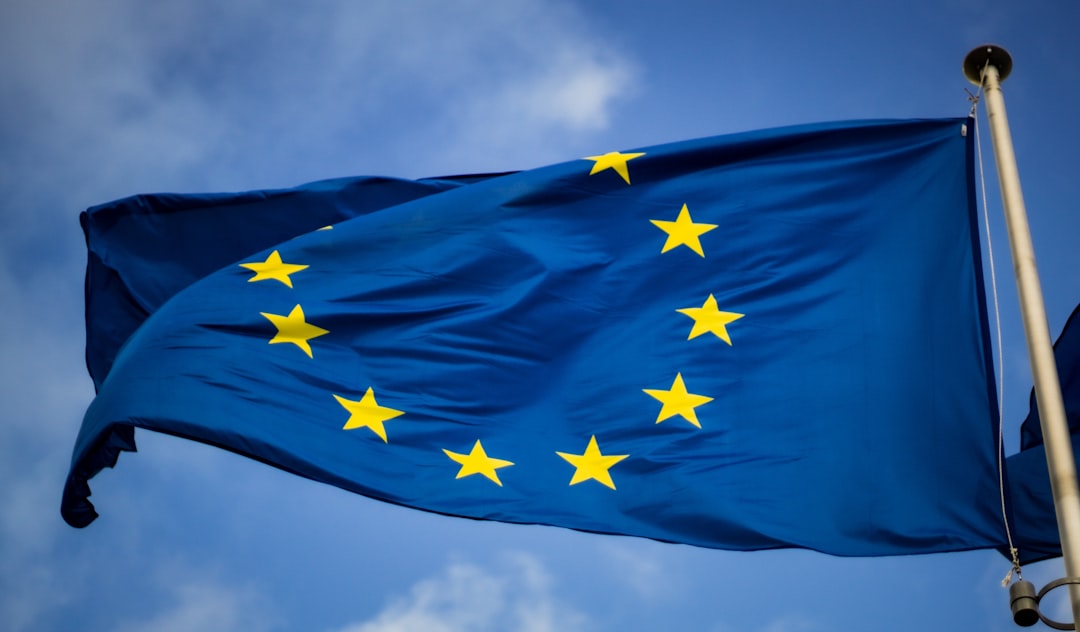
The European Union is considering restricting veto rights for new member states as the bloc pushes for enlargement to include Ukraine, Moldova, and Western Balkan countries, according to proposals under discussion in Brussels.
The plan would create a two-tier system in which new entrants gain access to EU funding and regulatory frameworks but face limitations on their ability to block decisions in policy areas where unanimity is currently required. Senior EU officials confirmed the discussions to The Guardian, though formal proposals have not yet been presented to member states.
To understand today's headlines, we must look at yesterday's decisions. The EU's expansion eastward after the Cold War brought in countries with vastly different economic development levels and political cultures. The 2004 enlargement added 10 new members, followed by Romania and Bulgaria in 2007 and Croatia in 2013.
That expansion created internal tensions. Newer members from Central and Eastern Europe have occasionally blocked initiatives championed by Western European powers, most notably Hungary and Poland's resistance to EU rule-of-law mechanisms and refugee resettlement quotas. These vetoes have frustrated officials in Berlin, Paris, and Brussels who see institutional reform as essential to making the EU governable at 30-plus members.
The current proposal reflects that frustration. By limiting veto rights for new entrants, EU architects hope to accelerate enlargement without paralyzing decision-making. The approach would allow the bloc to expand while preserving the ability to act on foreign policy, taxation, and other sensitive areas where unanimity is required.
However, the plan raises fundamental questions about equality within the union. An EU with first-class and second-class members risks creating resentment among countries that join under restricted terms. Why should Ukraine or Moldova accept diminished voting rights when Hungary—a serial obstructionist in the eyes of many Western officials—retains full veto power?
Prospective members may calculate that even partial EU membership offers benefits worth accepting restricted rights. Access to the single market, structural funds, and security guarantees could outweigh the loss of veto power on policies where new members have limited influence anyway.
For Ukraine, the implications are particularly significant. Kyiv has framed EU membership as a strategic goal worth fighting for—literally. Ukrainian officials have argued that integration with Europe represents the country's future, in contrast to the authoritarian model embodied by Russia. If that integration comes with second-tier status, Ukrainian public opinion may shift.
The proposal also reflects a broader debate about the EU's identity. Is it a union of equals, where small nations like Luxembourg and Malta wield the same veto power as Germany and France? Or is it a hierarchical structure where larger, wealthier members set the agenda and newer, poorer countries accept terms dictated by the core?
Institutional reform has bedeviled the EU for decades. The Lisbon Treaty, which took effect in 2009, was intended to streamline decision-making after the 2004 enlargement. It partially succeeded, expanding qualified majority voting in some policy areas. But foreign policy, taxation, and constitutional matters still require unanimity—giving any single member state the power to block the other 26.
Hungary's Prime Minister Viktor Orbán has wielded that veto repeatedly, blocking aid to Ukraine, delaying sanctions on Russia, and obstructing rule-of-law measures. His approach has convinced many EU officials that further enlargement without institutional reform is untenable.
Whether existing members would agree to restrict rights for newcomers remains uncertain. Eastern European countries that joined in 2004—particularly Poland, Czech Republic, and the Baltic states—may oppose creating a system they perceive as discriminatory. Western Balkans countries in the accession queue may balk at joining on inferior terms.
What is clear is that the question of EU expansion has become inseparable from the question of EU governance. The bloc cannot continue expanding indefinitely under rules designed for a much smaller membership. The two-tier proposal represents one possible solution—but whether it proves politically viable will determine whether Ukraine's westward path ends in full EU membership or something altogether more ambiguous.