
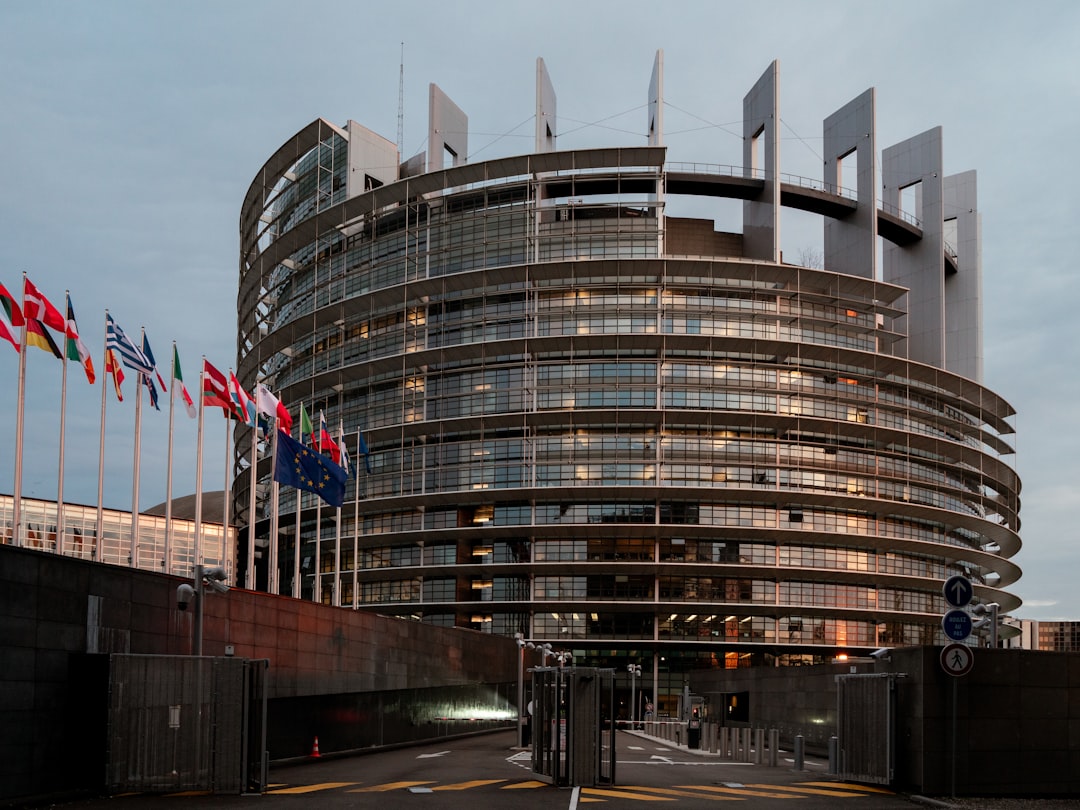
Andrej Rajchl and Kateřina Vachatová, lawmakers in Czech Republic's parliament, have introduced legislation requiring organizations receiving foreign funding to register as 'foreign agents'—a proposal that explicitly draws on Russian and Hungarian models rather than American law, according to <link url='https://denikalarm.cz/2026/03/ne-rajchl-s-vachatovou-se-neinspiruji-americkym-zakonem-fara-ale-v-rusku/'>analysis by Deník Alarm</link>.
The draft law would create a registry designating nonprofits, media outlets, activists, and journalists receiving international financial support as 'foreign agents'—including organizations funded by the European Union, a political bloc Czechia voluntarily joined two decades ago. The Justice Ministry would gain authority to determine which entities qualify as 'political nonprofits' subject to the designation.
<h2>Putin's Playbook, Not Washington's</h2>
Proponents have attempted to frame the measure as similar to the United States' Foreign Agents Registration Act (FARA) from 1938. Legal analyst Jan Bělíček rejects this comparison entirely. American FARA targets organizations representing foreign government interests with proven direct control or funding relationships. Russia's 2012 law—and the Czech proposal—broadly designate all foreign-funded organizations as 'foreign agents' regardless of actual government influence.
<blockquote>"The Czech proposal goes even further than Putin's approach by encompassing all subject types from inception," Bělíček writes, noting Russia progressively expanded its statute from nonprofits to media to individual activists over a decade.</blockquote>
The vague definitions could theoretically capture municipalities seeking European development grants, creating a chilling effect on civic participation and EU collaboration across Czech Republic.
<h2>Assault on Velvet Revolution Legacy</h2>
The proposal represents a direct challenge to the democratic institutions established after the Velvet Revolution peacefully ended communist rule in 1989. Civil society organizations—many receiving grants from EU institutions, Western foundations, and international donors—formed the backbone of transition to liberal democracy and eventual EU membership in 2004.