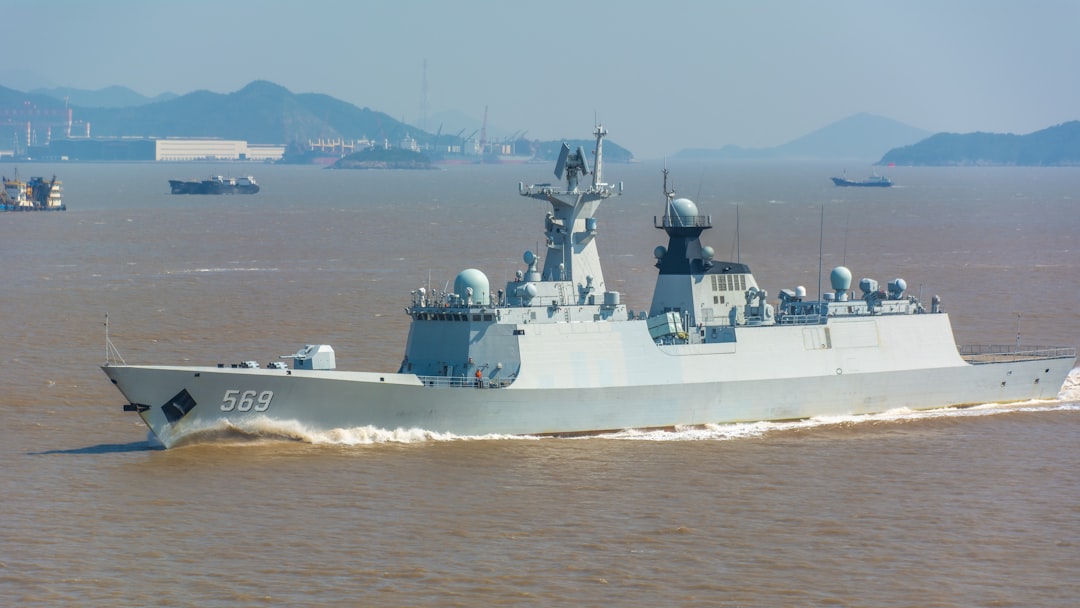
China has deployed the Liaowang-1, an advanced intelligence-gathering vessel, to the Gulf of Oman near the Strait of Hormuz, marking an expansion of Beijing's naval surveillance operations beyond the Pacific into waters critical to global energy supplies.
The deployment, reported by Cicero's, comes amid heightened tensions in the Middle East following recent U.S. military actions and demonstrates China's growing capability and willingness to conduct intelligence operations in distant theaters.
The Liaowang-1 (瞭望一號, "Lookout No. 1") represents China's most sophisticated naval surveillance platform, equipped with advanced electronic warfare systems, satellite communications, and signals intelligence capabilities. Its presence near the Strait of Hormuz—through which approximately 21% of global petroleum passes—signals Beijing's expanding interest in monitoring maritime activities far from Chinese shores.
The deployment aligns with China's Belt and Road Initiative energy security imperatives. China imports approximately 10 million barrels of oil daily, with substantial volumes transiting the Strait of Hormuz from Saudi Arabia, Iraq, and other Gulf producers. Protecting these energy lifelines has become a strategic priority for Beijing.
Unlike previous Chinese naval deployments to the region—typically focused on anti-piracy operations off the Horn of Africa—the Liaowang-1's intelligence-gathering mission suggests more assertive naval posture. The ship's sophisticated sensor suite can monitor communications, track vessel movements, and potentially observe U.S. and allied naval operations in the region.
The timing is significant. Rising tensions between the United States and Iran, coupled with instability in Yemen and the broader Persian Gulf, have made the region a focal point of great power competition. China has maintained careful neutrality in Middle Eastern conflicts while expanding economic ties with all regional actors, including Iran, Saudi Arabia, and the UAE.
Analysts note that China's naval reach has expanded dramatically over the past decade. The People's Liberation Army Navy now operates a permanent base in Djibouti, regularly deploys task forces to the Indian Ocean, and has established port access agreements across the Arabian Sea and Persian Gulf.
The Belt and Road Initiative has provided the economic framework for this expansion. Chinese investments in Gwadar (Pakistan), Hambantota (Sri Lanka), and Khalifa Port (UAE) create potential logistics hubs for naval operations, though Beijing maintains these are purely commercial facilities.
For regional powers, China's expanded naval presence represents both opportunity and concern. Gulf states value Chinese investment and see Beijing as a potential balancer to U.S. influence. However, the presence of intelligence-gathering vessels raises questions about information security and China's intentions should regional conflicts escalate.
The deployment also reflects China's assessment that it can no longer rely solely on the U.S. Navy to protect maritime commons essential to Chinese interests. As U.S.-China strategic competition intensifies, Beijing appears to be developing independent capabilities to monitor and potentially influence events in critical regions.
The 中國人民解放軍海軍 (Zhōngguó Rénmín Jiěfàngjūn Hǎijūn, People's Liberation Army Navy) has transformed from a coastal defense force to a true blue-water navy over two decades of sustained investment. Ships like the Liaowang-1 represent the intelligence foundation for power projection—you cannot influence what you cannot monitor.
Whether this expansion represents defensive protection of economic interests or the foundation for more assertive great power competition remains a subject of debate among regional analysts. Beijing characterizes its naval activities as peaceful and aimed at protecting legitimate commercial interests, but the deployment of sophisticated spy ships suggests preparations for more complex scenarios.
Watch what they do, not what they say. In East Asian diplomacy, the subtext is the text.