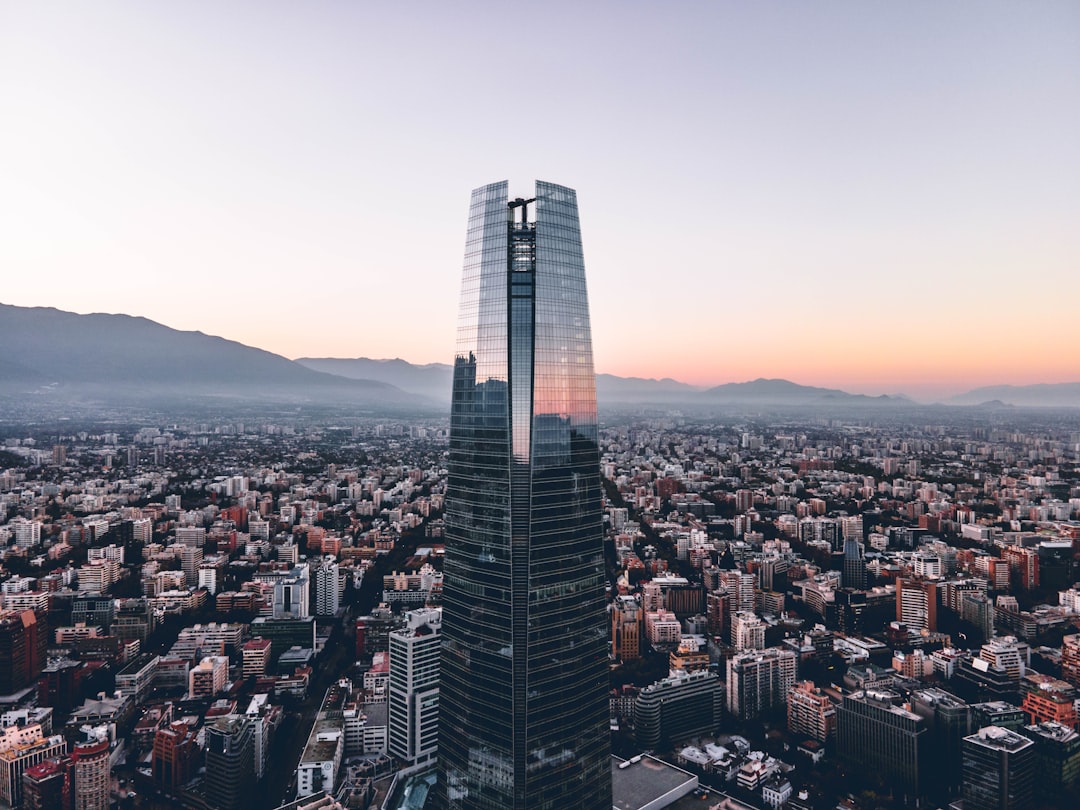
Chile's young leftist government wants to slash corporate taxes by four percentage points over four years, and that sound you hear is economists across Santiago asking: what happened to the revolution?
Finance Minister Jorge Quiroz unveiled the plan this week: reduce the corporate rate from 27% to 23%, aligning Chile with OECD averages and, the government claims, kickstarting investment and job creation in Latin America's most developed economy.
"For each percentage point reduction in corporate tax, GDP grows 0.65% long-term," the Finance Ministry argued in its proposal, according to El Mostrador. Officials say 55% of Chilean workers are employed by corporations subject to this rate, making tax relief for business a jobs policy.
But critics see something else: a center-left president abandoning his base to court the business elite that opposed his election.
Pragmatism or Betrayal?
President Gabriel Boric came to power in 2022 on a wave of street protests demanding radical change - pension reform, constitutional overhaul, wealth redistribution. He was the young progressive who would finally break Chile's neoliberal model, the one installed under Augusto Pinochet's dictatorship and preserved through decades of center-left governments too timid to challenge it.
Then reality hit. Chile's proposed new constitution was rejected by voters. Economic growth stalled. Business confidence tanked. And Boric, reading the room, pivoted toward what his advisors call "responsible governance" and his critics call capitulation.
Now he's cutting corporate taxes while leaving income taxes on wage earners untouched.
"Why weren't second-category income taxes reduced for lower earners?" economist Claudio Agostini asked in the El Mostrador report, pointing to the distributional consequences. Benefits flow to large corporations and wealthy shareholders. The middle class gets nothing.
Former Finance Minister Ignacio Briones, who served under conservative President Sebastián Piñera, warned each percentage point cut could reduce tax revenue by 0.15% of GDP in the short term. Long-term growth might mitigate that to minus 0.1% of GDP - assuming the growth materializes.
The Trickle-Down Question
Agostini went further, noting there's "no example worldwide" demonstrating the government's claimed effects. Reagan-era tax cuts in the United States and Thatcher's reforms in the United Kingdom failed to generate the immediate economic booms promised. Trickle-down economics has a long history of not trickling.
The Boric administration, aware of the fiscal risks, is now considering a more gradual approach: cut rates by 0.5 percentage points in 2027 and 1.5 points in 2028, spreading the revenue loss over time.
But the political damage may already be done. Chile's left sees a president who ran against the establishment now governing like it. The right sees weakness and smells blood for the next election. And economists see a government betting big on a theory that rarely works in practice.
Twenty countries, 650 million people. Chile was supposed to be the success story, the democracy that worked, the economy that delivered. Instead, it's become another cautionary tale about the gap between campaign promises and governing realities - and about how hard it is to redistribute wealth when the wealthy still hold the power.
Somos nuestra propia historia. And in Chile right now, that history is being written by technocrats in ties, not protesters in the streets.