
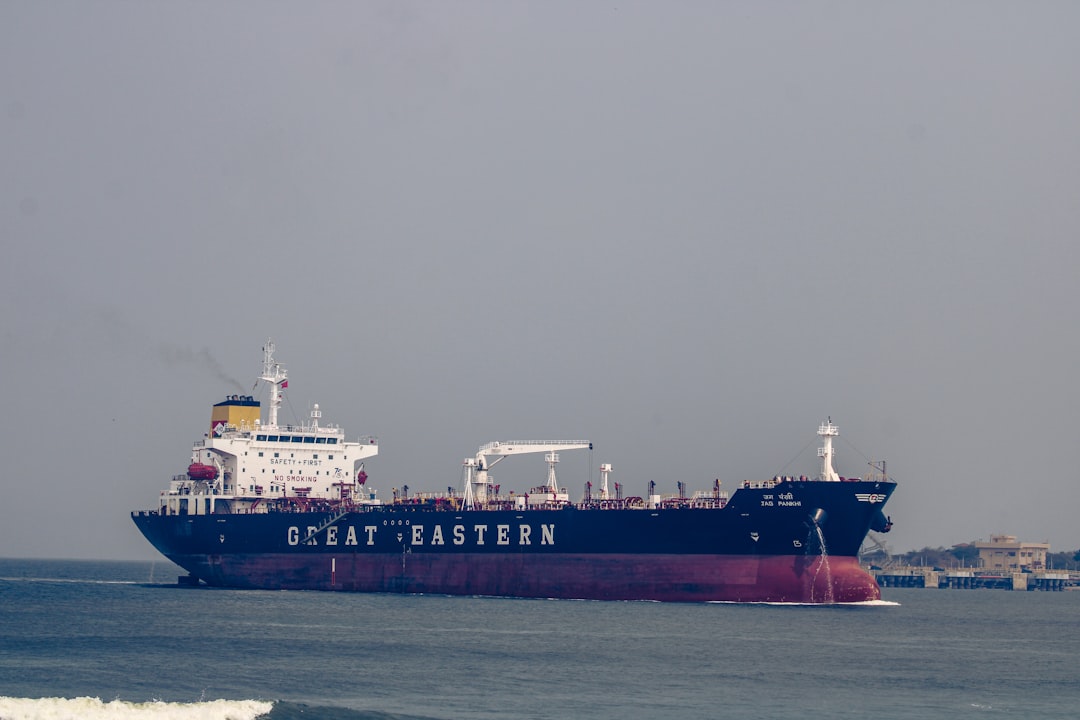
Brazil has achieved record-breaking oil exports to China as the Iran conflict disrupts global energy markets, according to Brazilian media reports that highlight the South American nation's growing role as an alternative energy supplier and its deepening economic integration within the BRICS coalition.
Brazilian petroleum exports to China surged in the first quarter of 2026, with industry analysts attributing the spike to Beijing's efforts to diversify energy sources amid military tensions in the Persian Gulf. The development strengthens economic ties between the two BRICS partners while potentially reducing U.S. influence in the Western Hemisphere's largest economy.
In Brazil, as across Latin America's giant, continental scale creates both opportunity and governance challenges. The country's offshore pre-salt oil reserves, discovered in the 2000s beneath thick layers of salt under the Atlantic Ocean, have transformed Brazil into a major petroleum producer capable of competing with Middle Eastern suppliers.
Chinese demand for Brazilian crude has accelerated as the Iran-Israel conflict threatens traditional supply routes through the Strait of Hormuz. Brazilian oil offers logistical advantages for China, arriving via safer maritime routes that avoid geopolitical chokepoints, though the journey around Africa or through the Panama Canal adds transportation costs.
The export boom provides welcome economic relief for President Lula da Silva's government, which has struggled with sluggish growth and persistent inflation. Petroleum revenues strengthen Brazil's fiscal position while generating employment in coastal states like Rio de Janeiro and Espírito Santo, where offshore operations are concentrated.
Petrobras, Brazil's state-controlled oil company, has ramped up production to meet Chinese demand. Company officials indicate that pre-salt fields are operating at near-maximum capacity, with additional investment in drilling platforms and pipeline infrastructure planned for coming years.
The Brazil-China energy relationship extends beyond crude oil to include partnerships in refining, renewable energy, and technology transfer. Chinese companies have invested billions in Brazilian infrastructure projects, often as part of Beijing's Belt and Road Initiative, though Brazil has not formally joined that program.
For Chinese policymakers, Brazilian oil represents more than emergency supply diversification. It advances strategic goals of reducing dependence on Middle Eastern producers and strengthening alliances with major developing nations through the BRICS framework, which also includes Russia, India, and South Africa, along with newer members.
The arrangement carries geopolitical implications for the United States, which has traditionally viewed Latin America as within its sphere of influence. Brazil's pivot toward China as its largest trading partner challenges American economic dominance in the region, though Brazilian officials insist they maintain balanced relationships with both powers.
Environmental advocates have expressed concern that increased fossil fuel production contradicts Brazil's climate commitments and Lula's pledges to achieve zero deforestation in the Amazon. The government argues that oil revenues can fund green transition programs and sustainable development initiatives in vulnerable regions.
Industry experts note that Brazilian crude is particularly attractive to Chinese refineries due to its quality characteristics. The pre-salt oil is generally light and sweet, meaning it contains relatively low sulfur content and is easier to refine into high-value products like gasoline and jet fuel.
The export surge has strained Brazil's port infrastructure, with loading terminals operating at maximum capacity. Authorities in Santos, Brazil's busiest port, report record tanker traffic as vessels queue to load crude for the journey across the Pacific Ocean or around Cape Horn to Chinese refineries.
Economists caution that over-reliance on commodity exports to a single buyer creates vulnerabilities, particularly given China's slowing economic growth and potential for political tensions. Brazil experienced this dynamic with agricultural exports when Chinese authorities previously threatened to curtail soybean purchases during trade disputes.
The timing of the export boom coincides with Brazil's hosting of BRICS summit preparations, where energy cooperation is expected to feature prominently on the agenda. Brazilian diplomats view the oil relationship as evidence of BRICS members' ability to create alternative economic architectures outside Western-dominated institutions.
As global energy markets remain volatile amid the Iran conflict and broader geopolitical tensions, Brazil's emergence as a reliable supplier positions the nation for continued influence in international affairs, though the long-term sustainability of commodity-dependent growth remains an open question for Latin America's giant.