Campaign tensions escalated dramatically in the village of Tatárszentgyörgy when a 12-year-old boy confronted opposition volunteers with an air rifle, firing twice into the ground as Hende Máté, the Tisza Party candidate for Pest County's 13th district, canvassed door-to-door in an impoverished neighborhood.
The incident, captured on video and widely shared on social media, occurred as Tisza volunteers campaigned in areas where residents live in deep poverty. According to opposition accounts, the child brought the air weapon from his home and discharged it in the presence of campaign workers, prompting them to call police.
While the boy's father insisted his son had no intention to injure anyone, Tisza volunteers reported encountering residents shouting "Only Fidesz!" during the confrontation. Police were summoned to the scene for an investigation.
The episode took a more troubling turn when Tisza volunteers alleged they encountered another 12-year-old boy in Tatárszentgyörgy who claimed he had been hired by the village's Fidesz mayor, Szehofner József, to distribute government party leaflets in exchange for payment. The mayor, who has led the Pest County municipality since 2010, drove past the scene during the police investigation but did not stop to address the situation.
Government officials have not yet commented on the allegations. Opposition parties characterized the incident as evidence of escalating intimidation tactics in rural constituencies where Fidesz has maintained dominance for over a decade.
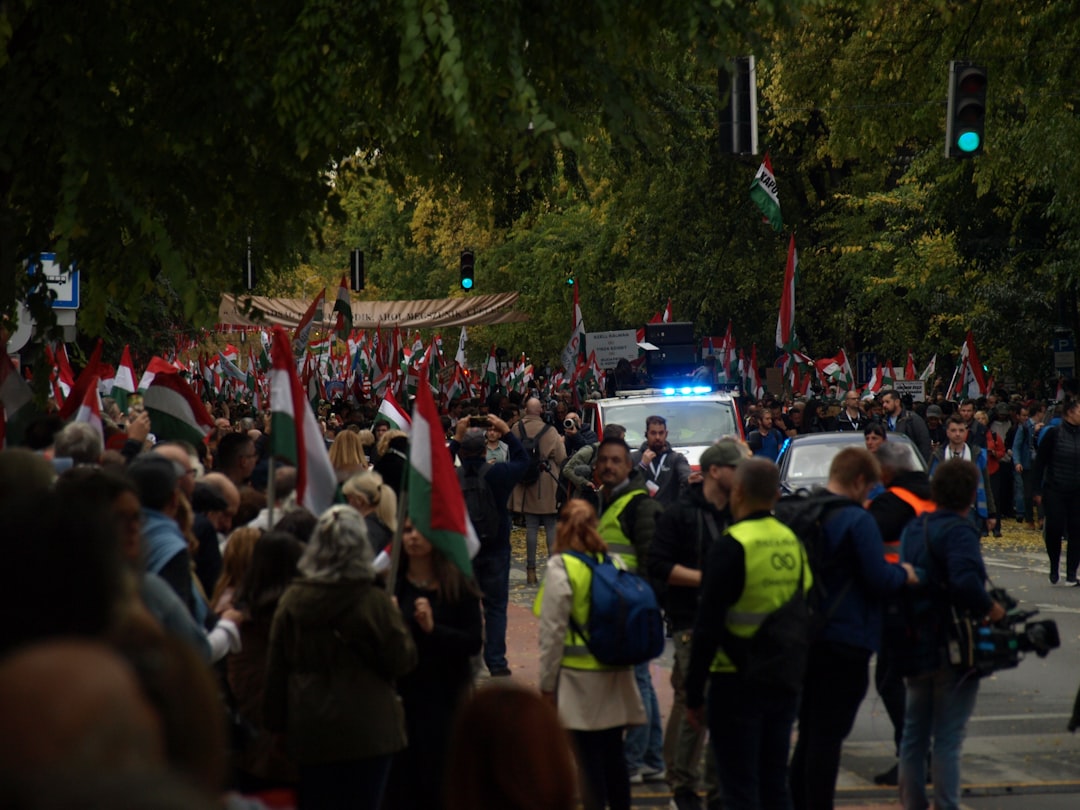
The confrontation comes just 11 days before Hungary's parliamentary elections on April 12, as Magyar Péter's Tisza Party mounts an unprecedented challenge to Prime Minister Viktor Orbán's governing coalition. Recent polling suggests the race has tightened dramatically, with Tisza rallies drawing unexpectedly large crowds in traditionally Fidesz-dominated rural areas.
In Hungary, as across the region, national sovereignty and European integration exist in constant tension. But the current campaign has revealed deeper fault lines, with accusations of vote-buying, intimidation, and unequal access to media resources dominating the final stretch before voters cast ballots.
Electoral observers have noted the heated atmosphere, with both government and opposition supporters increasingly confrontational at campaign events. The Tatárszentgyörgy incident represents the most serious allegation of violence involving a minor during the current election cycle.
As Hungary enters the final days before the vote, the question facing the country is not merely which party will govern, but whether democratic norms can survive a campaign season that has pushed the boundaries of acceptable political conduct to their breaking point.