
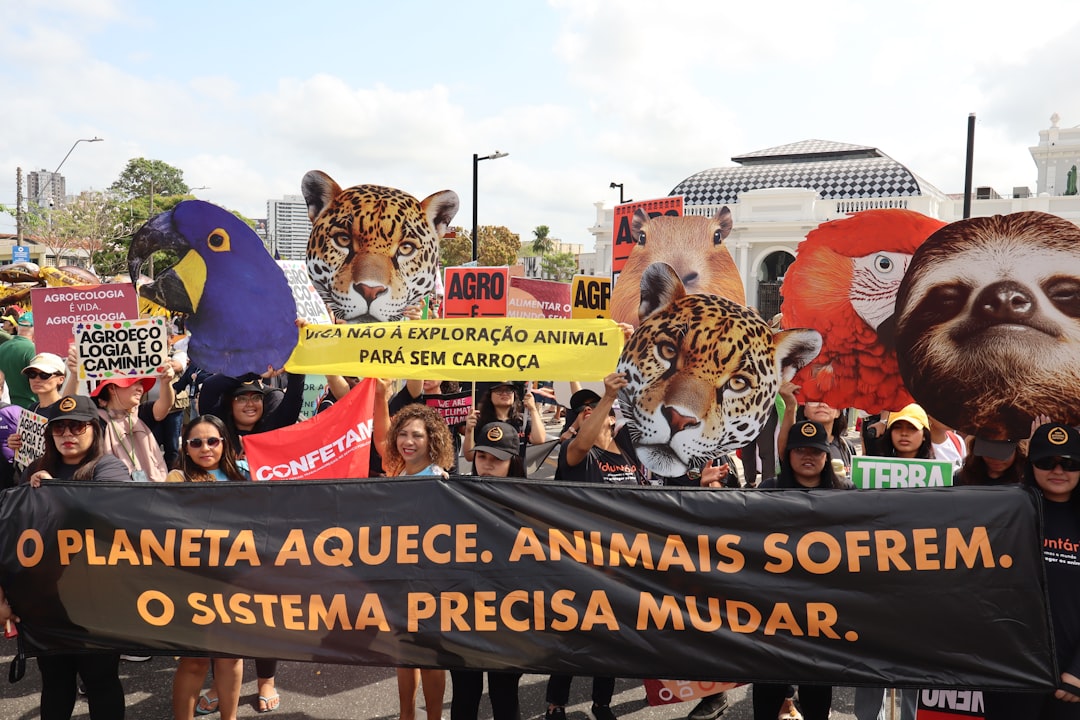
Brazil has submitted its most ambitious climate commitment to the United Nations, pledging to eliminate all deforestation by 2030 while expanding renewable energy to 90% of its electricity grid, signaling that developing world climate leadership can advance alongside economic development.
The updated Nationally Determined Contribution, filed with the UN Framework Convention on Climate Change, commits Brazil to cutting greenhouse gas emissions 67% below 2005 levels by 2035—among the most aggressive targets submitted by any major economy.
President Luiz Inácio Lula da Silva, who returned to office in 2023 after a tumultuous political period, has made Amazon protection central to his administration. The new climate plan builds on dramatic deforestation reductions achieved over the past two years, when illegal forest clearing dropped 45% following restoration of environmental agency funding and enforcement powers.
"Brazil will not choose between development and the environment," Lula declared at the plan's unveiling in Brasília. "We will prove that protecting forests, empowering Indigenous peoples, and building a clean energy economy are the path to prosperity, not obstacles to it."
In climate policy, as across environmental challenges, urgency must meet solutions—science demands action, but despair achieves nothing. Brazil's commitment demonstrates that political will can reverse even entrenched environmental destruction when governments prioritize enforcement and provide alternatives to extractive industries.
The plan targets not only Amazon rainforest protection but also the Cerrado savanna and Atlantic Forest ecosystems, which have received less international attention despite facing severe habitat loss. Agricultural expansion, cattle ranching, and soy production drive most Brazilian deforestation, making the zero-clearing pledge dependent on productivity improvements and land-use reforms.
Indigenous land rights feature prominently in the strategy. Brazil commits to completing demarcation of contested Indigenous territories by 2028, recognizing that Indigenous-managed lands experience dramatically lower deforestation rates. The plan allocates $2 billion for Indigenous community support, sustainable livelihood programs, and territorial monitoring systems.

Renewable energy expansion centers on hydroelectric, wind, and solar development, building on Brazil's existing clean energy infrastructure. The country already generates 85% of electricity from renewable sources—primarily hydropower—giving it advantages over fossil fuel-dependent economies in clean energy transition.
Marina Silva, Brazil's Environment Minister and longtime rainforest defender, emphasized international dimensions. "Developed nations created the climate crisis through 200 years of unconstrained emissions," she said. "They must provide financial and technological support enabling countries like Brazil to protect forests while lifting citizens from poverty."
Climate finance remains contentious. Brazil's plan assumes $10 billion annually in international support for forest protection and clean energy projects—funds that wealthy nations pledged repeatedly but rarely deliver in full. The Glasgow climate summit's $100 billion annual commitment to developing countries remains unfulfilled.
Environmental organizations welcomed Brazil's ambition while noting implementation challenges. The country has announced deforestation targets before, only to see them abandoned under subsequent administrations. The 2018-2022 period saw Amazon protections dismantled and illegal logging surge as enforcement agencies faced budget cuts and political interference.
Agricultural sector responses split between large-scale operations resisting new restrictions and sustainable farming advocates supporting the transition. Brazil's powerful agribusiness lobby has historically influenced environmental policy, making sustained political support crucial for plan success.
Scientific analysis suggests Brazil's forest protection directly impacts global climate stability. The Amazon absorbs massive amounts of atmospheric carbon—recent research indicates the intact forest removes roughly 500 million tonnes of CO2 annually, equivalent to Japan's total emissions. Deforestation not only eliminates this carbon sink but releases stored carbon as vegetation burns or decomposes.
Regional climate effects from continued Amazon destruction could prove devastating. The rainforest generates much of its own rainfall through evapotranspiration; as forest cover declines, precipitation drops, creating feedback loops accelerating forest die-back. Scientists warn that losing another 20-25% of Amazon forest could trigger irreversible transition to degraded savanna.
Other Latin American nations have signaled interest in similar commitments. Colombia, Peru, and Ecuador—which share Amazon basin territory—are coordinating rainforest protection strategies, though financing and governance capacity vary significantly across the region.