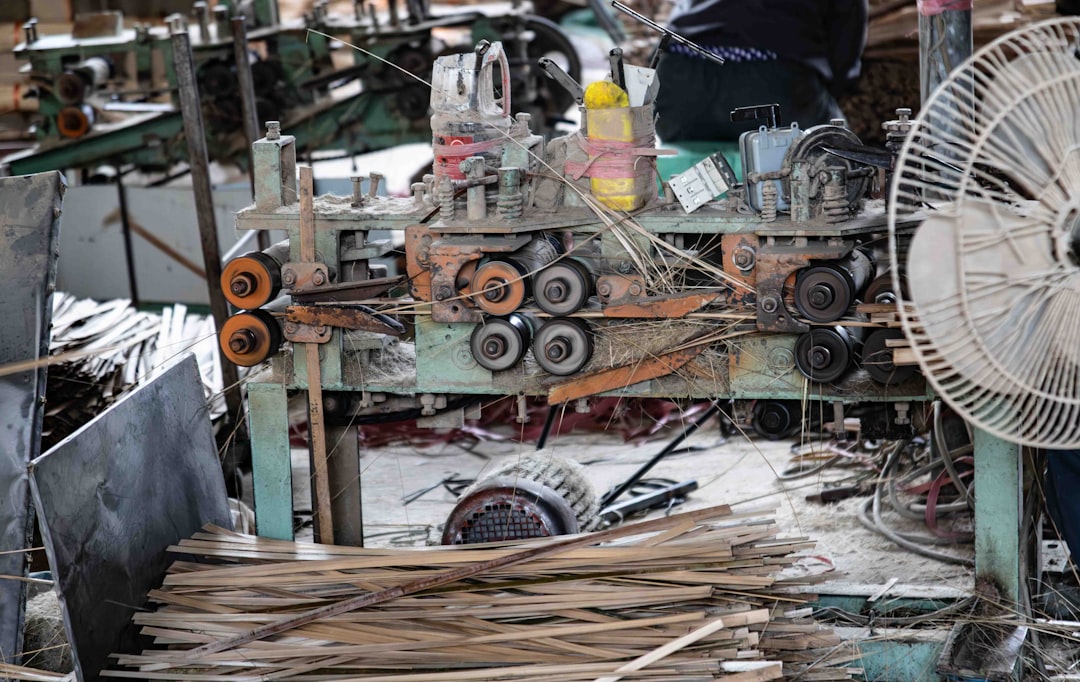
Jeff Bezos is reportedly raising a $100 billion fund to acquire old manufacturing companies and modernize them with AI automation. That's not a typo - one hundred billion dollars to buy up industrial infrastructure and replace workers with algorithms. This is Amazon's warehouse playbook applied to entire sectors of the economy.
According to reports, the fund is targeting traditional manufacturing companies - the kind that make physical goods using processes that haven't fundamentally changed in decades. The pitch is straightforward: buy them, inject AI and automation, cut labor costs, increase margins, profit.
I spent years in tech, and I watched 'disruption' used to justify every aggressive business move. This isn't about efficiency - it's about who owns the means of production in an AI economy.
Let's talk about what 'AI modernization' actually means in manufacturing. It means replacing human workers with computer vision systems for quality control. It means replacing factory floor managers with optimization algorithms. It means replacing skilled tradespeople with robots guided by machine learning. It means fewer people, lower labor costs, and higher profits for whoever owns the capital.
Amazon has been running this playbook in their warehouses for years. They've deployed hundreds of thousands of robots, implemented AI-driven productivity monitoring, and automated huge portions of their fulfillment operations. The result? Higher productivity per worker, but fewer workers overall. And the workers who remain are monitored by algorithms that track their every movement.
Now imagine that same approach applied to steel mills, textile factories, food processing plants, automotive suppliers - basically every sector of manufacturing that hasn't already been fully automated. That's what a $100 billion fund could accomplish.
The scale is genuinely unprecedented. For context, $100 billion is enough to acquire dozens of major manufacturing companies. We're not talking about venture capital bets on startups. We're talking about buying established industrial infrastructure and fundamentally restructuring how production works.
Bezos knows how to deploy capital at scale. He turned Amazon from an online bookstore into a trillion-dollar company that touches every part of the supply chain. He's not proposing this because he thinks manufacturing is a good investment as-is. He's proposing it because he sees an opportunity to extract value through automation.
The efficiency gains will be real. AI-optimized manufacturing is more productive than traditional methods. Computer vision systems don't get tired. Optimization algorithms can find inefficiencies that human managers miss. Robots work 24/7 without breaks or benefits.
But efficiency for whom?
Manufacturing jobs - particularly in the U.S. - have been the foundation of the middle class for generations. They're the jobs that allowed people without college degrees to earn good wages, support families, and build wealth. When you 'modernize' those jobs away, you're not just improving efficiency metrics. You're restructuring the economic basis of entire communities.
The counter-argument is that this is just how technological progress works. Farming used to employ 90% of the workforce; now it's less than 2%. Manufacturing employment has been declining for decades anyway. AI automation is just the next step in a long-running trend.
Fair enough. But there's a difference between gradual technological evolution and deliberate consolidation. When Bezos raises $100 billion to buy manufacturing companies specifically to automate them, that's not market forces gradually shifting. That's concentrated capital deliberately restructuring production to minimize labor costs.
What happens to the workers? The optimistic case is that they retrain for new jobs in the AI-driven economy. The realistic case is that most of them don't, because retraining is hard, new jobs don't necessarily exist in the same communities, and not everyone can or wants to become a software engineer.
The really concerning part is the consolidation. Right now, manufacturing is relatively distributed - lots of different companies, different ownership structures, different approaches. If a $100 billion fund starts acquiring companies across sectors, you're creating concentrated ownership of physical production capacity.
When Amazon dominates e-commerce, they can influence prices and squeeze suppliers. When they dominate cloud computing, they can dictate terms to startups. If Bezos-backed entities dominate manufacturing, they can shape the entire supply chain for physical goods.
I'm not anti-automation. AI genuinely can make manufacturing more efficient, reduce waste, and improve quality. The question is who benefits from those improvements, and what happens to the people currently doing those jobs.
When Bezos says he wants to 'modernize' manufacturing with a $100 billion fund, what I hear is: 'I want to buy the infrastructure that makes physical goods and restructure it to minimize human labor.' That might be good for returns on capital. The question is whether it's good for anyone else.
The technology is impressive. The question is whether anyone has figured out how to deploy it without hollowing out the economic foundation of the communities where manufacturing happens.
$100 billion can buy a lot of factories. The question is what happens to the people who work in them.