
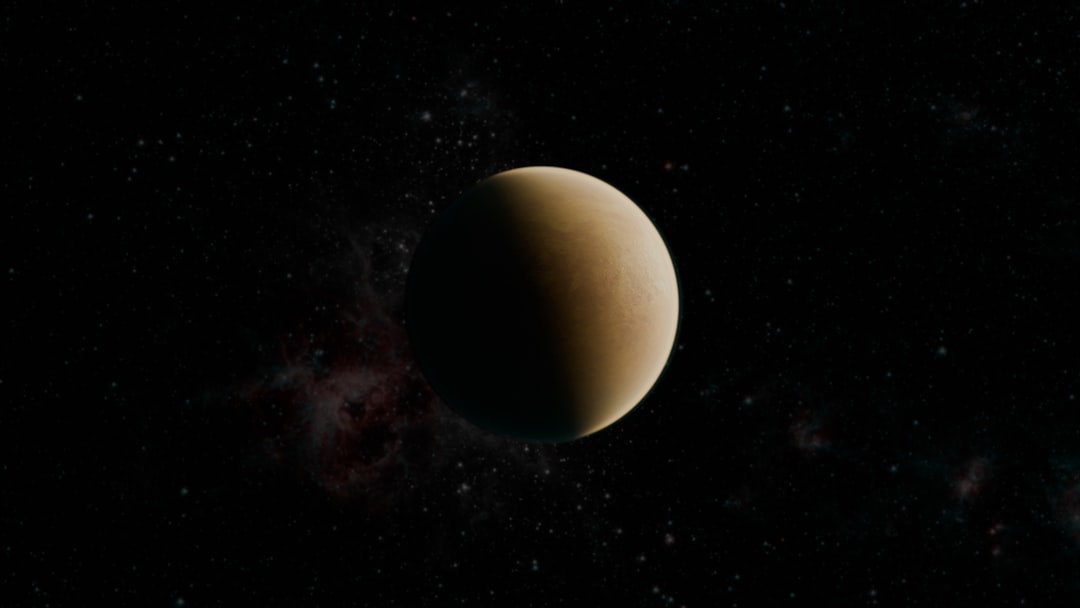
About 800 light-years away, orbiting a young star called HD 110067, there's a solar system that has astronomers scratching their heads. Six planets, all roughly the size of Neptune, all orbiting in perfect resonance with each other like a cosmic clockwork mechanism. And according to our best models of planetary formation, this system shouldn't exist.
Here's the puzzle: these planets are too big, too close to their star, and too perfectly arranged. The leading theory of planet formation - the "inside-out" model - says planets should form from the inside outward, with small rocky worlds near the star and gas giants farther out. HD 110067's system is basically inside-out in reverse.
All six planets are what astronomers call "sub-Neptunes" - larger than Earth but smaller than Neptune, with thick atmospheres of hydrogen and helium. They orbit tightly packed, closer to their star than Mercury is to our Sun. And they're locked in what's called orbital resonance - for every orbit the innermost planet makes, the others complete precise fractional numbers of orbits. It's like a musical chord in space.
Orbital resonance isn't that unusual - Jupiter's moons show it, and we've seen it in other exoplanet systems. But to see six planets all maintaining this delicate dance for what appears to be the entire lifetime of the system? That's extraordinarily rare. It suggests these planets formed in these orbits and have barely been disturbed since.
The discovery, announced earlier this month, comes from data collected by ESA's CHEOPS space telescope, with follow-up observations from multiple ground-based observatories. The team spent months verifying the orbital parameters because, frankly, the configuration seemed almost too perfect to be real.
So what does this tell us? Mainly that our models of planetary formation are incomplete. We've discovered thousands of exoplanets over the past two decades, and they've repeatedly surprised us. Systems with "hot Jupiters" orbiting closer to their stars than Mercury. Planets orbiting binary stars like something out of science fiction. And now this: a pristine, perfectly preserved planetary system that formed in a configuration we didn't think was possible.
The leading hypothesis is that these planets formed farther out, where there was enough material to build gas-rich worlds, and then migrated inward while maintaining their resonant relationships. But the details of how that migration happened without disrupting the resonances? That's the puzzle researchers are now working to solve.