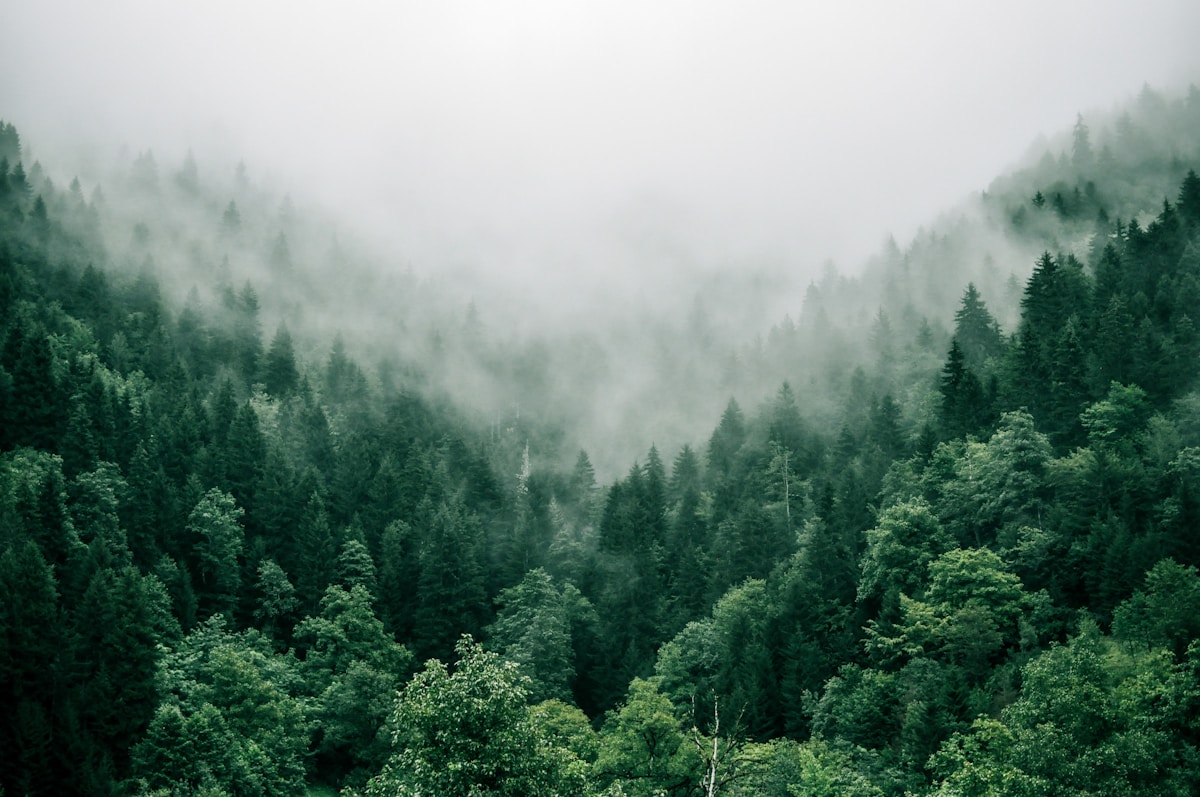

A rapid rise in atmospheric CO₂ 56 million years ago triggered catastrophic forest collapse, increased wildfires, and massive soil erosion—all within a few centuries, not the millennia scientists previously thought.
The finding comes from high-resolution analysis of marine sediment cores, providing our most detailed look yet at how quickly terrestrial ecosystems can destabilize under abrupt global warming.
The event in question is the Paleocene-Eocene Thermal Maximum (PETM)—a well-studied warming episode that saw global temperatures spike by 5-8°C over a geologically brief period. Scientists have long used it as a natural laboratory for understanding rapid climate change.
What's new here is the timescale. Previous studies, limited by coarser sediment records, suggested ecosystem changes unfolded over thousands of years. The new high-resolution marine cores tell a different story: widespread forest loss, surging wildfire activity, and major soil erosion all happened within centuries of the initial CO₂ spike.
Think about that for a moment. Centuries. On a human timescale, that's 10-20 generations. On a geological timescale, it's essentially instantaneous.
The researchers tracked these changes by analyzing sediment chemistry and fossil pollen preserved in ocean floor cores. As forests on land collapsed and soils eroded, distinctive chemical signatures and terrestrial debris washed into the ocean, leaving a detailed chronological record.
The parallels to our current situation are uncomfortable but important. We're injecting CO₂ into the atmosphere faster than the PETM event did. If ecosystems can destabilize within centuries under slower warming, what does that mean for forests experiencing more rapid change?
That said, there are crucial differences. The PETM occurred in a world already much warmer than today, with different continental configurations and ecosystems. We can't simply copy-paste the PETM onto the present and call it a prediction.
What we can say is this: the study provides empirical evidence that major ecosystem collapse can happen on timescales relevant to human civilization. Not abstract geological time—actual centuries that would span from, say, the invention of the printing press to today.
The research underscores why paleoclimate studies matter. The Earth has run these experiments before. We just need to read the results carefully.