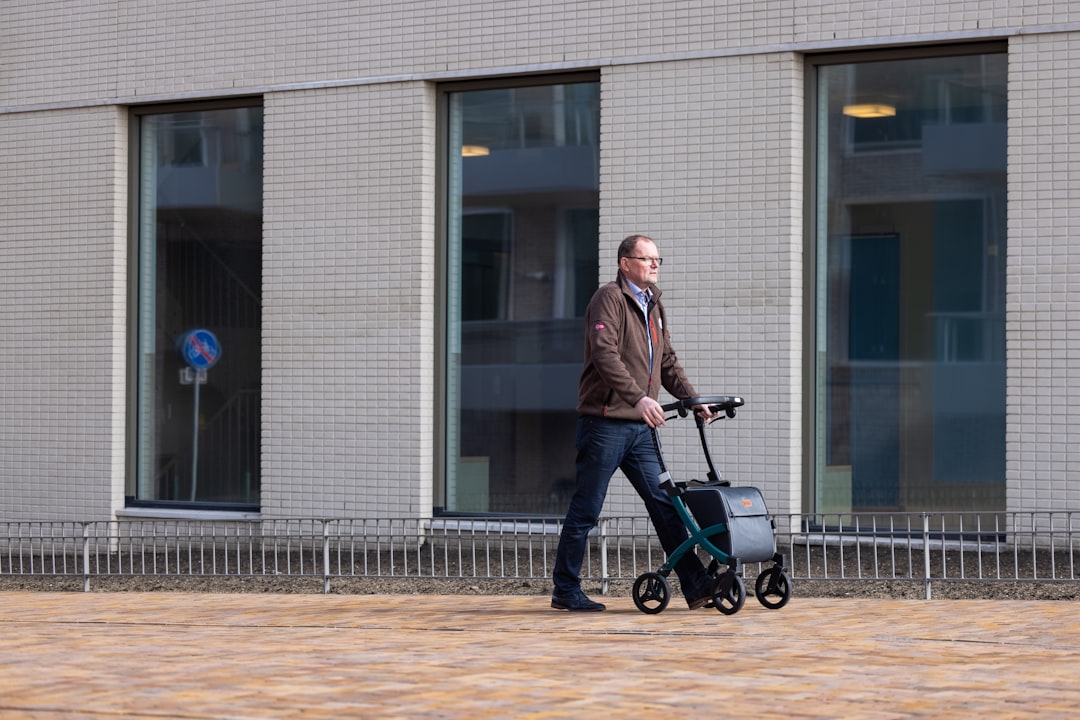
Researchers at the German Research Center for Artificial Intelligence have developed AI-powered wheelchairs that can navigate complex environments autonomously. You can tell the chair "drive me to the coffee machine" and it goes. The technology is impressive. The question is whether wheelchair users actually want or need this level of autonomy.
The research, presented earlier this month in Anaheim, shows sensor-equipped electric wheelchairs that can navigate a roomful of obstacles. The system integrates data from wheelchair-mounted sensors and environmental sensors, including drone-based cameras. It can operate semi-autonomously with joystick input, or fully autonomously via voice commands.
Christian Mandel, senior researcher who co-led the project, points out an inconvenient truth: many wheelchair users with severe disabilities can already navigate tight spaces better than most robotic systems. So what problem are we solving?
This is a pattern I see constantly in tech: engineers building impressive solutions to problems that don't exist, or at least don't exist in the form they imagine. Autonomous wheelchairs are cool. They demonstrate sophisticated AI and sensor fusion. But do wheelchair users wake up thinking "if only my chair could drive itself to the coffee machine"?
The real challenges in wheelchair mobility aren't usually navigation - they're infrastructure. Sidewalks without curb cuts. Buildings without ramps. Elevators that break down. No amount of AI fixes these problems.
That said, there are legitimate use cases. People with very limited upper body mobility might benefit from voice-controlled navigation. Individuals with cognitive disabilities might find autonomous features helpful in specific contexts. The technology isn't useless - it's just not the universal solution the research framing suggests.
The safety system is actually the more interesting innovation. Integrating sensor data from both the wheelchair and the environment could help prevent collisions and falls. That's a genuine safety benefit that doesn't depend on full autonomy.
But here's what concerns me: autonomous systems inevitably fail. When your wheelchair decides to navigate around an obstacle but misreads the environment, what happens? With manual control, users develop sophisticated spatial awareness and adaptation strategies. With autonomous systems, you're trusting the AI's interpretation of sensor data.
The researchers are testing safety extensively, which is good. But there's a broader question about whether adding autonomous features improves mobility or just creates new dependencies on technology that might not work when you need it most.
The disability community has been vocal about technology solutions that sound helpful but miss the point. What users often want isn't more automation - it's better manual controls, more reliable devices, and infrastructure that doesn't require workarounds in the first place.
Smart wheelchair research isn't inherently misguided. But it needs to be driven by the actual needs and preferences of wheelchair users, not by what's technically possible or what makes for impressive demos. The difference between those approaches is everything.