
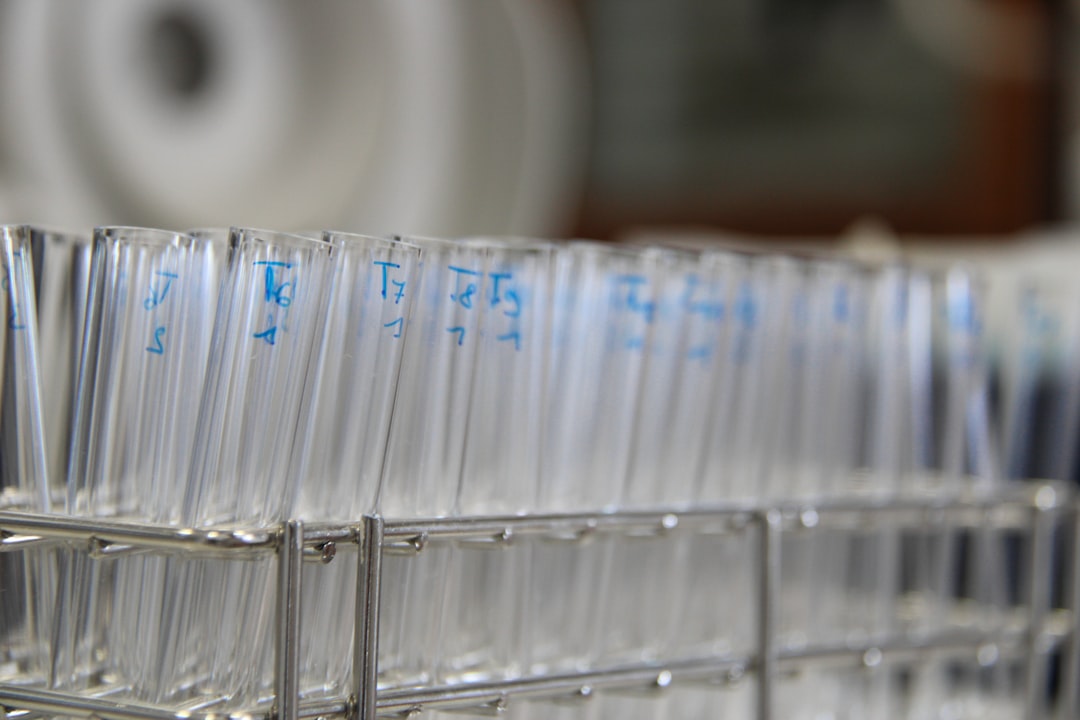
Roughly a quarter of all drugs used in the United States involve services from WuXi AppTec, a Chinese contract research and manufacturing organization that has become deeply embedded in global pharmaceutical supply chains. Now Western policymakers are asking whether that dependency represents a strategic vulnerability—and whether decoupling is even possible.
The WuXi ecosystem—primarily WuXi AppTec and WuXi Biologics—functions as the backbone of outsourced pharmaceutical development. Founded by Li Ge in 2000, these interconnected companies don't discover drugs themselves. Instead, they provide the laboratories, manufacturing capacity, and specialized expertise that allow Western pharmaceutical companies to move molecules from concept to commercialization more quickly and cheaply than building capabilities in-house.
According to industry surveys, 79% of U.S. biopharma companies have at least one contract with a Chinese contract development and manufacturing organization, with WuXi representing the largest single player. The companies rank third and fifth globally among such organizations by revenue, behind Swiss firm Lonza and U.S.-based Catalent—significant but not monopolistic positions that nonetheless create systemic dependencies.
WuXi's competitive advantages derive not from breakthrough technologies but from structural factors that Western competitors struggle to replicate. The company pioneered integrated platform approaches, guiding molecules through entire development pipelines rather than providing discrete services. Chinese workforce costs roughly half Western equivalents, while dramatically higher numbers of STEM Ph.D. graduates create talent depth. Manufacturing innovations like "scale-out" biomanufacturing—using multiple smaller bioreactors instead of single large ones—demonstrate operational sophistication.
These advantages are amplified by China's central government support for biomanufacturing through subsidies and priority designations, while controlling global production of raw pharmaceutical materials and ingredients. The ecosystem advantage compounds WuXi's competitive position in ways that simple cost comparisons understate.
Western security concerns center on this structural indispensability rather than technological monopoly. The U.S. BIOSECURE Act represents the primary policy response, preventing federal funds from supporting Early versions explicitly targeted WuXi, though final legislation employs more flexible designation mechanisms to avoid overly rigid targeting.