

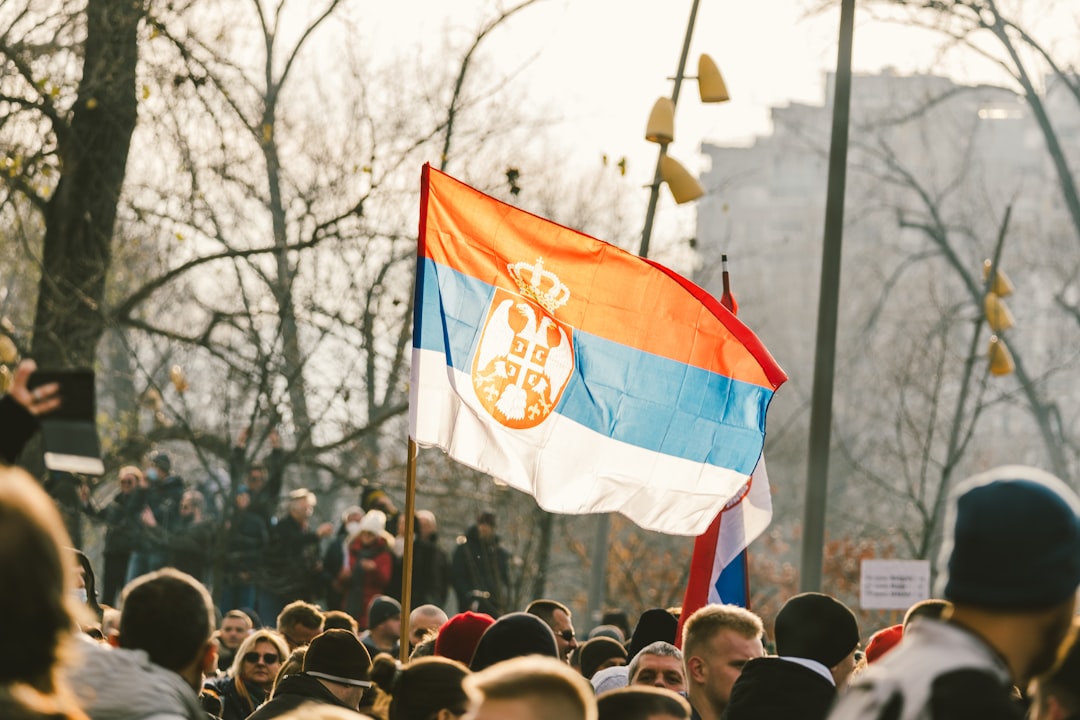
Armed attackers wielding clubs and batons assaulted student activists monitoring upcoming local elections in the northern Serbian town of Kula, raising fresh concerns about democratic standards in the EU candidate country just days before Sunday's municipal votes.Members of the Young Kula civic group were driven into a nearby field around 3 AM and confronted by masked assailants who identified themselves as members of the ruling Serbian Progressive Party (SNS), according to witness testimony reported by Serbian independent media outlet Nova.rs."Unknown people who presented themselves as" SNS members attacked the activists with weapons and forced them into the field, according to activist Katarina Petrović, who witnessed the assault. A gunshot was heard during the confrontation, though no injuries from gunfire were immediately reported.<h2>Police Response Raises Questions</h2>The incident has drawn criticism over the police response, with reports suggesting law enforcement arrested activists while allegedly protecting individuals affiliated with the ruling party. The discrepancy in police treatment reflects broader concerns among opposition groups and civil society organizations about unequal application of law enforcement in politically sensitive situations.The attack in Kula comes as Serbia prepares for local elections in ten municipalities on Sunday, contests being closely watched as indicators of political trends in the country. Opposition parties and monitoring groups have repeatedly raised concerns about unequal media access, misuse of state resources, and intimidation tactics targeting opposition activists and independent election monitors.<h2>EU Candidacy Under Scrutiny</h2>The violence carries particular significance given Serbia's status as a candidate for European Union membership. Brussels has consistently emphasized the importance of democratic standards, rule of law, and media freedom as fundamental criteria for EU accession negotiations.Pre-election violence and selective law enforcement directly challenge the reform commitments Belgrade has made as part of its EU integration process. The incident in Kula provides concrete evidence of the gap between formal commitments and implementation on the ground, a pattern that has complicated Serbia's accession trajectory.In the Balkans, as across post-conflict regions, the path forward requires acknowledging the past without being imprisoned by it. Yet incidents like the Kula attack demonstrate how democratic backsliding can occur not through dramatic constitutional changes, but through the gradual normalization of political violence and unequal law enforcement.<h2>International Observers Arrive</h2>Adding another layer of complexity to the electoral environment, observers affiliated with American far-right political movements have arrived in Serbia to monitor the local elections, according to reports. Their presence raises questions about the nature of international election observation and which democratic standards are being evaluated.The contrast between EU concerns about democratic standards and the arrival of observers from movements skeptical of liberal democratic norms reflects the competing international influences shaping Serbia's political trajectory.For opposition activists and civic monitoring groups like Young Kula, the immediate challenge remains more fundamental: ensuring they can observe the electoral process without fear of violence. The attack in Kula suggests that even this basic democratic function carries risks in Serbia's increasingly polarized political environment.As Western Balkan countries navigate their EU accession processes, incidents like the Kula assault test whether membership conditionality can effectively promote democratic consolidation or whether formal negotiations proceed despite deteriorating conditions on the ground. Sunday's local elections will provide another data point in answering that question.
|



/file/dailymaverick/wp-content/uploads/Becs-roelfmeyer2.jpg)