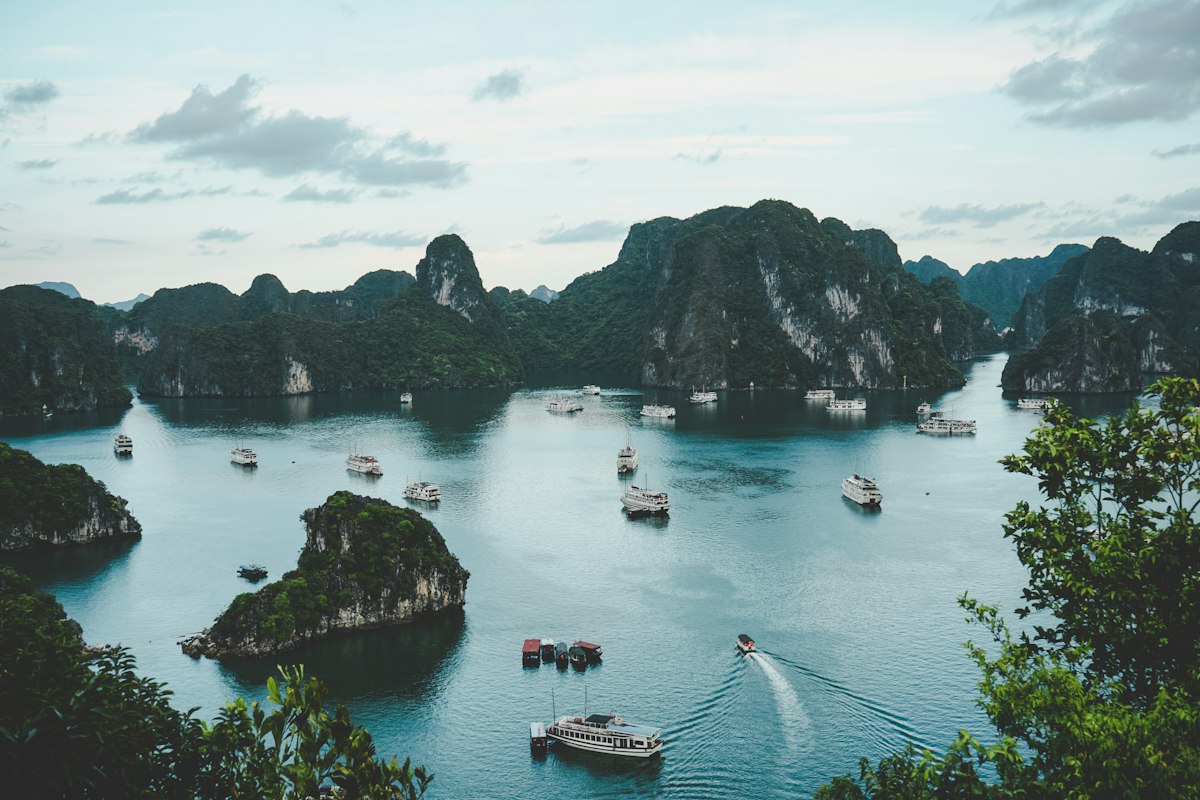
Two Vietnam stories are appearing simultaneously in travel communities right now - and together they map out exactly why the country delivers such wildly different experiences depending on where, when, and how you travel it.On one end of the spectrum: a couple stranded in Hanoi during Tet when local restaurants closed for the Lunar New Year, helped by a hotel worker who drove them on his motorbike to three shops, found them all closed, then stopped at his own home and brought back homemade Durian chips, tangerines, beer, and two kinds of rice cake dishes - and then cooked the meal in their hotel kitchenette and shared it with them. "I'd already fallen in love with Vietnam but this feels like the cherry on top of the cake," the traveler wrote on r/travel.On the other end: a month-long December-January trip through Thailand, Laos, Cambodia, China, and Malaysia before arriving in Vietnam with high expectations - and leaving with a genuinely conflicted experience. The landscapes were described as "probably the most visually stunning place I have ever been." The price point was acknowledged as extraordinary. But the interpersonal experience - persistent scams even outside tourist areas, vendors who seemed to want guests gone rather than welcomed - left the traveler counting positive local interactions on one hand after a full month.Both accounts are accurate. And both are incomplete on their own.Vietnam is a country of profound regional variation that travel coverage frequently flattens into a single narrative. Hanoi's Old Quarter, Hoi An's tourist-saturated tailor street, and Phu Quoc (described in the second account as "everything wrong with the modern world") are the pressure points - places where the ratio of tourists to locals has tilted so dramatically that the economics of every interaction skew extractive.A different Vietnam exists in parallel: the in the far north, where rice-terraced mountains draw comparisons to before package tours arrived. 's boat-threaded waterways and clifftop pagodas. 's cave systems in the mountains of central Vietnam. These are still places where traveler reports describe genuine hospitality and , all-in.The food polarization is real but partly taste-specific. Vietnamese cuisine's strengths - clean broths, fresh herbs, precise balance - are genuinely excellent for those whose palate aligns with it. The complaint that it lacks the flavor intensity of Thai food is a legitimate personal preference, not a universal verdict.The practical guidance from experienced Southeast Asia travelers: A month bouncing between , , , and hits every pressure point. Two focused weeks in , , and captures the country that built Vietnam's reputation.
|