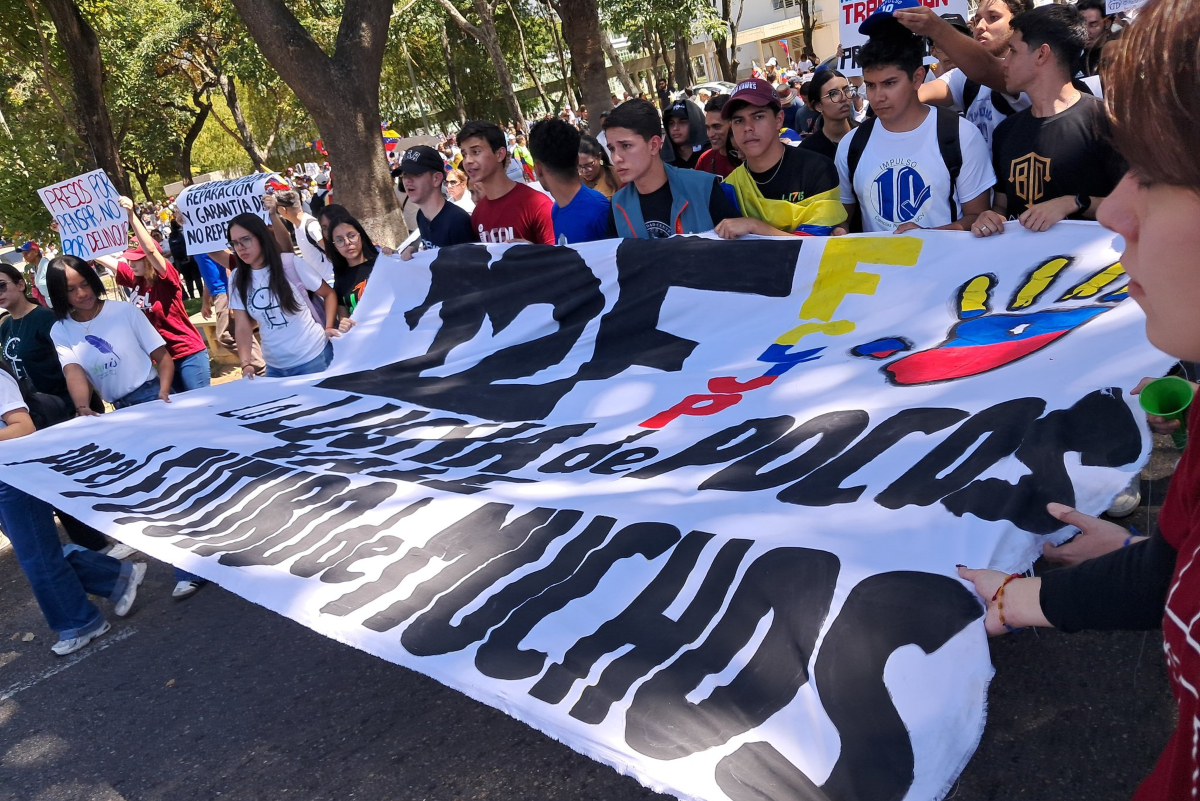
A new generation of Venezuelan students has begun taking to the streets to demand democratic reforms and the release of political prisoners, marking a resurgence of youth activism after years of government repression.
In Caracas, hundreds of students from the Universidad Central de Venezuela (UCV) marched beyond campus boundaries in February, joined by peers from universities across the country including institutions in Barquisimeto, Maracaibo, and Valencia. Students and families of political prisoners marched together chanting "libérenlos a todos"—"free them all."
"I was born in 2003 and all I knew was fear… until today," said Paola Carrillo, a 22-year-old student activist, reported by Venezuelan media El Nacional. "We are fighting for the freedom we want."
The protests represent a significant shift in Venezuela, where student movements historically played crucial roles in political change but were severely repressed following the 2017 demonstrations that left over 120 dead. Many student leaders from that era fled into exile or were imprisoned.
Student demands go beyond prisoner release, calling for repeal of laws used for political repression, free elections, institutional reform, and increased university funding. With approximately 1.3 million Venezuelan students eligible to vote, the demographic represents a potentially significant political bloc that the Nicolás Maduro regime cannot entirely ignore.
The demonstrations have remained relatively small compared to the massive 2017 protests, reflecting both lingering fear and the reality that millions of young Venezuelans have fled the country's economic collapse. Yet their persistence despite risks signals that resistance to authoritarian rule continues even as international attention has waned.