
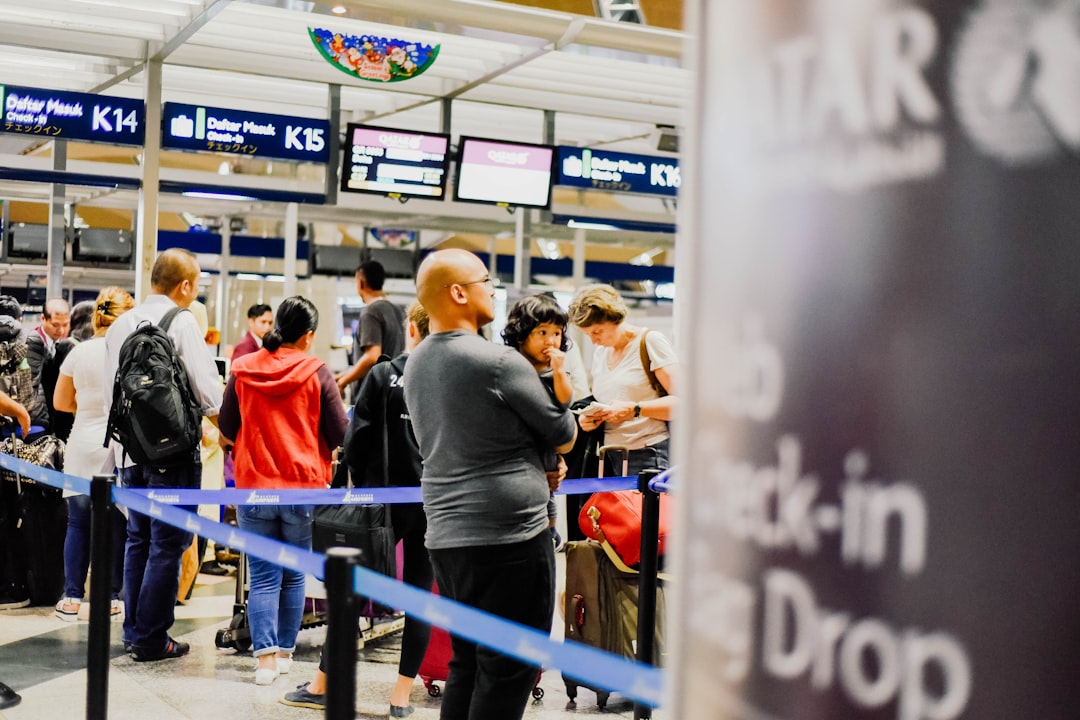
Argentina's immigration authorities have begun enforcing eight-year entry bans against foreign nationals who previously overstayed their visas, marking a dramatic shift in enforcement policy at Buenos Aires' Ezeiza International Airport.
Multiple travelers from the United States, Britain, and Russia have been denied entry and turned away at the airport in recent days despite having paid overstay fees for previous violations, according to reports from the expat community forum ExpatsBA. The enforcement represents a significant departure from Argentina's historically relaxed approach to immigration compliance.
In Argentina, as across nations blessed and cursed by potential, the gap between what could be and what is defines the national psychology. A country built by Italian, Spanish, and Middle Eastern immigrants—a nation that once welcomed the world's tired and poor—now turns them away at the border for bureaucratic infractions previously settled with administrative fees.
The crackdown appears to be part of a broader tightening of immigration enforcement under President Javier Milei, whose libertarian economic platform sits uncomfortably alongside increasingly nationalist immigration policies. The administration's willingness to enforce long-dormant regulations suggests a pragmatic approach to governance that prioritizes order and compliance over ideological purity.
Under Argentina's immigration laws, foreign tourists are granted 90-day stays, renewable for another 90 days. Historically, overstaying these limits resulted in modest fines paid at departure—typically around $50 to $100—with few additional consequences. The new enforcement regime transforms these administrative penalties into multi-year exclusions from the country.
"This administration doesn't seem to be messing around," one affected traveler wrote on the ExpatsBA forum, describing the shock of being denied entry despite having properly paid previous overstay fees.
The policy shift carries particular irony for a nation where an estimated 60% of the population claims Italian ancestry and where immigration-friendly policies have long been a point of national pride. Argentina's 2004 Migration Law, passed during the progressive government of Néstor Kirchner, explicitly recognized migration as a fundamental human right and established one of the hemisphere's most liberal immigration frameworks.
That framework now faces its sternest test under Milei, whose administration has prioritized fiscal austerity and regulatory enforcement across government agencies. Immigration officials at Ezeiza—the country's primary international gateway—appear to have received clear instructions to enforce existing regulations that had previously been applied selectively or ignored entirely.
The eight-year ban provision exists within Argentina's existing immigration code but had rarely been invoked prior to recent months. The law allows authorities to prohibit re-entry for individuals who violated visa terms, though enforcement had historically been minimal except in cases involving criminal activity or national security concerns.
For Buenos Aires' substantial expatriate community—which includes thousands of Americans, Europeans, and other foreigners who have made the cosmopolitan capital their home—the policy shift creates uncertainty about residency status and future travel. Many "perpetual tourists" had relied on periodic border runs to neighboring countries to reset their visa status, a practice immigration authorities now appear determined to curtail.
The timing of the crackdown coincides with Milei's broader efforts to assert state authority and reduce what his administration characterizes as systemic non-compliance with regulations. Similar enforcement drives have targeted tax evasion, labor law violations, and street vending in Buenos Aires, suggesting a comprehensive approach to regulatory enforcement.
Yet the immigration crackdown reveals tensions within Milei's libertarian ideology. A president who campaigned on reducing state intervention in economic affairs now deploys state power aggressively to control human mobility—a contradiction that reflects the messy reality of governing Argentina, where ideological consistency often yields to practical necessity.
Provincial perspectives on the policy shift remain unclear, though immigration enforcement has traditionally been viewed as a federal matter with limited provincial input. The policy affects primarily international arrivals through Ezeiza and other major ports of entry rather than land border crossings with Chile, Uruguay, Paraguay, and Brazil, where enforcement mechanisms differ.
For a nation perpetually caught between European sophistication and Latin American reality, between promise and dysfunction, the immigration crackdown represents another chapter in Argentina's ongoing identity crisis. A country that once saw itself as exceptional—whiter, richer, more cultured than its neighbors—now enforces borders with the same bureaucratic rigidity it once disdained in others.
The policy shift also carries economic implications for Argentina's tourism industry, which relies heavily on foreign visitors to generate hard currency. Whether the enforcement campaign will extend beyond high-profile cases at Ezeiza to broader immigration enforcement remains to be seen, though the signals from Milei's administration suggest a sustained commitment to regulatory compliance across government functions.
For now, foreign travelers with previous overstay violations face a stark choice: avoid Argentina entirely or risk the humiliation of deportation and an eight-year ban from a country that once prided itself on welcoming the world.