
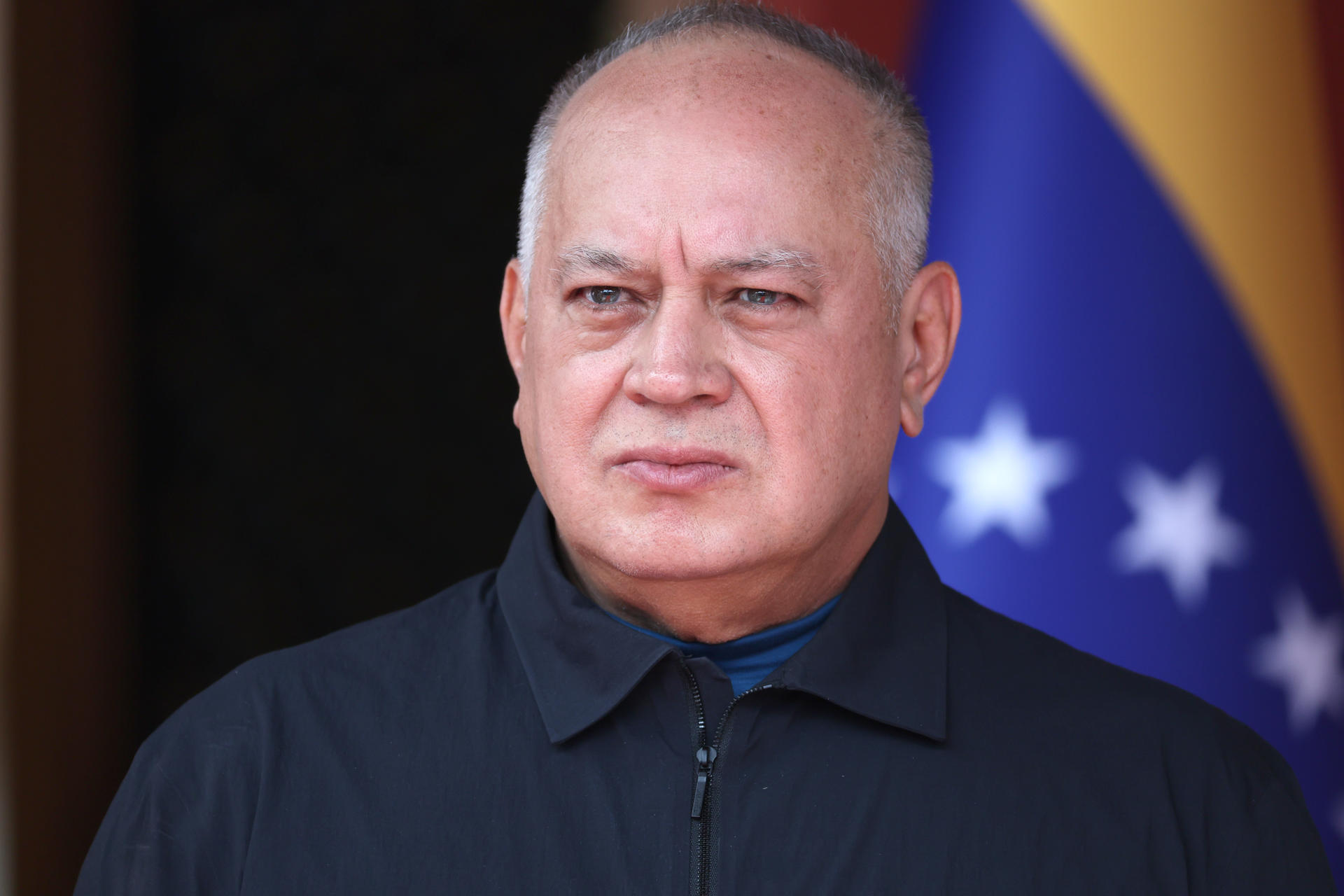
Venezuela's government has dismissed more than 12,000 police officers for corruption in a sweeping purge of security forces that Interior Minister Diosdado Cabello describes as dismantling systematic extortion networks within law enforcement.
The scale of dismissals—representing a substantial portion of Venezuela's police force—raises questions about whether the crackdown reflects genuine anti-corruption efforts or political consolidation within security institutions that are critical to maintaining the Nicolás Maduro regime's control.
"We have been dismissing more than 12,000 police officers who engaged in acts of corruption," Cabello told state media, citing cases of extortion, checkpoint robberies, and a "very corrupt" prison system where inmates controlled access to courts through payment schemes.
In one Lara state case, officers allegedly robbed citizens at checkpoints. Cabello also described a judicial corruption network where detainees paid officials for court appearances: "I'll take you to court if you pay. We've been dismantling that."
The minister acknowledged Venezuela's prolonged judicial delays, with some detainees held up to six years without trial—a crisis that has fueled the very corruption networks the government now claims to be eliminating. The admission offers a rare glimpse into the institutional decay plaguing Venezuela's criminal justice system.
The government reports training over 32,000 new security personnel through the UNES university program to replace dismissed officers, raising concerns about political loyalty criteria in an environment where security forces have been instrumental in suppressing opposition.
In Venezuela, as across nations experiencing collapse, oil wealth that once seemed a blessing became a curse—and ordinary people pay the price. The mass dismissals occur as the country continues struggling with economic crisis, humanitarian emergency, and political repression that has driven over seven million Venezuelans into exile.
The timing of the purge—amid international scrutiny of Venezuela's authoritarian practices—suggests the move may serve dual purposes: addressing genuine corruption problems while ensuring security force loyalty to the regime. Whether dismissed officers face criminal prosecution or merely removal from service remains unclear.
For Venezuelan citizens, the practical impact depends on whether new officers represent improvement or simply replacement of one set of corrupt actors with another—a pattern that has repeated throughout the country's institutional collapse over the past decade.