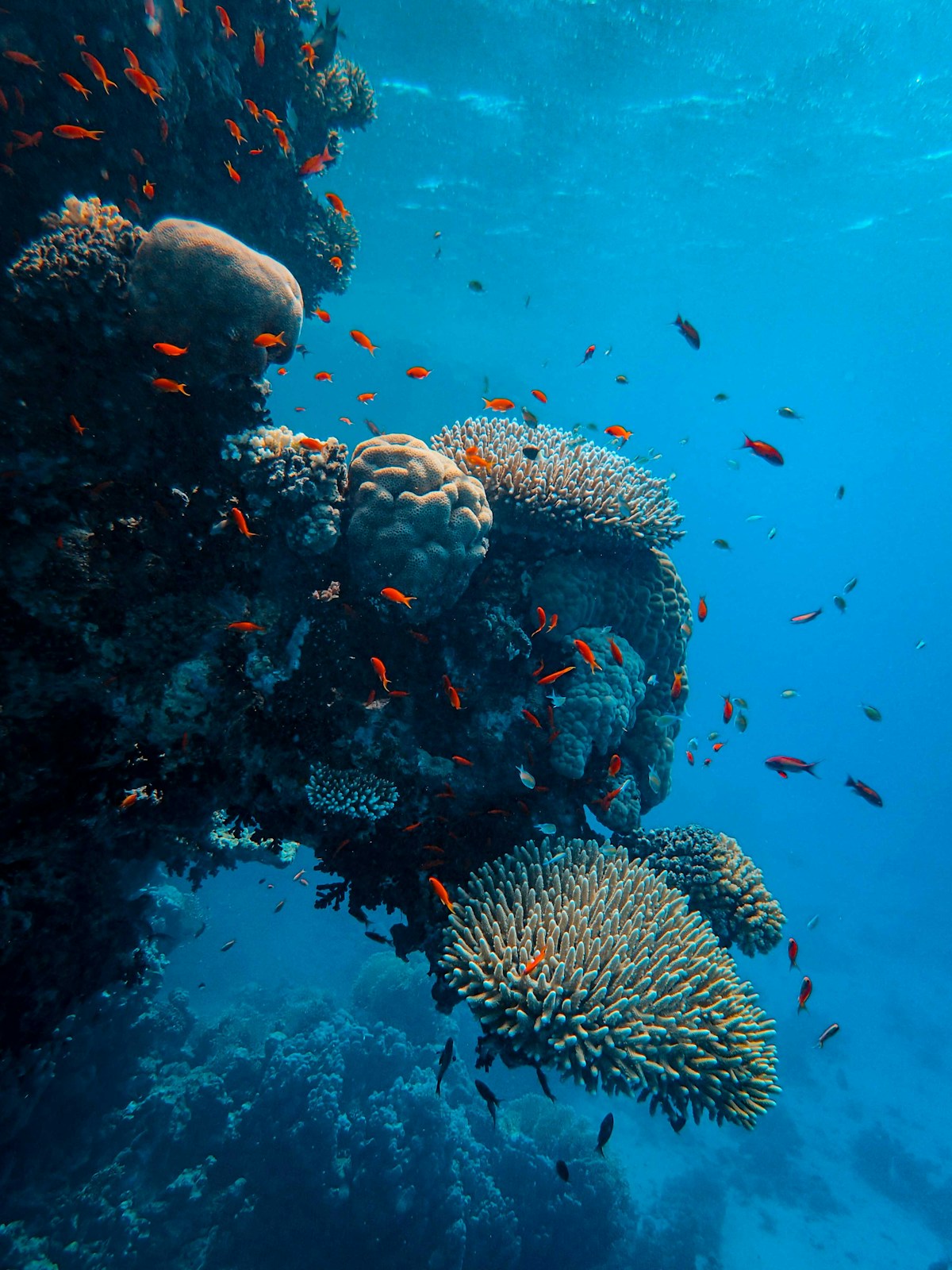
Current United States government policies are accelerating the collapse of coral reef ecosystems that support one-quarter of all marine species, according to scientists monitoring reef health globally.
The warnings, detailed in new analysis, connect policy reversals on climate action and ocean protection to cascading impacts on reef systems already stressed by warming waters, ocean acidification, and pollution.
Coral reefs provide ecosystem services worth an estimated $375 billion annually through fisheries support, coastal protection, and tourism revenue. Beyond economic value, reefs harbor extraordinary biodiversity in ocean ecosystems that cover less than 1% of the seafloor yet support 25% of marine species.
In climate policy, as across environmental challenges, urgency must meet solutions—science demands action, but despair achieves nothing. Yet scientists emphasize that reef collapse trajectories are accelerating under current policy frameworks, threatening ecosystems already at tipping points.
Marine biologists point to multiple policy areas affecting reef health, including weakened climate commitments, reduced marine protected area enforcement, and rollbacks of water quality regulations. The cumulative effect creates conditions where reef systems face compounding stressors without corresponding protections.
Dr. Terry Hughes, who has documented mass coral bleaching events across the Great Barrier Reef, has previously warned that reef systems are experiencing unprecedented thermal stress. Similar patterns are emerging in Caribbean and Pacific reef systems, where warming waters trigger bleaching that starves coral of symbiotic algae essential for survival.
Ocean acidification—driven by atmospheric carbon dioxide absorption—compounds thermal stress by inhibiting coral skeleton formation. The combination creates conditions where reefs struggle to recover between bleaching events, leading to permanent ecosystem state changes.
Coastal communities in Florida, Hawaii, and US Pacific territories depend directly on reef health for storm protection and fisheries. Reef degradation exposes shorelines to increased wave energy and storm surge while depleting fish populations that support local economies and food security.
Scientists emphasize that reef protection requires coordinated action across climate policy, marine conservation, and water quality management. Single-issue interventions prove insufficient when reefs face multiple simultaneous stressors from warming, acidification, pollution, and overfishing.
International reef monitoring networks document global patterns of coral decline, with some regions experiencing near-complete reef ecosystem collapse. The Caribbean has lost an estimated 80% of coral cover since the 1970s, transforming once-vibrant reef systems into algae-dominated seascapes.
Climate scientists calculate that limiting global warming to 1.5°C above pre-industrial levels—the Paris Agreement's aspirational target—would still result in 70-90% coral reef loss globally. Warming beyond 2°C essentially guarantees near-complete reef ecosystem collapse.
The grim projections underscore that reef protection depends fundamentally on climate stabilization, making energy transition and emissions reductions inseparable from marine conservation. Policy reversals that weaken climate action therefore directly threaten reef survival regardless of local conservation efforts.
Marine protected areas demonstrate that local management can enhance reef resilience to climate stress, providing examples of how protection measures create buffering capacity. However, scientists emphasize these interventions cannot substitute for climate action—they can only buy time and preserve reef remnants for potential recovery if global temperatures stabilize.
The warnings from reef scientists carry implications beyond coral ecosystems, illustrating how policy choices cascade through interconnected environmental systems. Decisions made in energy policy or emissions regulations ultimately determine the survival of marine ecosystems thousands of miles from power plants or vehicle tailpipes.
Several US states and territories have launched reef restoration initiatives, cultivating coral fragments for replanting and developing selective breeding programs for heat-tolerant coral varieties. These efforts show promise for preserving genetic diversity and potentially accelerating reef recovery, though their success depends on broader climate stabilization.
As policy debates continue, reef ecosystems face immediate threats from current warming trends and policy frameworks that scientists warn are inadequate to prevent catastrophic collapse of one of Earth's most biodiverse ecosystems.